

When to change whirlpool microwave vent hood combo filter?
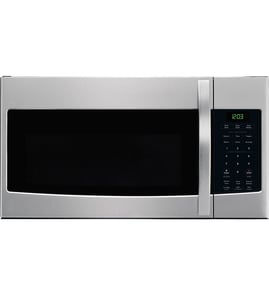
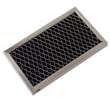
For the Whirlpool UMV1170LW00 microwave/hood combo, we replace the charcoal (odor) filter about every 6 months with typical cooking use; the metal grease filter is usually cleaned monthly and replaced only if it is damaged or won’t come clean.
Microwave/hood combos commonly use two different filter types:
- Grease filter (metal mesh): catches grease from the cooktop; washable and reusable
- Charcoal filter (carbon): reduces odors in recirculating (non-vented) setups; not washable
- No charcoal filter needed if your unit vents outside (ducted)
| Filter type | What to do | How often |
|---|---|---|
| Grease filter (metal) | Wash and dry completely | About once a month |
| Charcoal filter (carbon) | Replace | About every 6 months |
Replace or service the filter sooner if you notice:
- Lingering cooking odors even with the fan on high
- Grease buildup or dripping from the filter area
- Reduced airflow from the hood fan
- Filter is bent, torn, or the mesh is separating
If you’re servicing the venting system on UMV1170LW00, these parts are often involved:
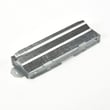
- Filter W10208631A (grease filter): replace if damaged or permanently clogged
- Check the vent grille and duct path for grease buildup (especially in ducted installs)
A clean grease filter helps protect the fan and internal surfaces from grease buildup, and a fresh charcoal filter keeps odors under control in recirculating setups. Staying on schedule helps the hood fan move air efficiently and keeps the microwave area cleaner.
Last updated: February 2026
How to remove whirlpool microwave vent cover?
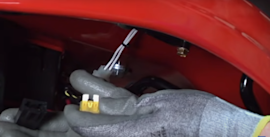
For the Whirlpool UMV1170LW00 microwave/hood combo, the vent cover you see on the front top is typically the vent grille. We remove it by shutting off power, opening the door, then removing the grille screws and sliding the grille off so you can access components behind it.
- Unplug the microwave or switch off the circuit breaker.
- Let the cooktop light and surfaces cool completely.
- Protect the range with a towel to prevent scratches.
- Use a #2 Phillips screwdriver; keep screws in a cup.
- Open the microwave door.
- Locate the screws along the top edge of the grille (usually 2 to 3 screws).
- Remove the screws.
- Slide the grille to the left (or toward the side with the locking tabs), then pull it forward to release it.
- Set the grille aside.
- Check for a hidden screw near one end cap.
- Push the grille slightly upward while sliding to disengage tabs.
- Confirm you removed all visible screws with the door open.
Once the grille is removed, you can commonly reach items like the control area and some mounting points. If you are removing the microwave from the wall, the grille removal is often an early step, along with removing the microwave mounting plate W11025649.
| Task | Grille removal needed? | Typical next step |
|---|---|---|
| Clean vent area | Yes | Wipe and reinstall grille |
| Replace control panel | Often | Remove control panel fasteners |
| Remove microwave from wall | Often | Support unit, remove top bolts |
Removing the vent grille the right way prevents broken plastic tabs, stripped screws, and misalignment that can cause rattles or poor venting performance.
Last updated: February 2026
What are the parts of a microwave?
A Whirlpool microwave like model UMV1170LW00 is built from cooking components (cavity, door, turntable system), control components (keypad and control board), and high-voltage components that create microwave energy. In a microwave/hood combo, it also includes a vent fan, lights, and filters.
- Magnetron: generates the microwave energy that heats food (common failure symptom: heats poorly or not at all).
- High-voltage system: steps up and routes power to the magnetron.
- Control system: runs cook cycles, timing, and safety monitoring.
- Door and interlocks: keep the unit from running with the door open.
- Turntable system: rotates food for more even heating.
- Hood system: moves air and captures grease and odors.
These are some frequently serviced items for this Whirlpool microwave/hood combo:
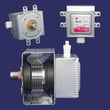
- Microwave magnetron W10754299
- Transformer, high voltage W11545871
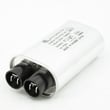
- Capacitor W10850446
- Microwave fuse W11707984
- Microwave/hood light bulb 8206232A
- Filter W10208631A
| Symptom | Most likely part area | Example part for UMV1170LW00 |
|---|---|---|
| Runs but does not heat | High-voltage system | Magnetron, capacitor, diode, transformer |
| Completely dead (no display) | Power input or protection | Fuse, control board |
| Light out under microwave | Lighting | Hood light bulb |
| Poor venting or greasy buildup | Hood airflow/filtration | Grease filter |
Knowing the major assemblies helps you troubleshoot faster and order the right replacement part the first time. For example, a “no heat” complaint usually points to the high-voltage circuit, while a “no power” complaint often starts with the fuse and control.
Last updated: February 2026
What are common problems with whirlpool microwaves?
Common problems we see with Whirlpool microwaves (including model UMV1170LW00) are no heat, no power, won’t start, loud noises, sparking, weak venting, and light or keypad issues. Many are caused by door-switch problems, power supply issues, or worn parts; heating failures often involve high-voltage components.
- Confirm the outlet has power (try a lamp or reset the breaker).
- Make sure the door closes firmly and the latch area is clean.
- Try a simple reset: unplug for 2 minutes, then plug back in.
- If it runs but does not heat, stop using it until it’s diagnosed (high voltage risk).
- If the hood fan seems weak, clean the grease filter and check for blocked airflow.
| Symptom | What it usually points to | Parts often involved on UMV1170LW00 |
|---|---|---|
| Runs but does not heat | High-voltage circuit problem | Microwave magnetron W10754299, gaoxin-hvd c W11256462, capacitor W10850446 |
| Completely dead (no display) | Blown fuse or power issue | Microwave fuse W11707984 |
| Light not working | Burned-out bulb or cover issue | Microwave/hood light bulb 8206232A |
| Loud hum/buzz while heating | Magnetron or HV component strain | Microwave magnetron W10754299, transformer, high voltage W11545871 |
| Hood venting poor | Grease buildup or airflow restriction | Filter W10208631A |
Microwave/hood combos like the Whirlpool UMV1170LW00 combine cooking and ventilation. A “no heat” complaint is often a high-voltage failure, while “no power” is commonly a fuse or supply issue. Correct diagnosis prevents repeat failures and avoids unsafe testing.
- Always unplug the microwave before removing any panels.
- Do not attempt to test or replace high-voltage parts unless you are trained; the capacitor can hold a dangerous charge.
- If you smell burning, see arcing, or hear popping, stop using the unit and have it serviced.
For basic electrical diagnosis, we use steps like those in how to tell if a fuse is blown and how to use a multimeter to test electrical parts video.
Last updated: February 2026