Owner’s manual
 Error Codes



What is the typical lifespan of a gas hot water heater?
A typical gas water heater lasts 8 to 12 years. For your American FG1F3030T3NOV gas water heater, regular maintenance (especially draining, flushing, and anode rod inspections) helps you reach the high end of that range; water quality and usage can shorten it.
Most residential tank-style water heaters fall into these ranges:
| Water heater type | Typical lifespan |
|---|---|
| Gas tank water heater | 8 to 12 years |
| Electric tank water heater | 10 to 15 years |
These factors drive tank corrosion, sediment buildup, and burner wear:
- Water quality (hard water increases sediment)
- Water softeners (softened water is more corrosive to the tank)
- Maintenance frequency (flushing and anode checks)
- Temperature setting (higher temps can increase stress and scale)
- Venting and combustion air (poor draft can affect burner operation)
We recommend following the maintenance schedule in the owner's manual. Key items include:
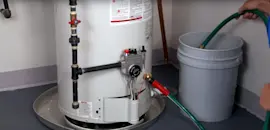
- Drain and flush the tank periodically to reduce sediment
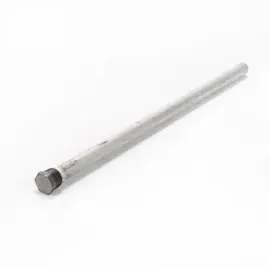
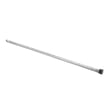
- Inspect the anode rod about every 3 years and replace it if it is more than 50% depleted
- Watch for odor or discoloration that can point to anode rod issues
- Check for leaks at fittings and valves and address them early
- Keep the burner area clean and make sure the unit has proper combustion air
If you are planning maintenance parts, common replacements for this model include the water heater anode rod 100109594 and the drain valve 100109106. You can order model-matched parts from the parts list for FG1F3030T3NOV, or search by model on Sears PartsDirect.
Once a tank begins to corrode internally, failure can happen quickly. Staying ahead of sediment and anode rod wear helps protect the tank lining, maintain heating efficiency, and reduce the chance of unexpected leaks.
Last updated: February 2026
What is the average cost of replacing a gas hot water heater?
For an American FG1F3030T3NOV gas water heater, the typical installed cost to replace a standard tank-style gas water heater is about $1,600 to $2,400 in many U.S. homes; higher-efficiency upgrades, venting changes, or code-required piping updates can push the total higher. Use the owner's manual to confirm venting, gas supply, and piping requirements before you price the job.
Replacement cost is usually a mix of the heater price, labor, and materials. The biggest cost drivers are:
- Tank size and efficiency level (basic atmospheric vent vs. higher-efficiency options)
- Venting work (draft hood, vent connector, chimney liner, power vent conversion)
- Gas line sizing or rerouting (pipe diameter and total run length)
- Water piping updates (shutoff valve, unions, expansion tank in closed systems)
- Permit and inspection fees (varies by area)
- Disposal/haul-away of the old tank
These ranges reflect common U.S. pricing for a like-for-like tank replacement.
| Scenario | Typical installed range | Notes |
|---|---|---|
| Like-for-like tank replacement | $1,600 to $2,400 | Most common when venting and gas line stay the same |
| Replacement with venting changes | $2,200 to $4,000 | Costs rise when venting must be modified to meet code |
| Tankless conversion | $2,400 to $5,400 | Often needs gas, venting, and sometimes electrical upgrades |
Your FG1F3030T3NOV manual calls out installation items that can add parts and labor:
- Gas supply sizing: pipe size depends on BTU input and total pipe length
- Combustion air and ventilation: may require added openings or ducting
- Water piping: 3/4-inch NPT hot and cold connections; unions are recommended for service
- Thermal expansion protection: closed systems often need an expansion tank or relief device
If your installer finds worn or leaking components, these are common add-ons:
- T&p valve 100108279 (temperature and pressure relief valve)
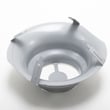
- Draft hood 100111362 (if the existing hood is damaged or missing)
- Drain valve 100109106 (if the drain is seized or leaking)
A gas water heater replacement is not just swapping tanks. Correct venting, gas line capacity, and safe water piping help prevent nuisance shutdowns, poor performance, and unsafe operating conditions.
To order replacement parts for FG1F3030T3NOV, use the parts list for this model or search by model number on Sears PartsDirect.
Last updated: February 2026
What is the most common problem with gas water heaters?
For the American FG1F3030T3NOV gas water heater, the most common problem we see is ignition trouble: the pilot will not light or will not stay lit, so the burner never runs and you get little or no hot water. Sediment buildup and a leaking T&P relief valve are also frequent causes of poor performance.
- Pilot will not stay lit: burner never comes on, water stays lukewarm or cold
- Dirty or restricted air intake/flame-trap: weak flame, nuisance shutdowns
- Sediment in the tank: popping or rumbling sounds, reduced hot water, slower recovery
- T&P relief valve weeping: dripping from the discharge pipe, pressure or temperature issues
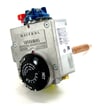
- Gas control/thermostat problems: inconsistent temperature, overheating protection trips
- Follow the lighting steps exactly in the owner's manual.
- Smell for gas at floor level before lighting (especially on LP models); if you smell gas, do not attempt to light.
- Confirm the temperature setting is reasonable; 120°F is the preferred starting point in the manual.
- Look at the pilot through the viewport while lighting; a weak or unstable pilot points to an ignition or airflow issue.
If troubleshooting points to a failed component, these are common replacements for this model:
| Symptom | Common part to check/replace | What it does |
|---|---|---|
| Pilot will not light or stay lit | Water heater pilot igniter 100110927 | Creates/maintains ignition at the pilot so the burner can run |
| Pilot/ignition assembly damaged or unreliable | Water heater pilot and igniter assembly 100093808 | Combines pilot and ignition components for stable lighting |
| Dripping from relief discharge pipe | T&p valve 100108279 | Releases excess temperature/pressure to protect the tank |
Ignition problems stop heat production entirely, while sediment and relief-valve issues reduce efficiency and can create unsafe operating conditions. The manual also notes safety shutdown behavior (for example, Flame Lock system events can permanently disable the heater), so correct diagnosis prevents repeat failures.
You can order replacement parts for FG1F3030T3NOV from the parts list for this model, or search by model number on Sears PartsDirect.
Last updated: February 2026
Why are gas water heaters being phased out?
Some areas are moving to phase out or limit new gas water heater installations to reduce air pollution (especially nitrogen oxides) and improve indoor and outdoor air quality. Rules vary by city, county, and state; your American FG1F3030T3NOV can still be serviced safely using the instructions in the owner's manual.
In most places, a phaseout targets new installations or new equipment sales, not immediate removal of existing units. For a gas water heater like the American FG1F3030T3NOV, that typically breaks down like this:
- Existing heaters can usually keep operating until replacement is needed
- Repairs and maintenance are commonly still allowed
- New installs may require an electric or heat pump water heater instead of gas
- Permits and venting requirements may tighten over time
- Some programs offer incentives for switching technologies
Even when local policies change, safe operation and correct installation remain the priority. Your manual highlights key safety points that directly affect real-world performance and safety, including:
- Avoiding installation near air-moving devices (exhaust fans, dryers) that can cause flue gas backdrafting
- Never storing flammable liquids or vapors near the heater
- Keeping required clearances and accessibility for service
- Following lighting instructions carefully, especially on LP (propane) models
When a gas water heater is still permitted, repairing common wear items is often practical. If you are troubleshooting ignition or pilot issues, these model-matched parts are commonly involved:
- Water heater pilot igniter 100110927
- Water heater pilot and igniter assembly 100093808
- Water heater propane gas control valve 100093749
| Situation | Typical next step | Why |
|---|---|---|
| Pilot will not stay lit | Inspect/replace pilot and igniter components | Weak ignition or sensing causes shutdowns |
| Gas control problems | Check gas control valve operation | Controls gas flow and safety shutoff |
| You smell gas | Shut off gas, ventilate, do not ignite | Prevents fire/explosion risk |
We list replacement parts for the American FG1F3030T3NOV on this model page; you can also search by model number on Sears PartsDirect if you are sourcing additional items.
Last updated: February 2026
Is it cheaper to repair or replace a water heater?
For an American FG1F3030T3NOV gas water heater, it’s cheaper to repair when the problem is limited to a serviceable part (ignition, gas control, T&P valve, drain valve). Replace the heater when the tank is leaking, badly corroded, or has been submerged in flood water (replacement is required in that case per the owner's manual).
- The tank is not leaking and there’s no heavy rust at fittings or the base.
- The issue is ignition or pilot related (common on gas models).
- The T&P relief valve is weeping due to pressure/temperature events (after confirming system conditions).
- The drain valve is leaking or won’t close.
- You can restore safe operation with a straightforward part replacement.
- The tank is leaking (tank leaks are not repairable).
- The heater has been under water or gas controls/burner/pilot were submerged (the manual calls for replacing the entire water heater).
- Repeated failures are stacking up (multiple parts plus labor).
- Corrosion is advanced around the combustion chamber, flue, or tank connections.
| Symptom | Likely repair path | Example part on this page |
|---|---|---|
| Pilot won’t light or won’t stay lit | Inspect pilot/igniter, connections, and combustion area; replace failed ignition parts | Water heater pilot igniter 100110927 or water heater pilot and igniter assembly 100093808 |
| Water dripping from relief line | Verify temperature setting and system pressure; replace relief valve if it won’t reseat | T&p valve 100108279 |
| Leaking at drain outlet | Replace drain valve; flush sediment after repair | Drain valve 100109106 |
| Odor or accelerated corrosion risk | Inspect anode rod every 3 years; replace if more than 50% depleted | Water heater anode rod 100109594 |
Repairing a gas water heater is only a good value when it restores safe, reliable operation. Tank leaks and flood submersion are hard stop conditions because they create safety risks and ongoing damage. The owner's manual also highlights safety steps such as not operating the heater after submersion.
We list model-matched replacement parts for FG1F3030T3NOV on this page; you can also search by model number on Sears PartsDirect if you’re comparing options or building a full repair list.
Last updated: February 2026