 Owner’s manual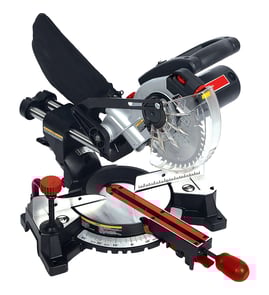

How much is the Bosch 5412L?
The Bosch 5412L miter saw price varies by condition and seller; most used units sell for a few hundred dollars, while new old stock (if found) is typically higher. For model-specific features and what should be included in the kit, use the 5412L owner's manual to compare listings accurately.
What to expect for price (typical ranges)
Because the 5412L is an older 12-inch sliding compound miter saw, pricing is usually driven by condition, included accessories, and whether it needs service.
- Used, working: about $200 to $450
- Used, needs work or missing parts: about $75 to $200
- Refurbished or very clean with stand/accessories: about $350 to $650
- New old stock (rare): often $600+
Quick checklist before you buy
A “cheap” saw can become expensive if it needs a motor repair, switch, or safety-guard parts.
- Confirm the lower blade guard moves freely and returns smoothly.
- Listen for motor surging, heavy sparking, or burning smell.
- Check the slide action for binding and side-to-side play.
- Verify the fence and table are not cracked and can be aligned.
- Inspect the power cord for cuts, stiff spots, or taped repairs.
- Ask whether carbon brushes have been inspected recently (the manual recommends checking them every 2 to 6 months for peak motor efficiency).
What “good value” looks like
| Listing description | Usually a fair buy when… | Likely to cost more later when… |
|---|---|---|
| “Works great” | Cuts square, slides smoothly, guard works | No proof of maintenance, heavy sparking |
| “Needs brushes” | Brushes are the only issue and commutator looks clean | Also has switch issues or arcing |
| “Missing blade” | Everything else is solid | Guard is damaged or fence is bent |
Why it matters
A miter saw is a high-RPM cutting tool; condition and safety components matter as much as price. The 5412L manual also notes these saws are intended for wood and woodlike products; if you cut non-ferrous metal (like aluminum), you need a blade specifically rated for that use.
Last updated: February 2026
Is it worth getting a double bevel mitre saw?
Yes, a double bevel miter saw is worth it when you regularly make compound cuts (miter plus bevel) for trim, crown molding, or cabinetry because it lets you bevel left and right without flipping the workpiece, which saves time and reduces setup errors. For basic crosscuts and simple miters, a single bevel saw is usually enough.
How this applies to the Bosch 5412L
The Bosch 5412L supports compound cutting and has left and right bevel capability (up to about 47° each way), plus factory bevel stops at 0° and 45° on both sides. That means it already delivers the main advantage people buy a double bevel saw for: fast, repeatable opposing bevel cuts without re-positioning the material. For operating details and angle features, use the owner's manual.
When a double bevel is the right upgrade
A double bevel saw pays off most when your projects include frequent “mirror image” cuts.
- Crown molding and other finish trim (inside and outside corners)
- Baseboard returns, door/window casing, and picture-frame trim
- Cabinet face frames and furniture parts needing matched angles
- Repetitive production cuts where speed and consistency matter
- Any workflow where flipping long stock is awkward or unsafe
When a single bevel is enough
If your work is straightforward, the extra features do not add much value.
- Mostly 90° crosscuts
- Occasional 45° miters with no bevel
- Rough framing where perfect fit is less critical
- You rarely cut left-hand and right-hand bevels in the same project
Quick comparison
| Feature | Single bevel miter saw | Double bevel miter saw (like 5412L) |
|---|---|---|
| Bevel direction | One side only | Left and right |
| Flipping workpiece for opposing bevels | Often required | Usually not required |
| Best for | Basic trim, general cuts | Trim, crown, cabinetry, repeatability |
Why it matters
Every time you flip a board to “fake” the opposite bevel, you add chances to misread the miter scale, change fence contact, or introduce a small alignment error. Double bevel capability keeps the workpiece orientation consistent, which improves fit on visible joints.
Last updated: February 2026
What is the best miter saw on the market?
There is no single “best” miter saw for everyone; the best choice depends on what you cut most (trim, framing, crown molding), how much capacity you need, and whether you want a slider. If you already own a Bosch 5412L, it is a strong 12-inch saw for accurate miter work, with built-in detents and crown molding-friendly settings described in the 5412L owner's manual.
How we recommend choosing the “best” miter saw
Focus on the features that change results the most:
- Blade size and arbor: The Bosch 5412L uses 12-inch blades with a 1-inch arbor hole.
- Miter range and detents: Faster repeatable cuts when common angles have positive stops.
- Bevel capability: Dual-bevel saves time on trim and crown.
- Cut style: Chop-only is compact; sliding increases crosscut capacity.
- Work support: Extensions, stands, and outfeed support reduce tipping and binding.
Bosch 5412L highlights (what matters in real use)
The 5412L includes features that many buyers look for in a “best-in-class” saw:
- Miter detents for common angles (including 0°, 15°, 22.5°, 31.6°, 45°, and 60° right)
- Miter detent override for micro-adjusting angles near detents
- Sliding base extensions to support longer stock
- Crown molding detents (31.6° miter and 33.9° bevel) for 38° spring-angle crown
Quick comparison: which type fits your work?
| If you mostly cut... | Best fit | Why |
|---|---|---|
| Baseboard, casing, crown | Dual-bevel compound miter saw | Fewer flips, cleaner workflow |
| Wide shelving, larger boards | Sliding compound miter saw | More crosscut capacity |
| Jobsite framing | Durable 10-inch or 12-inch compound | Speed and toughness |
| Fine woodworking | Precision-focused saw + good blade | Repeatability and cut quality |
Why it matters
A miter saw is only “the best” if it stays accurate and safe in your workflow. Stable mounting, proper support for long boards, and clamping the workpiece reduce tear-out, binding, and kickback risk.
Safety and setup essentials (applies to any top saw)
- Mount the saw on a level, firm surface
- Clamp or brace the workpiece; do not cut freehand
- Cut one workpiece at a time
- Feed smoothly; do not overload the motor
- Wait for the blade to stop completely before lifting the head
Last updated: February 2026