Installation guide
 Owner’s manual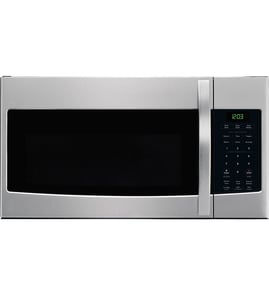


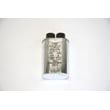
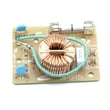
How do I do a hard reset on my GE microwave?
To hard reset your GE JVM1750SM1SS microwave/hood combo, we power-cycle it: unplug the microwave (or switch the circuit breaker off) for about 1 to 2 minutes, then restore power and set the clock. This clears many temporary control glitches and restores normal keypad response.
Hard reset steps (power cycle)
- Press CLEAR/OFF to stop any cooking cycle.
- Unplug the microwave, or turn the breaker OFF.
- Wait 1 to 2 minutes.
- Plug it back in, or turn the breaker ON.
- Set the clock and test a simple cook cycle (for example, 30 seconds with a cup of water).
Soft reset (control lock and stuck commands)
Your model lets you lock or unlock the control panel from the keypad. If the display shows a lock indicator or the keypad seems unresponsive, try this first.
- Press and hold CLEAR/OFF for about 3 seconds to lock or unlock the controls.
- Press CLEAR/OFF once to cancel an incorrect entry.
- If the clock display is off, press and hold CLOCK for about 3 seconds to toggle the clock display.
What a reset fixes (and what it does not)
| Symptom | Reset usually helps? | What to check next |
|---|---|---|
| Keypad not responding or acting “frozen” | Yes | Try control lock toggle; then power cycle |
| Random display behavior after a power flicker | Yes | Power cycle; then set clock |
| Microwave runs but does not heat | No | Heating circuit diagnosis (magnetron, controls) |
| Dead display, no interior light, no response | Sometimes | House power, breaker, internal fuse (service) |
Why it matters
A hard reset clears the control board’s temporary memory and reboots the electronics. A soft reset (CLEAR/OFF hold) is faster and often solves “locked controls” issues without cutting power.
For model-specific feature details (control lock, clock display on/off, and other settings), use the JVM1750SM1SS owner's manual.
Last updated: February 2026
What are common problems with GE JVM1750SM1SS microwaves?
Common problems on the GE JVM1750SM1SS microwave/hood combo include the unit running but not heating, a dead display or no power, door-latch and interlock issues that prevent starting, a turntable that will not rotate, and vent fan or cooktop light problems. Use the owner's manual to match symptoms to normal operation notes and basic checks.
Most common symptoms and likely causes
- Runs but does not heat: high-voltage components (magnetron, capacitor) or a safety cutout condition
- No power or goes dead: house power issue, internal fuse, or thermal cut-off opening
- Will not start or stops when door moves: door latch or interlock switch/lever problems
- Turntable not turning: coupler or turntable motor issue, or tray support not seated
- Vent fan or cooktop light issues: fan motor, capacitor, bulb, or socket problems
Quick checks we recommend first (safe, no disassembly)
- Confirm the microwave is on its own electrical outlet/circuit to reduce nuisance fuse blowing or breaker trips.
- Open and close the door firmly; the door must be securely latched for the microwave to run.
- Remove and reseat the turntable parts (tray support and coupler) so they sit flat and centered.
- If you see arcing or burn marks, stop using the microwave and inspect the cavity and waveguide cover area.
Parts that commonly fix these issues (when diagnosis points there)
| Symptom | Common part area | Example part for this model |
|---|---|---|
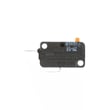
| Won’t start, intermittent start | Door interlock switches/latch | Micro-switch WB24X830 |
| Door won’t “catch” correctly | Latch body/lever | Microwave latch body WB06X10676 |
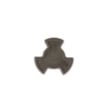
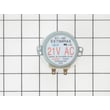
| Turntable won’t rotate | Coupler/turntable drive | Microwave turntable motor coupler WB06X10420 |
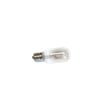
| Cooktop light out | Bulb/socket | Microwave light bulb WB36X10003 |
| Runs but no heat | High-voltage heating system | Magnetron WB27X10249 |
Why it matters
Many “won’t start” complaints are caused by door-latch alignment or interlock switch problems, which are designed to prevent operation when the door is not fully latched. Heating complaints often involve the high-voltage system, which requires careful, qualified service.
Last updated: February 2026
What is the average lifespan of a GE microwave?
Most GE microwaves, including over-the-range models like the GE JVM1750SM1SS microwave/hood combo, typically last about 7 to 10 years with normal household use. Lifespan depends heavily on heat buildup, ventilation, and avoiding misuse that can overheat key components.
What affects lifespan the most
We see these factors make the biggest difference in how long a microwave lasts:
- Running the microwave empty; even 1 to 2 minutes can overheat the magnetron and shorten life
- Heavy daily use (multiple long cook cycles per day)
- Poor airflow (blocked vents or grease buildup in the hood area)
- Door wear (slamming the door, or a door that does not latch firmly)
- Power issues (sharing an outlet with other high-draw appliances)
Quick habits that help your JVM1750SM1SS last longer
These are simple, high-impact steps:
- Keep the cavity and door area clean so the door closes and latches smoothly
- Use proper cookware; avoid metal items that can cause arcing
- Do not operate the unit with no food inside
- Use lower power levels when appropriate to reduce heat stress during long runs
- Make sure the hood venting path and grease filter area stay clean
Common “end-of-life” symptoms and what they usually point to
| Symptom | Common cause | What to check first |
|---|---|---|
| Runs but does not heat | High-voltage system issue | Heating circuit diagnosis (often not DIY) |
| Dead display/no response | Power supply or internal protection opened | Outlet, breaker, then internal fuse/thermal protection |
| Intermittent running, stops when door moves | Door interlock problem | Door latches and interlock switches |
| Sparks/arcing inside | Wrong cookware or damage/soil | Remove metal, clean, inspect waveguide cover area |
If you suspect a door-interlock issue on this model, the parts list for JVM1750SM1SS includes items commonly involved, such as the micro-switch WB24X830 and microwave latch body WB06X10676.
Why it matters
A microwave that is overheating, arcing, or not latching correctly can fail early because the magnetron and control components run hotter and longer than designed. Following the operating and safety guidance in the owner's manual helps prevent the most common life-shortening conditions.
Last updated: February 2026