
Are all miter saw blades interchangeable?
No. Miter saw blades are only interchangeable on your Craftsman 137285350 when the blade diameter and arbor (center hole) size match your saw, and the blade’s maximum RPM rating meets or exceeds the saw’s no-load RPM.
What must match for a safe fit
- Blade diameter: Common sizes are 10-inch or 12-inch; use the size your saw is designed for.
- Arbor size: Many miter saws use 5/8-inch arbors; some use 1-inch or require a reducer bushing.
- Kerf thickness: Very thin-kerf blades can flex more; very thick kerf can strain the motor.
- Max RPM rating: The blade’s printed RPM rating must be at least the saw’s rating.
- Blade type: Use a blade intended for miter saws and the material you are cutting.
Choosing the right blade for the cut
Different blades fit the same saw but perform very differently.
| Cut type | Typical tooth count (10-inch blade) | What you get |
|---|---|---|
| Fine crosscut (trim) | 60 to 80T | Smooth edges, less tear-out |
| General purpose | 40 to 60T | Balanced speed and finish |
| Rough framing | 24 to 40T | Faster cuts, rougher finish |
Quick checks before you install a blade
- Unplug the saw and lock the head down.
- Confirm the blade’s diameter, arbor size, and RPM on the label.
- Inspect the blade for wobble, missing teeth, or cracks.
- Make sure the blade seats flat on the inner flange and the guard moves freely.
- Hand-spin the blade (with power disconnected) to confirm it clears the guard and throat area.
Why it matters
A blade that “fits” but has the wrong RPM rating, arbor fit, or kerf can vibrate, cut inaccurately, overload the motor, or create kickback risk. Matching the fit specs first, then selecting tooth count and hook angle for your material, gives the safest and cleanest results.
For help confirming you have the correct model number before ordering parts or accessories, use how to find your appliance model number (and what it means for parts).
Last updated: February 2026
What are the parts of a miter saw?
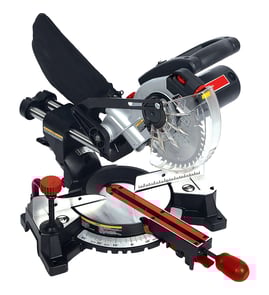
A Craftsman miter saw like model 137285350 is built from a cutting head (motor, blade, and guards), an angle-setting system (miter and bevel controls), and a work support system (fence, table, and clamp). These parts work together to make accurate crosscuts and angled cuts.
Main miter saw parts you will see
- Blade: does the cutting; mounts to the arbor.
- Upper and lower blade guards: help shield the blade; the lower guard retracts during a cut.
- Motor and switch/trigger: powers the blade and controls start/stop.
- Handle and pivot arm: lets you lower the blade smoothly into the workpiece.
- Fence: keeps the board square to the blade.
- Table/turntable: the rotating base that sets the miter angle.
- Miter lock knob/lever: locks the turntable at the selected miter angle.
Angle and depth controls (miter and bevel)
Most miter saws, including Craftsman models in this class, use these common controls:
- Bevel lock lever/knob: locks the saw head when you tilt for bevel cuts.
- Bevel scale and stops: helps repeat common bevel angles.
- Miter detent plate/stops: “click” positions for common miter angles.
- Depth stop (on some models): limits how deep the blade can cut.
Work support and safety-related parts
| Part | What it does | When it matters most |
|---|---|---|
| Workpiece clamp | Holds material against the fence/table | Small parts, trim, repeat cuts |
| Dust port/bag | Captures some sawdust | Indoor work, visibility |
| Spindle lock/arbor bolt | Secures blade for operation and blade changes | Blade replacement |
| Flat washers and lock nuts | Keep assemblies tight and aligned | Vibration, accuracy issues |
Why it matters
Knowing the names of the miter lock, bevel lock, fence, and guards helps you troubleshoot accuracy problems (out-of-square cuts, drifting angles) and identify the right replacement hardware when something loosens, breaks, or goes missing.
Helpful next step
If you are matching parts or confirming the exact configuration for your saw, use how to find your appliance model number (and what it means for parts) to verify you are shopping by the correct model identifier.
Last updated: February 2026
How to change a blade on a 10 inch miter saw?
To change the blade on a 10-inch miter saw like the Craftsman 137285350, unplug the saw, lock the head down, remove the blade bolt and outer washer, swap the blade (correct rotation), then reinstall and tighten the bolt while holding the spindle lock.
Safety first (do this every time)
- Unplug the saw (do not rely on the trigger switch).
- Wear cut-resistant gloves when handling the blade.
- Use eye protection; chips can fall when the guard is moved.
- Keep the saw head locked down so it cannot drop.
- Use the correct wrench or socket so you do not round the bolt.
Step-by-step: blade removal and installation
- Disconnect power and clear the work surface.
- Raise the blade guard enough to access the arbor bolt (most saws have a small guard access point or a guard that pivots up).
- Press and hold the spindle lock (arbor lock) to keep the blade from turning.
- Loosen the arbor bolt and remove the bolt and outer washer/flange.
- Many 10-inch miter saws use a left-hand thread arbor bolt, so you turn the bolt to the right (clockwise) to loosen and to the left (counterclockwise) to tighten.
- Remove the old blade, then seat the new 10-inch blade fully on the arbor.
- Confirm blade direction: match the arrow on the blade to the rotation arrow on the upper guard/housing.
- Reinstall the outer washer/flange and bolt.
- Hold the spindle lock and tighten the bolt firmly (snug plus a bit more; do not over-torque).
- Lower the guard, remove tools, and do a quick spin-by-hand check to ensure the blade clears the guard.
Quick reference: which way do I turn the bolt?
| Task | Typical 10-inch miter saw arbor bolt | What you do |
|---|---|---|
| Loosen to remove blade | Left-hand thread | Turn clockwise |
| Tighten after installing blade | Left-hand thread | Turn counterclockwise |
Why it matters
A blade installed backward or not fully seated can cause poor cuts, excessive vibration, and unsafe operation. Correct bolt direction is also important because many miter saws are designed so the bolt self-tightens during normal rotation.
Helpful related DIY reading
If you run into a damaged cord, loose connection, or a no-power issue while working on the saw, use how to repair broken or damaged wires video for safe, basic wiring repair practices.
Last updated: February 2026
How to unlock a Craftsman miter saw?
To unlock your Craftsman miter saw model 137285350, start with the transport (down) lock that holds the saw head for carrying. With the saw unplugged, relieve pressure on the lock by pressing the handle down slightly, then release the lock so the head can rise under control.
What to unlock first (most common situation)
On the 137285350, “unlock” usually means the saw head is pinned down for transport. Use this sequence:
- Unplug the saw.
- Hold the handle firmly.
- Press the head down slightly to take tension off the lock.
- Pull or press the transport lock control (pin or latch) to release it.
- Let the head rise slowly; do not let it snap up.
If you meant unlocking an adjustment (miter or bevel)
After the head is free, you only loosen the lock for the adjustment you are making, then tighten it again.
- Miter change (left/right): Loosen the miter lock, rotate the table to your angle, then re-tighten.
- Bevel change (tilt): Loosen the bevel lock, tilt to your angle, then re-tighten.
- Stuck adjustment: Clear sawdust around the lock area and try again with light pressure on the handle.
Quick reference
| What is “locked” | What you do | What you should feel |
|---|---|---|
| Saw head down for transport | Release the transport lock while holding the handle | Head rises smoothly under control |
| Turntable will not rotate | Loosen the miter lock | Table rotates without forcing |
| Head will not tilt | Loosen the bevel lock | Head tilts without binding |
Why it matters
Releasing the correct lock prevents forcing the pivot points and keeps the miter and bevel settings accurate, which helps your 137285350 make repeatable cuts.
For general safety guidance before adjusting or troubleshooting, use: are diy appliance repairs safe.
Last updated: February 2026