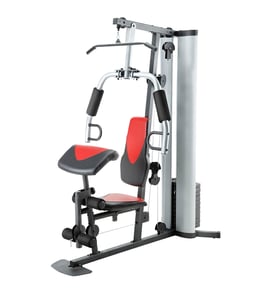

What are the most common issues with 1352?
The most common issues we see with the Weider 1352 weight system are loose or missing hardware, worn pivot points that cause wobble or squeaks, and damaged end caps that expose tubing edges. These problems usually show up as instability, noise during reps, or parts that no longer align smoothly.
Common problems and what they look like
- Loose frame joints: movement at bolted connections, shifting during presses or pulls
- Squeaks or binding at pivots: noise or rough motion where arms or linkages rotate
- Wobble or side-to-side play: often tied to worn bushings or hardware that has backed out
- Missing or cracked end caps: sharp tube ends, cosmetic damage, or caps falling off
- Stripped or mismatched bolts: hardware will not tighten fully or keeps loosening
Quick checks we recommend before replacing parts
- Re-tighten all fasteners evenly; snug each joint, then re-check after a short workout.
- Inspect pivot points for ovaled holes, cracked plastic, or metal-on-metal rubbing.
- Look for missing caps on tube ends and check for sharp edges.
- Confirm you are using the correct bolt type and length at each location.
Hardware and wear items you may need
| Symptom | Likely cause | Example part to check |
|---|---|---|
| Joint won’t stay tight | bolt backing out or wrong bolt | Hex bolt 013414 |
| Wobble at a pivot | worn bushing | Bushing 143843 |
| Exposed tube end | missing/damaged cap | Cap 115366 |
Why it matters
A weight system that shifts, squeaks, or binds is more than annoying; it changes your range of motion and can accelerate wear on the frame and pivot points. Keeping bolts tight and bushings/caps in good shape helps the 1352 feel stable and operate smoothly.
Last updated: March 2026
How do I find the model number on my 1352?
The model number is printed on a label attached to the Weider 1352 weight system frame. We typically see it on a main upright, the base frame near the floor, or on the rear stabilizer; match that label exactly when ordering parts.
Where to look on a Weider 1352
Check these common label locations first:
- Main front upright (near the top or mid-height)
- Base frame rail near the floor
- Rear stabilizer bar
- Under the seat or backrest support tube
- Near the weight stack shroud (if equipped)
What the model label looks like
Most fitness equipment labels include a few identifiers. Use the model number for parts lookup.
| Label item | What it’s used for | Example you might see |
|---|---|---|
| Model number | Correct parts and diagrams | 1352 |
| Serial number | Production tracking | Letters and numbers |
| Brand | Manufacturer name | Weider |
Tips to avoid ordering the wrong part
- Write the model number exactly as shown (including any dashes or extra digits)
- Take a clear photo of the label before you start disassembly
- If the label is worn, look for a stamped number on the frame tubing
- Compare your hardware to the parts list (bolt length and thread size matter)
Why it matters
Weider weight systems often share similar frames across different versions; using the exact model number ensures the right fasteners and frame hardware. If you’re replacing missing hardware, start by matching a known piece such as the hex bolt 013414.
Last updated: March 2026
What is the average lifespan of 1352?
A Weider 1352 weight system typically lasts 10 to 20 years with normal home use. Lifespan depends most on cable condition, pulley wear, and whether frame bolts stay tight; replacing worn hardware and bushings keeps the machine safe and smooth.
What wears out first
These items usually determine when performance drops:
- Cables and cable ends (fraying, broken strands)
- Pulleys and pivot points (noise, binding)
- Bushings (slop in arms and linkages)
- Frame hardware (bolts loosening, stripped threads)
- Upholstery (tears, compressed padding)
Maintenance that extends life
- Retighten frame bolts periodically, especially after moving the unit
- Keep pivot points clean and dry; wipe sweat off metal surfaces
- Inspect cables before each workout for fraying or kinks
- Replace worn bushings and caps to reduce play and rattles
Quick “replace now” checklist
| Symptom | What it usually means | What to do |
|---|---|---|
| Clicking or popping at pivots | Loose or worn hardware | Check and retighten bolts; replace as needed |
| Excessive wobble in arms | Worn bushing | Replace the bushing |
| Metal-on-metal rubbing | Missing cap/spacer | Replace missing caps/spacers |
Why it matters
A weight system can look fine but still be unsafe if a pivot bushing is worn or a bolt is stretched. If you notice looseness at a joint, a common wear item to check is the bushing 143843.
Last updated: March 2026
