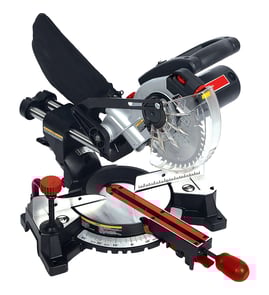

Is the Delta ShopMaster suitable for beginners?
Yes. Delta ShopMaster tools are typically a good fit for beginners doing basic DIY projects because they are straightforward to use and budget-friendly; just plan to spend extra time on setup, alignment, and safe cutting habits, especially on an entry-level saw like the Delta MS250 10-inch compound power miter saw.
What beginners usually like about ShopMaster-style saws
- Simple controls and common miter/bevel adjustments
- Good capability for trim, framing, and general crosscuts
- Portable enough for a garage or jobsite-style workspace
- Lower upfront cost than pro-grade miter saws
- Easy to find common wear items (blades, brushes, switches) by model number
Where beginners need to be more careful
Entry-level miter saws can cut very well, but they often require more user attention to keep cuts consistent and safe.
- Setup matters: square the fence, verify the miter scale, and confirm the blade is 90 degrees to the table
- Work support: use stable stands or outfeed support for long boards
- Blade choice: a sharp, fine-tooth blade improves cut quality and reduces grabbing
- Technique: keep hands out of the cut path and let the blade reach full speed before cutting
- Dust control: connect a shop vacuum when possible and wear eye and hearing protection
Quick “beginner suitability” checklist
| What you need | ShopMaster-style tools usually deliver | What you may need to add |
|---|---|---|
| Basic crosscuts and miters | Yes | Better blade for cleaner trim cuts |
| Repeatable accuracy | Often good after tuning | Stop block, clamp, and careful calibration |
| Strong safety habits | Depends on the user | Push/hold-down methods, proper support |
| Long-term daily use | Not the main focus | Consider pro-grade if you cut every day |
Why it matters
A miter saw is one of the fastest ways to make accurate cuts, but it is also one of the easiest tools to misuse. For a beginner, choosing a straightforward saw like the Delta MS250 and pairing it with careful setup, a quality blade, and consistent clamping habits is what drives safe, clean results.
Finding parts and model-specific help
When you need replacement parts (like a switch, brush set, guard components, or hardware), match by the exact model number MS250. Start with the parts list for this model, or search by model on Sears PartsDirect.
Last updated: February 2026
What kind of motor does the Delta ShopMaster have?
On the Delta MS250 10-inch compound power miter saw, the motor is a corded 120V AC motor intended for portable cutting; many saws in this class are labeled 15 amps on the tool data plate. The exact motor design (for example, universal vs. induction) is identified on your saw’s rating label.
What to look for on the motor label
Unplug the saw, then check the rating label on the motor housing, rear handle area, or base. You are looking for:
- Voltage (typically 120V)
- Current draw in amps (often 15A on portable miter saws)
- No-load speed (RPM)
- Duty rating and insulation class
- Any wording such as “universal,” “induction,” or “brushless”
Common motor types used on miter saws
Most 10-inch corded compound miter saws use one of these motor styles; the label tells you which you have.
| Motor type | How it’s commonly described | What it means for you |
|---|---|---|
| Brushed motor | Mentions brushes or shows brush caps | Brushes are wear items; sparking can increase as brushes wear |
| Brushless motor | Often labeled “brushless” | Typically lower maintenance; electronics control speed |
| Induction motor | Often labeled “induction” | Usually quieter and smooth; more common on heavier shop tools |
Quick checks that help identify it
These simple observations often match what the label will confirm:
- Brush access caps on the motor housing usually indicate a brushed motor.
- A heavier, quieter motor with slower start-up often points to induction.
- A motor that explicitly says “brushless” is brushless.
Why it matters
Knowing the motor type helps you choose the right troubleshooting path for issues like weak power, overheating, or excessive sparking, and it helps you match replacement electrical parts correctly.
For parts lookup by model number MS250, start with the model page and search our catalog on Sears PartsDirect.
Last updated: February 2026
What's the difference between a regular miter saw and a compound miter saw?
A regular miter saw pivots left and right to make angled (miter) cuts, while a compound miter saw also tilts the blade to make bevel cuts. Your Delta MS250 is a 10-inch compound power miter saw, so it handles both miter angles and bevel angles for more versatile trim and framing work.
Quick comparison
| Feature | Regular miter saw | Compound miter saw (like Delta MS250) |
|---|---|---|
| Miter cuts (left/right) | Yes | Yes |
| Bevel cuts (tilt) | No | Yes (single or dual bevel depending on model) |
| Best for | Simple angle cuts | Crown molding, complex trim, multi-angle joints |
What you can do with each saw
- Regular miter saw: crosscuts and basic miter cuts for baseboard, picture frames, and simple casing.
- Compound miter saw: everything above, plus bevel cuts for crown molding, nested trim, and compound angles.
- Compound cuts: a compound saw can combine a miter angle and a bevel angle in one setup.
How to choose for your projects
- Choose a regular miter saw if you mostly cut 90-degree crosscuts and occasional left/right miters.
- Choose a compound miter saw if you install crown molding, cut bevels for trim returns, or want fewer workarounds.
- If you cut a lot of wide boards, consider whether you need a sliding miter saw (sliding is separate from compound).
Why it matters
A compound miter saw reduces the need to flip material or use jigs to create bevels. That usually means faster setups, more consistent joints, and cleaner-looking trim work, especially when you are matching corners.
Parts and support
If you are maintaining your MS250 (blade guard, fence alignment, switch, brushes, or power cord), start with the model parts list for MS250. If you need to search beyond what is listed, we recommend using Sears PartsDirect and searching by model number.
Last updated: February 2026