 Owner’s manual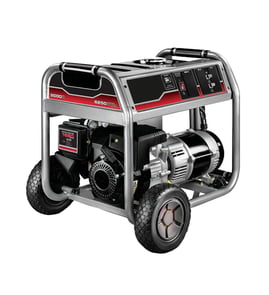

How old is my Generac generator by serial number?
To determine the age of your Generac GP7500E-5943-3 generator, use the serial number on the generator’s data label and look up the manufacturing date using the identification guidance in the owner's manual. The serial number is the key identifier used to match your unit to its production date.
Where to find the serial number
On most portable Generac generators, the serial number is printed on a data label attached to the frame or engine area.
Check these common spots:
- Side rail of the frame near the control panel
- Near the recoil starter or engine shroud
- On or near the alternator housing
- Inside the control panel area (behind an access cover)
- On the engine block label (if equipped)
How to use the serial number to estimate age
Once you have the serial number, use it exactly as printed (including letters and dashes). Then:
- Compare it to the identification section in the manual
- Record both the model number (GP7500E-5943-3) and serial number for parts matching
- If you are ordering repair parts, match by model first, then confirm by serial when variations exist
Quick checklist
| What to record | Why it matters |
|---|---|
| Model number: GP7500E-5943-3 | Ensures the correct parts diagrams and lists |
| Serial number | Identifies production run and configuration |
| Engine family info (if shown) | Helps confirm engine-specific parts |
Why it matters
Generac sometimes makes running changes during production. Knowing the serial number helps us match the correct generator parts (for example, electrical items like a voltage regulator or mechanical items like a fuel shut-off valve) to your exact build.
Last updated: February 2026
What is the most common problem with generac generators?
For the Generac GP7500E-5943-3 generator, the most common no-start complaint is a fuel delivery issue (stale fuel, closed valve, clogged carburetor passages) or an ignition/electrical starting issue (weak battery, loose connections). Consistent maintenance prevents most “won’t start” and “runs rough” problems; see the GP7500E-5943-3 owner's manual for the exact service intervals.
Most common issues we see (and what to check first)
- Fuel problems: old gasoline, water in fuel, clogged fuel path, or the shut-off is closed
- Battery and starting circuit: weak battery, corroded terminals, loose ground, bad starter relay
- Low oil or oil sensor shutdown: oil level low or unit not level
- Spark/ignition issues: fouled plug, damaged ignition lead, failing coil
- Output problems: tripped breaker, bad receptacle, voltage regulation issues
Quick troubleshooting checklist (safe, fast checks)
- Confirm the generator is outside and on level ground.
- Verify fresh fuel and that the fuel shut-off is open; if the valve leaks or won’t open/close smoothly, replace the Generac generator fuel shut-off valve 0J0974.
- Check oil level and reset any tripped breakers on the control panel.
- Inspect battery terminals for corrosion; tighten connections.
- If it cranks but will not fire, check spark plug condition and ignition lead seating.
Common symptoms and likely causes
| Symptom | Most likely cause | What to do next |
|---|---|---|
| Won’t start after storage | Stale fuel or varnished fuel system | Drain/replace fuel; clean fuel path; run with fresh fuel |
| Cranks slowly or clicks | Weak battery or poor connections | Charge/replace battery; clean and tighten terminals |
| Starts then dies | Fuel restriction or low oil shutdown | Confirm fuel flow; verify oil level and level surface |
| Runs but no power at outlets | Breaker tripped, bad receptacle, voltage regulation | Reset breaker; inspect outlet; test output with a meter |
Why it matters
Most “common problems” trace back to fuel and basic electrical starting health. Fixing those early protects the alternator, voltage regulator, and control panel from stress caused by repeated hard-start attempts.
Last updated: February 2026
Can a 7500-watt generator run a whole house?
A 7,500-watt portable generator like the Generac GP7500E-5943-3 can power many homes’ essentials (refrigerator, lights, internet, TV, sump pump), but it typically will not run an entire all-electric house at once. The key is managing starting watts and only running the highest-priority loads. See the wattage and connection guidance in the owner's manual.
What a 7,500-watt generator can usually handle
Most households can run several circuits at the same time if you avoid stacking multiple high-starting loads.
Common “essential” loads that usually work well:
- Refrigerator or freezer (cycles on and off)
- LED lighting and phone chargers
- TV, modem/router, small electronics
- Gas furnace blower (if applicable) or boiler controls
- Sump pump (depends on pump size and starting surge)
What often pushes it over the limit
These loads commonly exceed capacity due to high running watts, high starting watts, or both:
- Central air conditioner or heat pump
- Electric water heater
- Electric range/oven
- Electric dryer
- Well pump (larger pumps can surge hard)
How to size it correctly (simple method)
- List the items you want to run.
- Add running watts for everything that will be on together.
- Add starting watts for the single largest motor load (fridge, pump, AC) because that surge is what trips breakers.
Quick rule-of-thumb table
| Goal | Typical fit for 7,500 watts | What you do |
|---|---|---|
| Power essentials | Yes | Rotate big loads (fridge, sump pump) so they do not start together |
| Run “most of the house” | Sometimes | Use a transfer switch and strict load management |
| Run everything like normal | No | Step up to a larger standby-style system |
Why it matters
Overloading a generator can trip its breaker, cause low voltage (which can damage motors and electronics), and shorten generator life. Good load planning keeps power stable and protects appliances.
Helpful tips for safer, steadier power
- Start the biggest motor load first, then add smaller loads.
- Avoid running two big motor loads at the same time.
- Use heavy-duty cords sized for the amperage and distance.
- If outlets are worn or intermittent, inspect the receptacle; the generator receptacle, 20-amp, 120-volt 0D4968 is a common service part.
- Keep up with maintenance (oil, plug, air filter); the maintenance kit 0J586200SM can help simplify tune-ups.
Last updated: February 2026