
Should scroll saw teeth point up or down?
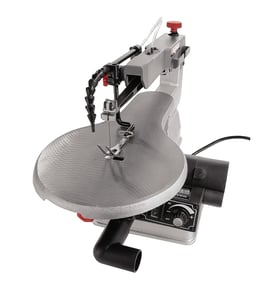
For the Craftsman scroll saw model 351224360-STAND, the blade teeth should point down (toward the table) so the saw cuts on the downstroke. This gives you better control, cleaner cuts, and helps prevent the blade from grabbing and snapping.
Quick rule to remember
A scroll saw blade should cut into the table.
- Teeth down: correct for most scroll saw cutting
- Teeth up: usually causes bouncing, rough cuts, and frequent blade breakage
- If the blade is installed upside down, the saw may barely cut or it may lift the workpiece
How to check blade direction (before you cut)
- Unplug the saw.
- Look closely at the teeth; they should “lean” downward.
- Lightly drag a scrap of wood against the blade; it should feel like it wants to pull the wood down.
- Make sure the blade is properly tensioned; a loose blade wanders and breaks more easily.
Common symptoms and what they usually mean
| What you notice | Most likely cause | What to do |
|---|---|---|
| Wood lifts or chatters on the table | Teeth facing up | Reinstall blade with teeth down |
| Saw won’t cut, just burns or rubs | Dull blade or wrong blade type | Replace with a fresh blade matched to material |
| Blade breaks often | Upside-down blade, too much feed pressure, or low tension | Correct direction, increase tension, slow feed |
Why it matters
Scroll saws are designed to cut on the downstroke so the work stays flat on the table. With teeth down, you get safer handling, tighter curves, and less tear-out on the top surface.
Related DIY help
If you are troubleshooting power, switches, or wiring issues while working on the saw stand or motor, use our guide: how to use a multimeter to test electrical parts video.
Last updated: February 2026
Can you make straight cuts with a scroll saw?
Yes. You can make straight cuts with a Craftsman scroll saw like model 351224360-STAND, but it takes more setup and technique than a saw designed for ripping; scroll saw blades naturally want to wander, so short straight cuts are realistic, while long perfectly straight cuts are harder.
Best practices for straighter cuts
- Use a wider, stiffer blade (skip-tooth or reverse-tooth styles often track better than very fine blades).
- Increase blade tension to reduce deflection (too little tension is a common cause of drift).
- Feed the wood slowly and steadily; forcing the cut bends the blade.
- Keep the workpiece flat on the table and maintain consistent downward pressure.
- Let the blade do the work; steer gently instead of twisting the wood sharply.
- Start with a square edge and mark a clear cut line (pencil plus a knife line helps on hardwood).
Simple ways to guide a straight line
A scroll saw does not typically use a rip fence like a table saw, but you can still guide straight cuts.
| Method | What it’s good for | Notes |
|---|---|---|
| Clamp-on straightedge | Short straight cuts | Keep the wood edge tight to the guide; do not pinch the blade. |
| Marked line plus slow feed | General straight cuts | Best when the cut is not long and the stock is thin. |
| Practice cuts in scrap | Dialing in blade choice and tension | Helps you learn how your blade “pulls” in different woods. |
Common reasons a “straight” cut drifts
- Blade tension is low.
- Blade is too fine for the thickness or hardness of the wood.
- Feed rate is too fast.
- Blade is dull, bent, or installed slightly off.
- You are twisting the workpiece to correct the line instead of easing the feed and re-centering.
Why it matters
If you are cutting joinery, inlays, or tight-fitting parts, a drifting blade creates gaps and extra sanding. Getting tension, blade selection, and feed rate right usually improves straightness more than trying to muscle the cut.
For more DIY safety basics before adjusting tension or changing blades, use are diy appliance repairs safe.
Last updated: February 2026
How thick of wood can a scroll saw cut through?
Most scroll saws, including Craftsman scroll saw setups like model 351224360-STAND, cut best in wood up to about 1-1/2 inches thick. With the right blade, a slow feed rate, and good blade tension, many users also cut up to about 2 inches in softer woods, but thicker stock reduces accuracy and increases blade breakage.
Practical thickness guidelines
- 1/4 to 3/4 inch: easiest range for tight curves, fretwork, and clean edges
- 3/4 to 1-1/2 inches: common for name plaques and thicker craft parts; use a slower feed
- 1-1/2 to 2 inches: possible for straight or gentle curves; expect more burning and drift
- Over 2 inches: not a typical scroll saw job; a band saw is usually the better tool
What affects the maximum thickness most
- Blade type and size: thicker, coarser blades clear sawdust better in thick stock
- Wood species: hardwoods (oak, maple) cut “thinner” than softwoods at the same thickness
- Blade tension and tracking: low tension increases wandering and breakage
- Feed rate: pushing too fast overheats the blade and causes burning
- Cut style: tight inside curves require thinner stock than straight cuts
Quick reference table
| Wood thickness | Typical result on a scroll saw | Best use case |
|---|---|---|
| Up to 3/4 in. | Clean, controllable cuts | Detailed patterns, tight curves |
| 3/4 to 1-1/2 in. | Good with slower feed | General craft work |
| 1-1/2 to 2 in. | Slower, more drift/burning | Simple shapes, gentle curves |
| Over 2 in. | Inefficient, rough results | Switch tools (often band saw) |
Why it matters
Staying in the “sweet spot” thickness helps your Craftsman scroll saw cut straighter, reduces blade breakage, and improves pattern accuracy, especially on inside cuts and tight-radius turns.
For safe DIY habits while cutting thicker stock, follow the guidance in are diy appliance repairs safe.
Last updated: February 2026
Can I make money with a scroll saw?
Yes, you can make money with a scroll saw by selling small, repeatable projects and custom work; a Craftsman 351224360-STAND scroll saw is well-suited for items like ornaments, name plaques, and simple craft parts where your profit comes from efficient cutting, clean sanding, and consistent pricing.
Best ways to earn with a scroll saw
Focus on products that are fast to produce, easy to ship, and simple to personalize.
- Personalized name signs and nursery decor
- Holiday ornaments and layered silhouettes
- Keychains, magnets, and small wall hangings
- Inlay style coasters and trivets (simple patterns)
- Craft show customizations (names, dates, short quotes)
- Small batch parts for other makers (blanks, shapes)
What to price and track (so it stays profitable)
Your profit is usually decided by time per piece and material waste, not just the selling price.
| Cost or metric to track | What to include | Why it matters |
|---|---|---|
| Materials | wood, blades, sandpaper, finish | Protects margin on every item |
| Time per item | cutting, sanding, finishing, packing | Sets a realistic hourly rate |
| Scrap rate | miscuts, tear-out, broken blades | Helps you choose better patterns |
| Overhead | electricity, tool wear, shop supplies | Prevents underpricing |
Practical tips to increase your return
These steps help you sell more while reducing rework.
- Standardize 3 to 5 “core” designs and produce them in batches.
- Offer personalization as an add-on (name/date) with a clear upcharge.
- Use templates and repeatable setups to keep cuts consistent.
- Plan finishing time; paint and clear coats often take longer than cutting.
- Keep blade changes and tension checks routine to avoid drift and breakage.
Why it matters
Scroll saw income is realistic when you treat it like a small production process: repeatable patterns, predictable material costs, and a consistent quality standard. That approach turns a hobby tool into a steady side revenue stream.
For more help with model identification when listing or ordering items, use how to find your appliance model number (and what it means for parts).
Last updated: February 2026
Why did my scroll saw stop working?
If your Craftsman scroll saw model 351224360-STAND stopped working, the most common causes are a power supply problem, a failed switch, a blown fuse/overload (if equipped), or a loose blade or jam that stalls the drive. Start with quick electrical checks, then inspect the blade and moving parts.
Quick checks first (fastest fixes)
- Confirm the outlet works by testing it with another tool or lamp.
- Reset the breaker or GFCI if it tripped.
- Unplug the saw and inspect the power cord for cuts, crushed spots, or a loose plug.
- Make sure the on/off switch is fully engaged and not sticking.
- Remove the workpiece and check for a blade bind (wood pinching the blade) or debris packed in the lower area.
Blade tension and feed rate (common “it just stopped” causes)
A scroll saw can stall and feel “dead” if the blade is too loose or the cut is being forced.
- Set blade tension so the blade is straight and does not deflect easily side-to-side.
- Reduce feed pressure; let the teeth do the work.
- Use the right blade for the material thickness (fine-tooth for thin stock, coarser for thicker stock).
- Check that the blade is installed in the correct direction (teeth typically point down toward the table on most scroll saws).
Electrical troubleshooting (unplug first)
If the outlet is good and the saw still will not run, focus on the electrical path.
| Symptom | Most likely cause | What to do next |
|---|---|---|
| No sound, no movement | Bad switch, cord, or internal connection | Inspect cord and switch; test continuity with a meter |
| Hums but won’t move | Blade jam, seized linkage, or motor issue | Clear jam; check for free movement by hand |
| Runs then stops | Overload/thermal trip (if equipped) or overheating | Let it cool; reduce load; check ventilation |
For step-by-step meter basics, use how to use a multimeter to test electrical parts video. For fuse checks, use how to tell if a fuse is blown.
Why it matters
A stalled blade or failing switch can overheat the motor and damage internal wiring. Catching a bind, loose blade, or electrical fault early helps protect the motor and keeps cuts accurate.
Last updated: February 2026