
Can you cut a 2x4 with a table saw?
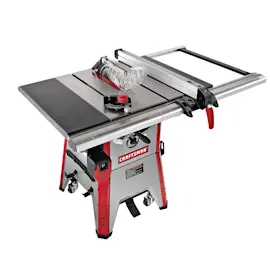
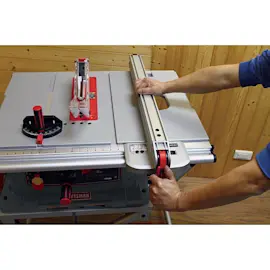
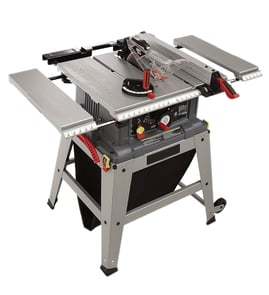
Yes. You can cut (rip or crosscut) a 2x4 with a Craftsman 17155 table saw as long as the board is straight enough to ride the fence and table safely, and you use proper anti-kickback technique with push tools and solid outfeed support.
Safe setup for cutting a 2x4
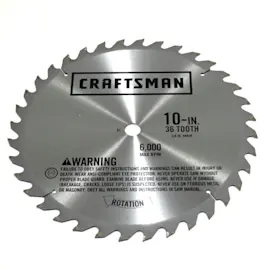
- Use a sharp, appropriate blade (rip blade for ripping; combination blade for general cuts).
- Set blade height so the gullets clear the top of the 2x4 (typically about 1/4 to 3/8 inch above the wood).
- Keep the fence parallel to the blade; a misaligned fence increases burn and kickback risk.
- Support the board before and after the cut (infeed and outfeed) so it cannot tip or twist.
- Use a push stick or push block when your hands would get close to the blade.
- Stand slightly to the side of the blade path, not directly behind the board.
Ripping vs. crosscutting: what changes
| Cut type | What you’re doing | Best control tool | Common risk |
|---|---|---|---|
| Rip cut | Cutting along the length (with the grain) | Rip fence + push stick | Kickback from pinching/twisting |
| Crosscut | Cutting to length (across the grain) | Miter gauge or sled | Binding if the board shifts |
Why 2x4s can be tricky
Construction lumber is often wet, bowed, or twisted. As you cut, internal stress can close the kerf and pinch the blade, which is a common cause of kickback and rough cuts.
If your cuts look rough or the angle is off
Use these targeted checks:
- Verify the blade is square to the table for 90-degree cuts.
- Check the fence for toe-in or toe-out.
- Confirm the miter gauge is set accurately.
For step-by-step troubleshooting, use table saw bad angle cuts.
Last updated: January 2026
What are the common table saw mistakes?
For the Craftsman 17155 table saw, the most common mistakes are unsafe hand placement, freehand cutting, poor blade and fence setup, and skipping basic safety devices. These errors cause kickback, binding, rough cuts, and loss of control, even when the saw itself is working correctly.
Common mistakes we see most often
- Cutting freehand instead of using the rip fence or a miter gauge.
- Using the rip fence as a stop for crosscuts (this can trap the workpiece and cause kickback).
- Setting the blade too high above the material (more exposed blade increases risk and tear-out).
- Standing directly behind the board during a rip cut (puts you in the kickback line).
- Reaching near the blade to clear offcuts or scraps while the blade is moving.
- Skipping push sticks or push blocks on narrow rips.
- Removing or not using the riving knife, splitter, or anti-kickback pawls when the cut allows it.
Quick setup checks that prevent bad cuts and kickback
Before you cut, we recommend these basics:
| What to check | What “good” looks like | What happens if it’s off |
|---|---|---|
| Blade height | Gullets just above the top surface of the wood | More tear-out and more exposed blade |
| Fence alignment | Parallel to the blade | Burning, binding, kickback |
| Miter gauge use | Used for crosscuts, not the fence | Workpiece can pinch and launch |
| Feed technique | Steady feed, no forcing | Motor bogs, blade deflects, rough cut |
Why it matters
Most “table saw problems” are actually technique or alignment issues. Fixing the setup and using the right guide (fence vs. miter gauge) improves cut quality and reduces the chance of kickback on the Craftsman 17155.
Helpful DIY guides
- Use how to use a table saw safely to review stance, hand position, and kickback prevention.
- If your cuts are off-angle, follow table saw bad angle cuts to check alignment and adjustment points.
- For blade changes and correct installation, use how to replace a table saw blade.
Last updated: January 2026
Can I put a dado blade on any table saw?
No. You can only use a dado blade on a table saw that is designed and rated for dado use. On a Craftsman 17155 table saw, compatibility comes down to arbor size and usable arbor length, maximum stack width, and having the right insert and safe guarding setup.
What determines dado compatibility
A dado stack is wider than a standard blade, so the saw must clamp the stack securely and provide clearance.
- Arbor diameter must match the dado set bore (many are 5/8 inch)
- Arbor length must allow the full stack plus washers and the arbor nut to fully engage threads
- Maximum dado width rating must meet your target groove width
- Throat plate opening must clear the wider cutter (a dado insert is typically needed)
- Guard and riving knife system must be configured safely for the cut type
Quick fit check (before you install)
- Unplug the saw; remove the standard blade
- Measure exposed threaded arbor length from the inner flange to the end of the threads
- Add up your planned stack width (blades plus chippers) plus any required washers
- Confirm the arbor nut threads on several full turns and tightens with the stack fully seated
- Verify you have an insert that provides clearance for the dado width
Common outcomes
| What you notice | What it means | Practical fix |
|---|---|---|
| Arbor nut barely catches threads | Stack is too wide for the arbor | Use fewer chippers or a thinner dado set |
| Cutter rubs the insert | Insert opening is too narrow | Use a dado insert sized for the width |
| Rough cut or burning | Alignment or dull cutters | Align fence and blade; use sharp cutters |
Why it matters
If the arbor nut cannot fully clamp the stack, the dado set can loosen or wobble; that increases kickback risk and can damage the arbor bearings.
Helpful DIY guidance
Use how to replace a table saw blade for safe blade removal and installation steps, and how to use a table saw safely for setup and cutting practices.
Last updated: January 2026
How thick can an 8 1/4 table saw cut?
An 8-1/4 inch table saw typically through-cuts about 2-1/2 inches at 0° (90° cut), and about 1-3/4 inches at 45° bevel. For the Craftsman 17155 table saw, confirm the exact capacity by measuring blade height at full raise on your saw.
Typical cutting depth for an 8-1/4 inch blade
Actual depth varies with blade diameter, tooth height above the table, and how much the blade can raise.
- 0° bevel (straight cut): about 2-1/2 in.
- 45° bevel: about 1-3/4 in.
- Thin-kerf vs. full-kerf blades: cut width changes, not max depth
- Worn height mechanism or packed sawdust: can reduce max blade lift
| Setup | Typical max thickness | What changes it most |
|---|---|---|
| 0° bevel | ~2-1/2 in. | Max blade lift above table |
| 45° bevel | ~1-3/4 in. | Bevel angle reduces effective height |
How to measure your Craftsman 17155 cut capacity (fast and accurate)
Use this method to get the real number for your saw and blade.
- Unplug the saw.
- Raise the blade to full height.
- Measure from the tabletop to the highest tooth tip.
- Set bevel to 45°, raise fully again, and re-measure.
- If the blade will not raise smoothly or fully, use table saw can't adjust the blade height.
Why it matters
Knowing the true max depth helps you choose the right approach for thick stock (avoid binding and kickback risk) and decide when you need a different tool or a two-pass technique.
For blade-related setup that affects real-world performance, use how to replace a table saw blade.
Last updated: January 2026