
Can you make straight cuts with a miter saw?
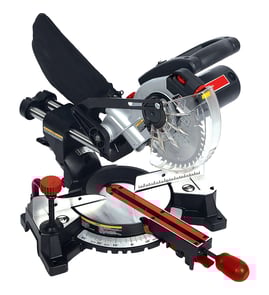
Yes. With your Delta MB-4B-2-A 10-inch compound miter saw, you can make straight (square) crosscuts by setting the miter and bevel to 0 degrees and holding the workpiece firmly against the fence; that is the saw’s primary “straight cut” use.
What “straight cut” means on a miter saw
A miter saw makes straight cuts across the width of a board (crosscuts). It is not designed for long straight cuts down the length of a board (rips).
| Cut type | Can a miter saw do it? | Typical use |
|---|---|---|
| Square crosscut (90 degrees) | Yes | Cutting boards to length |
| Miter cut (angled across face) | Yes | Trim, frames |
| Bevel cut (angled through thickness) | Yes (compound saw) | Crown molding, trim |
| Rip cut (lengthwise) | No (not recommended) | Use a table saw or circular saw with a guide |
How we recommend making a straight, square cut
- Set miter to 0 degrees and lock it.
- Set bevel to 0 degrees and lock it.
- Place the board flat on the table and tight to the fence.
- Support long stock with outfeed support so it stays flat.
- Let the blade reach full speed, then lower smoothly without forcing.
Quick checks if your “straight” cuts are not square
- Fence alignment: A bumped fence can throw off 90 degrees.
- Blade condition: A dull blade can wander and burn.
- Workpiece movement: If the board lifts or shifts, the cut will be off.
- Technique: Twisting the handle while cutting can pull the blade.
- Material issues: Warped lumber will not sit flat to the fence.
Why it matters
Square cuts are the foundation for accurate joinery and tight trim corners. When the MB-4B-2-A is set to 0 degrees and the stock is held firmly, it produces repeatable, straight crosscuts with minimal layout work.
For general DIY safety reminders before adjusting or troubleshooting, we recommend reviewing are diy appliance repairs safe.
Last updated: February 2026
How thick of wood can you cut with a Delta MB-4B-2-A?
On the Delta MB-4B-2-A 10-inch compound miter saw, the maximum one-pass thickness is 4 inches for common crosscuts. Capacity changes with angle: at 0° miter and 0° bevel it handles up to 4 in. x 12 in. stock; at 45° miter and 0° bevel it handles up to 4 in. x 8 in.
Cutting capacity at common settings
Use these as your planning baseline for maximum thickness and width.
- 0° miter, 0° bevel: up to 4 in. thick (about 4 in. x 12 in.)
- 45° miter, 0° bevel: up to 4 in. thick (about 4 in. x 8 in.)
- Bevel cuts: capacity drops compared to 0° bevel
- On-edge cuts: limited by fence height and clamp clearance
- Over-capacity stock: make a controlled cut, then flip the board to finish (only if it can be clamped securely)
Quick reference table
| Saw setting | Max thickness | Typical max crosscut width |
|---|---|---|
| 0° miter / 0° bevel | 4 in. | 12 in. |
| 45° miter / 0° bevel | 4 in. | 8 in. |
Why it matters
Staying within the MB-4B-2-A’s rated capacity reduces binding and kickback risk, helps the blade maintain speed in hardwood, and improves cut accuracy.
If the saw struggles during thick cuts
- Use a sharp 10-inch blade matched to the material (fine-tooth for trim, fewer teeth for framing)
- Let the blade reach full speed before entering the cut
- Clamp the workpiece firmly and support long boards
- Clean pitch buildup from the blade and check for a dragging lower guard
- If power seems intermittent, use how to use a multimeter to test electrical parts video to check the cord, switch, and connections
Last updated: February 2026
How to tilt a Delta miter saw?
To tilt (bevel) a Delta MB-4B-2-A 10-inch compound miter saw, we unlock the bevel mechanism, set the bevel angle on the scale, then lock it back down so the saw head cannot move during the cut. Always verify the angle with a square before cutting.
Steps to tilt the saw (bevel adjustment)
- Unplug the saw or remove the battery pack (if equipped) before adjusting.
- Locate the bevel lock (commonly a lever or knob at the rear or side of the pivot).
- Loosen the bevel lock and support the saw head with one hand.
- Tilt the saw head left or right to the desired bevel angle using the bevel scale.
- Tighten the bevel lock firmly.
- Make a test cut on scrap and confirm the bevel with a combination square.
If you meant “tilt” as in moving the fence
Some Delta miter saws also allow fence adjustment for bevel clearance. If your cut requires it:
| Adjustment | What you loosen | What it changes | When to use it |
|---|---|---|---|
| Bevel tilt | Bevel lock | Blade angle vs. table | Bevel cuts (0 to common angles like 45) |
| Fence position | Fence lock knobs/bolts | Fence location/clearance | Wide bevel cuts, preventing blade contact |
Common problems and quick fixes
- Saw head drifts after locking: tighten the bevel lock more; recheck for sawdust on the bevel mating surfaces.
- Bevel scale seems inaccurate: use a square to set true 0 degrees, then rely on the square for critical angles.
- Fence blocks bevel travel: reposition the fence (if adjustable) and re-tighten evenly.
- Hard to tilt: clean pitch and dust from pivot points; check for bent hardware.
Why it matters
A locked, verified bevel setting prevents the saw head from shifting mid-cut, which improves accuracy and reduces binding, kickback risk, and premature wear on the blade and pivot hardware.
For general DIY safety practices before servicing or adjusting tools, follow are diy appliance repairs safe.
Last updated: February 2026
What should you never cut with a miter saw?
On a Delta MB-4B-2-A 10-inch compound miter saw, never cut material you cannot fully control and support, or material the saw and blade are not designed for. These situations commonly lead to binding, kickback, broken blades, and serious hand or eye injuries.
Never cut these materials or setups
- Freehand cuts (work not tight to the fence and table)
- Small pieces you cannot clamp safely (especially short offcuts)
- Round stock (dowel, pipe) unless it is secured in a proper jig
- Warped, twisted, or badly bowed lumber that rocks on the table
- Loose bundles (multiple boards stacked without clamping)
- Masonry products (stone, brick, concrete, tile)
- Metal unless you are using a metal-rated saw and the correct abrasive or metal-cutting blade
What we recommend instead (safer options)
- Clamp the workpiece and keep it flat on the table and tight to the fence.
- Use a stop block and clamp for repeat cuts instead of holding short pieces by hand.
- For very small parts, cut a longer board first, then trim to final length using a safer method.
- For metal or masonry, use the correct tool (cutoff saw, angle grinder, tile saw) and the correct wheel or blade.
Quick safety checklist before you pull the trigger
| Check | What “good” looks like | Why it matters |
|---|---|---|
| Work support | Board is fully supported and stable | Prevents pinching and binding |
| Fence contact | Work is tight to the fence | Reduces twist and kickback |
| Clamping | Hands are not near the blade path | Prevents hand injuries |
| Blade match | Blade type matches the material | Prevents tooth loss and overheating |
Why it matters
A miter saw is built for controlled crosscuts and miters. When the workpiece can move, roll, or pinch the blade, the saw can pull the material (or your hand) into the blade path in a fraction of a second.
For general DIY safety best practices, we recommend reviewing are diy appliance repairs safe for a quick safety mindset that also applies to power tool work.
Last updated: February 2026
What size blade does a Delta miter saw use?
The Delta MB-4B-2-A is a 10-inch compound miter saw, so it uses a 10-inch (10 in.) blade. For best results, match the blade’s arbor size and tooth count to your cutting needs (trim, framing, or fine finish work).
How to confirm the blade fits your saw
Even with the correct 10-inch diameter, a blade must match key fit specs.
- Blade diameter: 10 inches
- Arbor (center hole) size: commonly 5/8 inch on many 10-inch miter saws
- Kerf (thickness): thin-kerf or full-kerf; choose based on motor power and cut quality
- Max RPM rating: blade rating should meet or exceed the saw’s no-load speed
- Tooth count: more teeth for smoother cuts; fewer teeth for faster rough cuts
Quick blade selection guide
| What you’re cutting | Typical tooth count (10-inch blade) | What to expect |
|---|---|---|
| Framing lumber | 24 to 40T | Faster cuts, rougher finish |
| General purpose | 40 to 60T | Balanced speed and finish |
| Trim and molding | 60 to 80T | Smoother finish, slower feed |
Why it matters
Using the correct 10-inch blade and the correct arbor size helps prevent wobble, poor cut quality, and unsafe operation. A blade with the wrong RPM rating or fit can also increase vibration and wear on the spindle and bearings.
Helpful DIY reference
If you’re troubleshooting power issues before blaming the blade, we recommend checking your electrical supply and switch wiring using a meter; see how to use a multimeter to test electrical parts video.
Last updated: February 2026