Installation guide
 Owner’s manual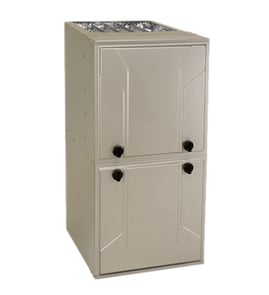



How do I find out what model my furnace is?
Your Icp gas furnace model number is on the rating plate, which for model N9MSE0601714A1 is located on the blower door. Turn off power to the furnace before opening panels, then copy the full model number exactly as shown in the owner's manual.
Where to look on the furnace
On N9MSE0601714A1, the rating plate is on the blower door (inside the cabinet). You may need to remove the main access door to see it.
- Shut off electrical power at the furnace switch or breaker.
- Remove the access door (keep screws in a cup so they do not get lost).
- Look for a label marked rating plate.
- Write down the model number and serial number exactly.
- Reinstall the door fully; many furnaces will not run if the door is not seated (door safety switch).
What to record (and why)
Record both numbers; the model identifies the correct parts list, and the serial number helps match production details.
| Item to record | Example format | Why it matters |
|---|---|---|
| Model number | N9MSE0601714A1 | Ensures correct part fit and diagrams |
| Serial number | Letters and numbers | Helps match exact configuration |
Why it matters
Using the exact model number prevents ordering the wrong ignition, safety, or control parts. For example, common furnace components that must match the model include the hot surface igniter, limit switches, and the electronic control board.
Last updated: February 2026
How old is my furnace by model number?
You typically cannot determine the exact age of an Icp gas furnace from the model number alone. For Icp model N9MSE0601714A1, the manufacturing date is normally tied to the serial number on the rating plate; our owner's manual shows where to record the model and serial for service and maintenance.
Where to find the information you need
On most furnaces, the rating plate is on or behind the blower door area. Once you have the serial number, you can use it (with the brand) to determine the build date.
- Turn off power to the furnace at the breaker before opening panels
- Remove the blower door and look for the rating plate label
- Write down the model number (N9MSE0601714A1) and the serial number exactly as shown
- Also note the date installed if it is written on the unit or in your home records
- Keep the info with your furnace paperwork for future parts lookup and service
Model number vs. serial number (what each tells you)
| Item | What it identifies | What it usually tells you |
|---|---|---|
| Model number (example: N9MSE0601714A1) | Design, size, and configuration | Helps match correct parts and manuals |
| Serial number | Your specific unit | Usually encodes the manufacturing date |
| Installation date | When it was put in your home | Helps estimate age if serial decoding is unclear |
Why it matters
Knowing the furnace age helps us match the right replacement parts (such as an igniter, limit switch, or control board) and helps you plan maintenance. It also prevents ordering a part that fits a similar-looking furnace but not your exact configuration.
Last updated: February 2026
How to tell if a furnace pressure switch is bad?
On an Icp gas furnace like model N9MSE0601714A1, a “bad” pressure switch usually shows up as a no-heat condition where the inducer runs but ignition never starts, or the furnace starts and then shuts down quickly. In many cases, the switch is fine and the real problem is venting, condensate drainage, or a hose/port blockage; use the troubleshooting steps in the owner's manual to narrow it down.
What you’ll typically notice
- Inducer motor runs, but burners never light
- Furnace short cycles (starts, then stops)
- Status LED shows a pressure switch related fault (record the code before removing doors)
- Heat works intermittently, especially in windy or very cold weather
- You find a loose, cracked, or water-filled pressure switch hose
Quick checks we recommend before condemning the switch
Turn off electrical power before opening panels, and follow the shut-down steps in the owner's manual. Then check:
- Air intake and exhaust venting: look for blockage, sagging, ice, or disconnected piping
- Pressure switch tubing: verify it is connected, not kinked, and not split
- Port on the inducer housing: clear debris at the small nipple/port where the hose connects
- Condensate drain and trap: a clogged drain can prevent proper draft on condensing furnaces; inspect the trap assembly 1184288
- Door safety switch: make sure the blower/door panel is seated so the furnace door switch 1171981 is engaged
How a technician confirms a failed pressure switch
A pressure switch is a safety proving device; it should change state when the inducer creates the correct draft.
| Test/observation | What it suggests | Next step |
|---|---|---|
| Inducer runs, switch never closes | Draft problem or bad switch | Check venting, drain, tubing, inducer |
| Switch closes only if you tap/move it | Weak/failed switch or marginal draft | Inspect tubing/port; replace switch if draft is correct |
| Switch closes, then opens during run | Vent restriction, condensate backup, or inducer issue | Clear restriction; verify condensate flow |
Why it matters
If the pressure switch does not prove draft, the furnace will not allow ignition. That protects your home from unsafe combustion and venting conditions, so it is important to fix the underlying airflow or condensate issue, not just replace parts.
Last updated: February 2026
How much does a furnace cost for a 2000 square foot house?
For a 2,000 sq ft home, a new gas furnace typically costs about $4,000 to $9,000+ installed. Price depends on efficiency (AFUE), required heating capacity (BTU), and how much venting, combustion-air, and condensate drain work is needed. Use the installation guide to review venting and combustion-air requirements that can affect labor and materials.
Typical installed cost ranges
- $4,000 to $6,000: straightforward replacement, minimal venting or duct changes
- $6,000 to $9,000: higher efficiency and moderate venting or drain updates
- $9,000+: complex retrofit (major vent reroute, ductwork changes, code-driven updates)
| Installed range | Most common drivers | Typical add-ons |
|---|---|---|
| $4k to $6k | Like-for-like swap | Minor electrical or gas fitting work |
| $6k to $9k | Higher AFUE, more labor | PVC venting, condensate drain routing |
| $9k+ | Layout changes | Duct modifications, significant vent relocation |
Sizing guidance for a 2,000 sq ft home
Most homes this size land in the 60,000 to 100,000 BTU input range, depending on climate, insulation, windows, and air leakage.
Before you buy, we recommend confirming:
- A Manual J load calculation (best sizing method)
- Existing duct condition and sizing
- Fuel type (natural gas vs propane conversion)
- Venting path (length, diameter, termination location)
- Condensate drain location and slope
Why this matters for Icp N9MSE0601714A1
Your Icp N9MSE0601714A1 is a Category IV condensing furnace that can be installed as direct vent (2-pipe) or non-direct vent (1-pipe). Vent sizing, combustion air, and condensate handling often drive the biggest cost differences when replacing an older non-condensing furnace.
When repair can be the better value
If the furnace is otherwise sound, replacing a common service part can restore heat at a much lower cost.
| Part | What it affects |
|---|---|
| Furnace burner igniter 1176919 | Ignition and burner lighting |
| Furnace electronic control board 1184594 | Sequencing and safety control |
| Furnace temperature limit switch 1177033 | Overheat protection |
Last updated: February 2026