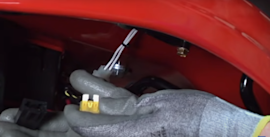
Installation guide
 Owner’s manual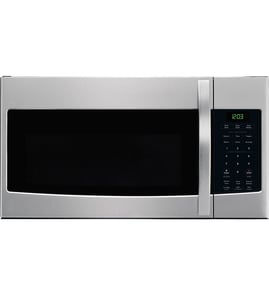



What is the average lifespan of a whirlpool microwave?
Most Whirlpool microwaves, including over-the-range microwave/hood combos like model MH1160XSY1, typically last 7 to 10 years with normal household use. Heavy daily use, poor ventilation, and repeated door slams shorten life; keeping the cavity clean and airflow clear helps it reach the high end of that range.
What affects lifespan the most
- Daily run time (reheating once a day vs. cooking multiple meals)
- Ventilation and grease buildup in the hood and vent path
- Door and latch wear (interlock switches take a lot of stress)
- Power quality (frequent surges can damage the control and high-voltage parts)
- Maintenance (cleaning, replacing lights/filters as needed)
Common “end-of-life” symptoms (and what they usually point to)
| Symptom | Most common area involved | Example parts on this model page |
|---|---|---|
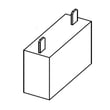
| Runs but does not heat | High-voltage circuit | Diode W11256462, microwave high-voltage capacitor W10850446 |
| Dead, no display, no response | Power supply protection | Microwave fuse W11707984 |
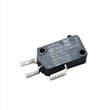
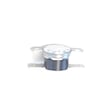
| Starts then stops when door moves, or won’t start | Door interlock system | Microwave/hood micro-switch W10269458, microwave/hood switch W10211972 |
| Loud buzzing or arcing | Waveguide cover/cavity issue or HV issue | Use safe inspection steps in the owner's manual |
When repair makes sense vs. replacement
A repair is usually worth it when the issue is a single, accessible part (like a fuse, door switch, or lamp). Replacement is usually the better value when the microwave has multiple symptoms, repeated failures, or significant cavity damage.
Quick decision checklist
- If it is under 7 years and otherwise solid: repair is usually the best first move.
- If it is 7 to 10 years: compare part cost plus labor vs. replacement.
- If it is over 10 years: replacement is usually the better long-term value.
Why it matters
Microwave/hood combos like the Whirlpool MH1160XSY1 combine cooking electronics with a ventilation system; grease, heat, and door-switch wear are the biggest drivers of failure. Catching symptoms early can prevent repeat shutdowns and nuisance fuse blows.
Last updated: February 2026
Does the whirlpool low profile microwave need to be vented outside?
For the Whirlpool MH1160XSY1 microwave/hood combo, outside venting is not required. This model is set up for recirculation by default, but it can be converted to vent through the wall or roof if you want to exhaust air outdoors (and your kitchen layout supports ducting). See the installation guide for the venting options and conversion steps.
Venting options for MH1160XSY1
You can install this microwave/hood combo in one of these configurations:
- Recirculation (non-vented): Air is filtered and returned to the kitchen.
- Wall venting: Air exhausts through an exterior wall.
- Roof venting: Air exhausts through the roof.
If you choose wall or roof venting, the installation instructions call out clearance and duct requirements so the damper opens freely and the vent path is not restricted.
What we recommend for best performance
For the strongest odor and smoke removal, venting outdoors performs better than recirculation. If you cannot vent outside, recirculation still works well for everyday cooking when filters are kept clean.
- Use a rigid metal vent (not flexible metal duct)
- Keep the duct run short and direct with fewer elbows
- Seal joints with duct tape
- Use a wall or roof cap with a backdraft damper
- Never vent exhaust air into concealed spaces (walls, ceilings, attic, crawl space, garage)
Quick comparison
| Installation type | Duct to outside | Typical benefit | What to watch for |
|---|---|---|---|
| Recirculation | No | Easiest install | Filter maintenance matters most |
| Wall venting | Yes | Better odor removal | Damper clearance inside wall |
| Roof venting | Yes | Best overall exhaust path (often) | Transition clearance above unit |
Why it matters
Choosing the right venting method affects kitchen air quality, grease buildup, and how hard the vent fan has to work. A restricted duct or blocked damper can reduce airflow and increase noise.
Last updated: February 2026
What are common problems with whirlpool microwaves?
Common problems on Whirlpool microwave/hood combos like model MH1160XSY1 include not heating, not starting, sparking/arcing, loud buzzing or humming, and vent fan or light issues. Many symptoms trace to power supply, door interlock safety parts, or high-voltage heating components.
Most common symptoms and what they usually mean
- Runs but does not heat: often a high-voltage component issue (diode, capacitor, magnetron circuit) or a safety cutout.
- Dead or no display: outlet or breaker issue, blown internal fuse, or wiring problem.
- Starts then stops, or will not start: door not closing fully, worn door interlock switch, or latch alignment issue.
- Sparking or burn marks: food splatter, damaged waveguide cover, or metal/foil contact.
- Buttons not responding: control lock enabled, moisture/grease contamination, or keypad/control failure.
Quick checks we recommend first (safe, no disassembly)
- Confirm the unit is plugged into a grounded 3-prong outlet and avoid extension cords (per safety guidance in the MH1160XSY1 owner's manual).
- Open and close the door firmly; remove any debris on the sealing surfaces.
- Try a simple reset: unplug for 2 minutes, then restore power.
- Test heating with a cup of water for 60 seconds; note whether the turntable and fan run.
- If you see arcing, stop using it and clean the cavity; remove any metal racks/foil.
Parts commonly involved (and when)
Microwaves use door safety interlocks and a high-voltage circuit; the symptom often points to a specific group of parts.
| Symptom | Common part area | Example part for MH1160XSY1 |
|---|---|---|
| No power, dead display | Line fuse, wiring | Microwave fuse W11707984 |
| Will not start, intermittent | Door interlock switches, latch parts | Microwave/hood micro-switch W10269458 |
| Runs but no heat | High-voltage circuit | Diode W11256462 |
Why it matters
Door interlocks and high-voltage components are safety-critical. The manual specifically warns not to defeat safety interlocks and to avoid operating the unit if the door or latches are damaged; that is why “won’t start” and “no heat” symptoms should be diagnosed carefully using the correct Whirlpool parts and procedures.
Last updated: February 2026
Are all Whirlpool microwaves the same size?
No. Whirlpool microwaves are not all the same size; dimensions vary by type (countertop, built-in, and over-the-range microwave/hood combos) and by model. For your Whirlpool MH1160XSY1 microwave/hood combo, use the installation cutout and clearance requirements in the installation guide to confirm fit.
What changes the size from one Whirlpool microwave to another
Even within the same brand, size depends on how the microwave is designed to mount and vent.
- Installation type: countertop vs built-in vs over-the-range (microwave/hood combo)
- Cabinet opening width: many installs target common cabinet widths, but the exact cutout varies by model
- Clearances: side clearance for door swing and top cabinet space for the power outlet
- Venting setup: recirculating vs exterior venting can change required space for ducting and a damper
- Cooktop compatibility: microwave/hood combos are commonly designed to go over ranges up to a certain width
MH1160XSY1 fit checks we recommend (before you buy or install)
For this model’s installation, we follow the requirements laid out for microwave/hood combinations.
| Fit item to verify | What to check | Why it matters |
|---|---|---|
| Range width below | Up to 36 in. cooking product width | Ensures proper coverage and safe placement |
| Left side clearance | At least 6 in. if near a left sidewall | Allows the door to open fully |
| Wall support | Stud and wall structure support | Prevents sagging and mounting failure |
| Electrical | Grounded outlet in the upper cabinet | Avoids unsafe wiring and nuisance power issues |
When “same size” matters most
If you are replacing an existing over-the-range unit, matching the mounting pattern and cutout requirements matters more than just the exterior width. Small differences can affect the mounting plate position, vent alignment, and door clearance.
Helpful tip for replacements
If your existing installation hardware is missing or damaged, a common fix is replacing the mounting hardware kit; for this model, see microwave mounting hardware W10821385.
Last updated: February 2026