Owner’s manual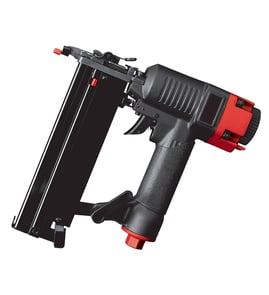

What is the 18 gauge nailer good for?
An 18-gauge nailer is best for light-duty trim and detail work where you want small nail holes and minimal splitting. For your Craftsman model 351184310, our documentation describes it as a 16-gauge finish nailer, which is a step up in holding power for trim, cabinetry, and similar finish carpentry; see the 351184310 owner's manual.
What this model is designed to do (16-gauge finish nailer)
The Craftsman 351184310 drives 16-gauge finish nails and is commonly used for finish carpentry tasks such as:
- Interior and exterior trim work (baseboard, casing, crown)
- Door and window work
- Furniture making
- Cabinetry and built-ins
- Fastening where you want a clean look but more bite than brads
18-gauge vs 16-gauge: quick comparison
If you are deciding between an 18-gauge brad nailer and this 16-gauge finish nailer, here is the practical difference.
| Feature | 18-gauge brad nailer | 16-gauge finish nailer (Craftsman 351184310) |
|---|---|---|
| Typical use | Light trim, small moldings, crafts | Trim, cabinetry, doors/windows, furniture |
| Holding power | Lighter | Stronger |
| Hole size | Smaller | Slightly larger |
| Split risk on thin stock | Lower | Slightly higher |
Nail sizes and operating range for Craftsman 351184310
From the manual, this tool is built around these basics:
- Nail gauge: 16 gauge
- Nail length range: 3/4 in. to 2-1/2 in.
- Magazine capacity: 110 finish nails
- Operating pressure: 60 to 100 PSI
Why it matters
Using the right gauge helps your project look better and hold up longer. An 18-gauge nailer keeps holes tiny for delicate trim, while a 16-gauge finish nailer like the Craftsman 351184310 gives you stronger fastening for trim and cabinetry that see more stress.
Last updated: February 2026
What size nail gun for 2x4?
For 2x4 framing, we use a framing nailer (not a finish nailer). The Craftsman model 351184310 is a 16-gauge finish nailer that drives 3/4-inch to 2 1/2-inch finish nails, so it is best for trim and light fastening, not structural 2x4 framing. See the 351184310 owner's manual for the exact nail range and specs.
What to use for 2x4 framing
A typical 2x4 framing job calls for a framing nailer that shoots larger-diameter nails and longer lengths than a 16-gauge finish nailer.
- Use a framing nailer (often 30 to 34 degree or 21 degree framing style)
- Choose nails commonly used for framing: 10d to 16d
- Common framing nail lengths: 3-inch to 3 1/2-inch
- Match nail type to the job: clipped head vs full round head (per your local code and application)
- For structural work, use nails rated for framing (not finish nails)
How the Craftsman 351184310 fits in
This model is designed for finish work where a smaller nail head and cleaner look matter.
| Task | Best tool | Typical nail size |
|---|---|---|
| Stud-to-plate framing (2x4 walls) | Framing nailer | 10d to 16d, about 3-inch to 3 1/2-inch |
| Baseboard, casing, trim | 16-gauge finish nailer (like 351184310) | 16-gauge, 3/4-inch to 2 1/2-inch |
| Small moldings, delicate trim | Brad nailer | 18-gauge, shorter lengths |
Setup tips if you are using the 351184310 for non-structural 2x4 work
If you are fastening 2x4s for jigs, temporary bracing, or non-structural assemblies, this finish nailer can work within its nail-length limits.
- Set air pressure in the 60 to 100 PSI range
- Use the depth adjustment to avoid overdriving
- Keep the nose area clear; use the quick-release nose cover to clear jams
- Use clean, dry, lubricated compressed air to protect O-rings and valves
Why it matters
Using a finish nailer on framing can lead to weak joints because 16-gauge finish nails are thinner and shorter than framing nails. For strength and safety, framing connections need the correct nail diameter, length, and tool.
Last updated: February 2026
Where can I buy Craftsman replacement parts?
You can buy replacement parts for your Craftsman finish nailer model 351184310 directly through our parts listings and diagrams at Sears PartsDirect. For correct fit, match parts by the exact model number and confirm the part callouts in the owner's manual.
Best way to make sure you order the right part
- Use the exact model number 351184310 when searching.
- Cross-check the part location using the parts illustration and key number list in the owner's manual.
- Compare the part description to the symptom (air leak, misfire, feed issue, etc.).
- If you are rebuilding after extended use, look for rebuild kit references in the owner's manual.
- Order all wear items together when you open the tool (common examples: O-rings, seals, piston/ram components).
Common parts this model may need (by function)
The manual for model 351184310 calls out serviceable items such as O-rings, the piston/ram assembly, magazine components, and inlet parts. Use the parts list to identify the exact key number and part number before ordering.
| Symptom | Common area to check | What to look for |
|---|---|---|
| Air leaking | Seals and O-rings | Cracks, flattening, dry/brittle rubber |
| Won’t drive nails fully | Piston/ram, lubrication, air pressure | Worn piston, low oiling, pressure set too low |
| Double-firing or unsafe firing | Trigger/contact trip mechanism | Binding, damage, missing parts |
| Jams or poor feeding | Magazine | Dirt buildup, worn magazine parts |
Why it matters
Ordering by model number and confirming the diagram callouts prevents mismatched parts, repeat downtime, and unnecessary tear-downs. It also helps you plan a complete repair (for example, replacing seals at the same time you service the piston).
Last updated: February 2026
Why is my nail gun not working?
If your Craftsman finish nailer model 351184310 is not firing, the most common causes are low or restricted air supply, a contact trip (safety) that is not actuating, or internal wear (O-rings/valves) from dry or dirty compressed air. Use the checks below, then follow the safety test steps in the owner's manual.
Quick checks that fix most “won’t fire” problems
- Confirm compressor output is set to 60 to 100 PSI (never exceed 100 PSI).
- Verify the hose and fittings deliver enough air (tool needs about 1.41 SCFM @ 90 PSI).
- Make sure the contact trip is fully pressed against the work; the tool should not fire unless it is.
- Check the magazine: correct 16-gauge finish nails and a clean, freely moving nail strip.
- Add a few drops of air tool oil to the air inlet if the tool has been running dry.
Safety mechanism test (contact trip and trigger)
The manual’s daily safety test helps pinpoint a bad contact trip or trigger behavior.
| Test | What you do | Correct result |
|---|---|---|
| Contact trip only | Push contact trip into workpiece, do not touch trigger | Tool must not fire |
| Trigger only | Pull trigger with contact trip clear of work, pointed away | Tool must not fire |
| Rapid-fire function check | Hold trigger, then bump contact trip into work | Drives one nail per contact trip press |
If any test fails, stop using the tool until the safety mechanism is repaired.
If air leaks or it runs weak, focus on seals and lubrication
Air leaks at the cap, nose, or trigger area, slow cycling, or power loss typically point to worn O-rings, a sticking head valve, or lack of lubrication. Clean, dry, lubricated compressed air prevents O-ring and valve damage.
Common symptom-to-cause map
- Won’t operate at all: insufficient air supply, worn head valve O-rings/seal, binding head valve, low lubrication.
- Slow or loses power: head valve spring issue, binding head valve, low lubrication.
- Skips nails/inconsistent: low air supply, buildup on ram/nose, worn piston O-ring, dirty magazine, damaged fasteners.
Why it matters
This nailer is designed to prevent firing unless the contact trip is engaged; that same safety system can also stop firing when it is dirty, sticking, or out of adjustment. Correct PSI, adequate SCFM, and proper lubrication keep the head valve and O-rings working so the tool cycles and drives nails consistently.
Last updated: February 2026