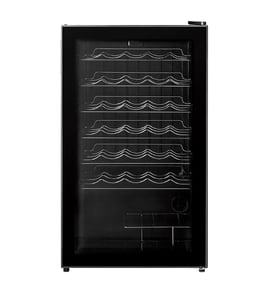

Can a thermoelectric wine cooler be repaired?
Yes, a thermoelectric wine cooler like the Vinotemp VT-TC32 can be repaired when the problem is in serviceable items such as wiring, a fuse, a fan, a control, or a power supply. If the thermoelectric (Peltier) module or sealed cooling system is the failure point, repair is typically not cost-effective compared to replacement.
What we check first (fast triage)
- Confirm the outlet has power and the cord is firmly seated
- Verify the control panel is set to cool (not off) and the set temperature is below cabinet temperature
- Listen for fans (interior circulation fan and rear heat-sink fan)
- Check for heavy dust on the rear heat sink or blocked airflow
- Look for frost buildup or water intrusion that could affect sensors and wiring
Common symptoms and what they usually mean
| Symptom | Most common cause | What to do next |
|---|---|---|
| Unit has lights but won’t cool | Rear fan not running, heat sink clogged, weak power supply | Clean airflow path; test fan and power supply with a meter |
| No power at all | Blown fuse, bad cord, failed control/power board | Check fuse and incoming voltage |
| Runs constantly, barely cools | Poor ventilation, door seal leak, failing thermoelectric module | Improve ventilation; check gasket; evaluate module |
| Loud buzzing or rattling | Fan blade hitting shroud, loose mounting | Inspect and secure fan and brackets |
Repair steps that are usually worth doing
- Unplug the cooler and remove the rear cover.
- Vacuum dust from the condenser-style heat sink and fan area.
- Inspect wiring connectors for heat damage or looseness.
- Test the fuse and DC output from the power supply.
- If a fan is stalled, replace the fan (most common economical fix).
For electrical testing and safe troubleshooting, we use these guides: how to tell if a fuse is blown and how to use a multimeter to test electrical parts video.
Why it matters
Thermoelectric coolers depend on strong airflow across the hot-side heat sink. When a fan fails or the heat sink is clogged, cooling performance drops sharply and the unit can overheat, which can also shorten the life of the power supply and control components.
Last updated: February 2026
Why is my Vinotemp not cooling?
If your Vinotemp VT-TC32 wine cooler runs but is not cooling, the most common causes are poor airflow (dirty condenser area), a failed evaporator or condenser fan, a control/thermostat sensing problem, or a sealed-system issue (compressor or refrigerant). Start with airflow and fan checks first because they are the fastest to confirm.
Quick checks that fix many “not cooling” complaints
- Confirm the unit has clearance for ventilation; blocked vents trap heat and stop cooling.
- Clean dust from the condenser intake and exhaust area (unplug first).
- Verify the door closes fully and the gasket seals all the way around.
- Set the temperature colder and wait 12 to 24 hours for stabilization.
- Avoid overloading; tightly packed bottles/cans can block internal air circulation.
What to listen and look for (symptom-based)
| What you notice | What it usually means | What to do next |
|---|---|---|
| Compressor hums, cabinet stays warm | Heat is not being rejected or refrigerant system is weak | Clean condenser area; check fans; then evaluate sealed system |
| Interior light works, no fan sound | Fan motor not running or not getting power | Check for obstructions; test fan motor circuit |
| Frost/ice on back wall or evaporator cover | Airflow restriction or defrost/control issue | Defrost (unplug, doors open) and recheck airflow |
| Runs constantly, barely cools | Dirty condenser, warm room, bad gasket, or sealed-system problem | Improve airflow and sealing; then sealed-system diagnosis |
Electrical tests (for experienced DIYers)
Unplug the cooler before removing panels. If you have a multimeter, these checks narrow it down quickly:
- Test the temperature sensor/thermistor for a stable resistance change as temperature changes.
- Check the evaporator fan and condenser fan for continuity and for correct voltage when running.
- Inspect wiring connectors for heat damage or looseness.
A good primer for safe meter use is our how to use a multimeter to test electrical parts video.
Why it matters
A wine and beverage cooler like the Vinotemp VT-TC32 depends on steady airflow across the condenser and evaporator. When airflow is restricted or a fan fails, the compressor can run but cooling performance drops sharply, and temperatures drift upward.
Last updated: February 2026
Is it worth repairing a wine fridge?
Yes, repairing a wine fridge is worth it when your Vinotemp VT-TC32 is a higher-end unit and the problem is a common service item (fan, thermostat, door seal, wiring). It is usually not worth it when the sealed system is failing (compressor or refrigerant leak) and the repair cost approaches the price of replacement.
Quick way we decide: repair vs. replace
Use these checkpoints before you spend money on diagnostics.
- Age and build quality: Premium wine and beverage coolers are built to justify repair; budget units usually are not.
- Symptom type: Cooling-system problems cost the most; airflow and control problems cost less.
- Total repair cost: Include labor, trip/diagnostic fees, and parts.
- Parts availability: If key parts are hard to source, replacement becomes the practical choice.
- Condition: Rust, heavy corrosion, or cabinet damage pushes the decision toward replacement.
What typically costs the most on a wine cooler
Sealed-system work is the cost driver because it requires specialized tools and certification.
| Issue type | Common examples | Typical “worth repairing?” outcome |
|---|---|---|
| Airflow/control | Fan not running, sensor/thermostat issues, loose wiring | Often worth repairing |
| Door/sealing | Worn gasket, door not closing, hinge alignment | Often worth repairing |
| Sealed system | Compressor failure, refrigerant leak, restriction | Often replace |
Troubleshooting steps that help you decide faster
Do these checks first; they often reveal a simple fix.
- Verify the set temperature and give the unit 24 hours to stabilize after changes.
- Confirm the condenser area has airflow (no tight enclosure, dust buildup, blocked vents).
- Listen for fan operation (evaporator and condenser fans, if equipped).
- Check for heavy frost on the back wall or evaporator cover (can point to airflow/defrost issues).
- Inspect the door seal with a paper-strip test; weak grip means warm air leaks.
- If you suspect an electrical issue, use safe testing practices from are diy appliance repairs safe.
Why it matters
A wine cooler like the VT-TC32 protects flavor and carbonation by holding a stable temperature. If the problem is airflow, sealing, or controls, a repair restores performance at a reasonable cost. If the sealed system is failing, replacement usually delivers a better long-term value.
Last updated: February 2026
What is the most common problem with wine coolers?
The most common problem we see with wine coolers like the Vinotemp VT-TC32 is inconsistent cooling (the cabinet runs too warm, too cold, or swings in temperature). In most cases, the root cause is restricted airflow, a control/thermostat issue, or a door seal that is leaking cold air.
Most common causes (and what to check first)
- Dirty or blocked airflow: Dust on the condenser area, blocked vents, or bottles packed too tightly can trap heat.
- Door not sealing: A warped gasket, debris on the seal, or a door that is slightly ajar causes temperature drift.
- Thermostat/control setting issues: Setpoint too warm, or the sensor/control is not reading correctly.
- Fan problems: An evaporator or condenser fan that is slow, noisy, or not running reduces heat transfer.
- Compressor not running efficiently: Longer run times, clicking, or overheating can point to a compressor/start-device problem.
Quick troubleshooting steps for a VT-TC32 that will not hold temperature
- Confirm the basics: Make sure the unit is plugged in firmly and the temperature is set correctly.
- Improve airflow: Leave space around the cabinet and avoid blocking interior vents with bottles or cans.
- Check the door seal: Close the door on a thin piece of paper; if it slides out easily, the seal is leaking.
- Listen for fans: You should typically hear a fan when the unit is actively cooling.
- Stabilize the load: A very empty cooler can swing more; adding thermal mass (bottles) helps steady temps.
Symptoms and the most likely direction
| Symptom | Most likely cause | What we do next |
|---|---|---|
| Runs but stays warm | Airflow restriction, fan issue | Clear vents, check for fan operation |
| Temperature swings | Door seal leak, sensor/control issue | Paper test on gasket, verify setpoint |
| Loud buzzing/rattling | Fan blade hitting, loose panel | Inspect for obstructions, tighten fasteners |
| Water inside | Drain/condensation management issue | Clean and level unit, check for blocked drain path |
Why it matters
Wine and beverages store best when temperature is stable. Even if the average temperature seems close, frequent swings make the compressor work harder, increase noise, and can shorten the life of cooling components.
Helpful DIY reference
If you need to do safe electrical checks (for example, verifying power to a fan or control), we recommend using a meter correctly: how to use a multimeter to test electrical parts video.
Last updated: February 2026