Error Codes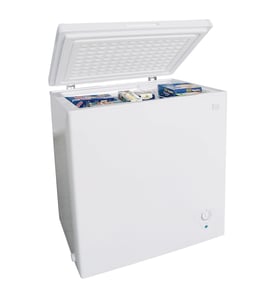




How long to plug in a chest freezer before using?
For the Hotpoint HCM22QWBWW chest freezer, let it sit upright and unplugged before you start it, especially after moving. A good rule is to let it stand for the same amount of time it was on its side, up to 24 hours, then plug it in and allow time to reach temperature before loading food.
What to do before you plug it in
- Place the freezer in its final location and keep it upright.
- If it was transported on its side, let it sit the same amount of time it was on its side (maximum 24 hours).
- Make sure the outlet is properly grounded and not controlled by a wall switch.
- Set the temperature control to a normal starting setting.
- Confirm the lid closes evenly and the gasket seals all the way around.
After you plug it in: when it is ready for food
Most chest freezers need time to pull down to safe storage temperature.
| Step | What to expect | Typical timing |
|---|---|---|
| Initial cool-down | Interior starts getting cold | First few hours |
| Ready for frozen food | Stable freezing temps | About 24 hours |
| Best practice | Add room-temp food gradually | First 24 hours |
Why it matters
Letting the freezer stand upright after being on its side helps the compressor oil settle back where it belongs. Plugging in too soon can lead to poor cooling, noisy operation, or compressor damage.
Parts that relate to startup and cooling (if you are troubleshooting)
If the freezer will not cool after proper settling time and a full cool-down period, these model-matched parts are commonly involved in cooling or power issues:
- Power cord WR55X32189
- Power indicator light - green WR01X41889
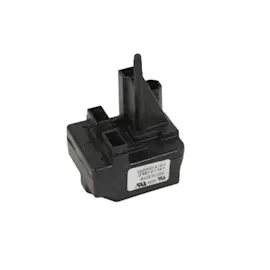
- Hotpoint compressor electricals WR87X46060
Last updated: January 2026
Why is my Hotpoint freezer not freezing properly?
If your Hotpoint HCM22QWBWW chest freezer is running but not freezing properly, the most common causes are poor airflow and heat removal (dirty condenser area), a temperature control issue, or a sealed-system problem such as low refrigerant or a restriction. Start with basic checks before replacing parts.
Quick checks we recommend first
- Confirm the temperature control is set colder and the lid is fully closing.
- Check the lid gasket for gaps, tears, or a “paper test” slip-out (warm air leaks cause weak freezing).
- Make sure the freezer is not overpacked; leave space for air circulation.
- Verify the freezer has clearance around it and is not next to a heat source.
- Listen for the compressor: steady hum with long run times often points to airflow, gasket, or sealed-system issues.
What to inspect (most likely causes)
1) Lid seal or lid alignment problems
A leaking lid gasket lets humid room air in; that raises temperatures and can create frost that reduces cooling.
If the lid or gasket is damaged, the correct replacement for this model is the Hotpoint white door & gasket WR78X46169.
2) Temperature control problems
If the control is loose, broken, or not turning the thermostat shaft correctly, the freezer may not run long enough to freeze.
- Check whether the knob turns smoothly and actually changes the feel of the control.
- If the knob is cracked or slipping, replace the thermostat knob WR01X46052.
3) Electrical supply issues
Low or intermittent power can cause weak cooling.
- Plug the freezer directly into a wall outlet (avoid extension cords).
- Inspect the cord and strain relief area for damage.
- If the cord is damaged, replace the power cord WR55X32189.
Symptom guide (what it usually means)
| What you notice | What it often points to | What to do next |
|---|---|---|
| Runs constantly, still warm | Air leak, poor heat removal, sealed-system issue | Check gasket, clearance, frost pattern |
| Runs briefly, then stops | Control/thermostat issue, power issue | Check knob, outlet, cord |
| Heavy frost inside | Lid leak or frequent openings | Check gasket and lid alignment |
| No compressor sound | Power issue or compressor start components | Verify power, then test electricals |
Why it matters
A freezer that cannot remove heat efficiently will run longer, waste energy, and still fail to reach safe food-storage temperatures. Fixing airflow, sealing, and control issues early also helps prevent compressor strain.
Last updated: January 2026
Does a chest freezer use a lot of electricity?
A Hotpoint chest freezer like model HCM22QWBWW typically uses a moderate amount of electricity; in most homes it is one of the more efficient “always-on” appliances, especially compared with an upright freezer. Your actual cost depends on size, room temperature, and how often the lid is opened.
What to expect for energy use
Most modern chest freezers are designed to run efficiently because cold air stays in the cabinet when you open the lid.
- Chest freezers usually use less electricity than upright freezers of similar capacity
- Hot garages and basements increase run time and energy use
- Frost buildup and a poor lid seal increase run time
- Frequent lid openings and warm food loads increase run time
- A steady, colder thermostat setting increases energy use
Typical annual energy range (rule of thumb)
| Freezer type | Typical annual use | Typical annual cost (varies by rates) |
|---|---|---|
| Chest freezer | ~200 to 350 kWh/year | Often lower than an upright |
| Upright freezer | ~300 to 500+ kWh/year | Often higher than a chest |
Quick ways to reduce electricity use
These steps improve efficiency without changing parts.
- Keep the freezer at a steady setting (avoid turning it colder than needed)
- Allow hot foods to cool before loading
- Leave space around packages for air circulation
- Defrost when frost buildup reaches about 1/4 inch
- Keep the lid gasket clean and check for gaps with the “paper test”
When a part problem can raise energy use
If the freezer runs constantly, struggles to hold temperature, or you see heavy frost, a component issue can drive up power use.
Common checks:
- Lid not sealing or lid alignment issues (inspect the door and gasket area)
- Temperature control issues (a damaged knob can prevent proper setting)
- Electrical supply problems (damaged cord or loose connection)
Helpful model-matched parts to consider:
Why it matters
Lower run time means lower electric cost and steadier food temperatures; it also reduces wear on the compressor and helps prevent thawing during heavy use.
Last updated: January 2026