Owner’s manual
 View engine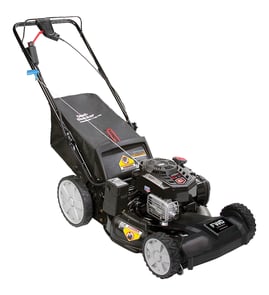



Should I use 87 or 89 gas for lawn mower?
For the Craftsman 917370542 gas walk-behind mower, we use regular unleaded gasoline (87 octane) for normal operation; higher octane like 89 does not improve performance in typical small-engine mowing. For best starting and fewer fuel problems, use fresh fuel and store it correctly (see the owner's manual).
What to use (and what to avoid)
- Use fresh, clean, regular unleaded 87 octane.
- Avoid stale fuel (old gas is a common no-start cause).
- Keep the gas can clean; replace it if it starts to rust.
- Do not store gasoline from one season to the next.
- Let the engine cool before storing the mower indoors.
Quick fuel tips that prevent “won’t start” issues
Old or contaminated fuel is one of the most common reasons a mower will not start. If your mower has been sitting, address fuel first.
- Drain and replace fuel if it smells sour or looks dark.
- If you suspect water in fuel, empty the tank and refill with fresh gas.
- Check the air filter and spark plug if fresh fuel does not help.
Common fuel-related symptoms
| Symptom | Likely fuel issue | What we do first |
|---|---|---|
| Starts then dies | Stale fuel or restricted fuel flow | Replace fuel with fresh 87 |
| Won’t start after storage | Stale fuel or water in fuel | Empty tank, refill, then prime |
| Runs rough | Old fuel, dirt/rust in can | Fresh fuel, clean container |
Why it matters
Using the right fuel helps the engine start easier, run smoother, and reduces carburetor and fuel-system problems. The manual’s troubleshooting section also lists stale fuel and water in fuel as common causes of a no-start condition.
Last updated: February 2026
Will a 42 inch mower fit through a gate?
A 42-inch mower only fits through a gate if the gate opening is wider than 42 inches (we recommend at least 1 to 2 inches of extra clearance). Your Craftsman 917370542 is a walk-behind mower with a 21-inch blade, so it typically fits through most 36-inch gates; confirm by measuring the widest point.
How to measure correctly (so you do not get surprised)
Measure the mower at its widest point with the handle in your normal moving position.
- Measure outside-to-outside across the rear wheels (often the widest point)
- Check for anything that sticks out: discharge chute, height adjusters, bagger frame
- Measure with the grass catcher installed if you plan to roll it through that way
- Measure the gate opening at the narrowest point (between posts, latch hardware, or stops)
- Allow extra clearance for uneven ground and turning angle
For diagrams and model-specific component locations, use the 917370542 owner's manual.
Quick fit guide
| Mower deck size | Typical overall width | Gate opening that usually works |
|---|---|---|
| 21-inch walk-behind (like 917370542) | About 22 to 24 inches | 30 inches or wider |
| 42-inch rider/tractor deck | About 44 to 48 inches | 46 to 50 inches or wider |
If it is close, these adjustments help
If your measurement is within about 1 inch of the gate opening, small changes can make the difference.
- Fold or lower the handle to reduce snag points (if your setup allows)
- Remove the grass catcher temporarily
- Turn the mower slightly and “walk” it through one wheel at a time
- Raise the cutting height so the deck does not catch on thresholds
- If a wheel or height adjuster is damaged and sticking out, inspect the lawn mower height adjuster knob 532701037
Why it matters
Trying to force a mower through a tight gate can bend the handle, damage the height adjusters, or crack the deck edge. Measuring the widest point first prevents unnecessary repairs and frustration.
Last updated: February 2026
How old is my lawn mower by serial number lookup?
For Craftsman walk-behind mower model 917370542, the serial number is on a decal on the rear of the mower housing; once you have it, you can often decode the build date from the serial format or confirm the date using the purchase date you recorded in the owner's manual.
Where to find the serial number on model 917370542
We see the serial number location called out for this model.
- Look on the rear of the lawn mower housing for the model/serial decal.
- Write down the serial number exactly as shown.
- Also note the date of purchase (the manual provides a spot to record it).
- If the decal is dirty, wipe it clean so every digit is readable.
How serial number “date codes” usually work
Craftsman serial formats can vary by production run, but these patterns are common on walk-behind mowers and small engines.
- Calendar date style: digits may represent month, day, and year.
- Year and week style: digits may represent year and production week.
- Engine vs. mower: the engine can have its own date code that differs from the mower’s serial.
Quick comparison of common date-code patterns
| What you see in the serial/date code | What it usually means | What to do next |
|---|---|---|
| A group of digits that looks like a date | Month/day/year encoded | Compare to your purchase date for a reality check |
| A 2-digit year plus week number | Year and production week | Use the week to estimate month of manufacture |
| Separate engine tag/date code | Engine build date | Use it as a close estimate if mower date is unclear |
Why it matters
Knowing the approximate age helps us match the right walk-behind mower parts (blade, drive components, hardware) and avoid ordering a look-alike part that fits a different production run.
If you are trying to date the mower for a repair
If you are troubleshooting drive or cutting issues while you are identifying the mower, these model-matched parts are commonly involved:
- Lawn mower blade 532406712 (bent or dull blade can cause poor cut)
- Lawn mower ground drive belt 580364604 (worn belt can cause weak or no self-propel)
- Return spring 532406558 (control linkage return issues)
Last updated: February 2026
How much does a 54 inch zero turn mower weigh?
A 54-inch zero-turn mower weighs about 550 to 1,000+ lb depending on whether it is residential or commercial grade. Your Craftsman 917370542 is a walk-behind mower (not a zero-turn); use the 917370542 owner's manual for your mower’s exact specifications.
Typical weight ranges for a 54-inch zero-turn
These are ready-to-mow weights for common 54-inch zero-turn designs:
- Residential: 550 to 700 lb
- Prosumer: 650 to 850 lb
- Commercial: 750 to 1,000+ lb
- Add-ons (bagger, hitch, weights): often adds 25 to 150 lb
What changes the weight the most?
- Deck construction (stamped vs fabricated)
- Frame and front caster size
- Hydrostatic drive size and transaxles
- Engine size and fuel capacity
- Accessories (bagger, mulch kit, suspension seat)
Quick comparison table
| Mower type | Typical deck size | Typical weight |
|---|---|---|
| Walk-behind (like Craftsman 917370542) | ~21 in | Much lighter than a zero-turn |
| Zero-turn residential | 54 in | 550 to 700 lb |
| Zero-turn commercial | 54 in | 750 to 1,000+ lb |
Why it matters
Weight affects trailer payload, ramp rating, tie-down requirements, and turf compaction. It also helps you estimate whether you can safely load and unload the mower on your own.
If you are sizing a trailer or ramps
- Use the mower’s listed operating weight (not just shipping weight)
- Add fuel and accessories to estimate real-world loaded weight
- Choose ramps rated above the loaded weight
- Confirm trailer payload and vehicle towing limits
Last updated: February 2026