Owner’s manual
 Error Codes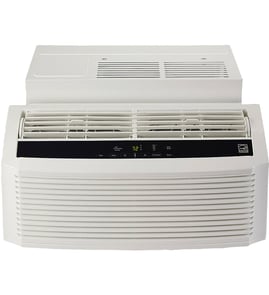



Can I refill window AC refrigerant by myself?
No. For the GE AHQ06LYQ1 room air conditioner, we do not recommend refilling or recharging refrigerant yourself because the unit contains flammable refrigerant and the manual directs that maintenance and service be performed only by properly trained, qualified technicians.
The safety guidance for this model emphasizes refrigerant safety: avoid damaging refrigerant tubing, do not pierce or burn tubing, and leave service work to trained technicians. Review the safety section in the AHQ06LYQ1 owner's manual before attempting any internal repair.
Key takeaways:
- Do not pierce, burn, or drill into the cabinet or sealed system.
- Refrigerant can be hazardous and may be odorless.
- Service and maintenance involving refrigerant should be done by trained technicians.
- If the unit is leaking refrigerant, continued operation can be unsafe.
Most “not cooling” complaints are caused by airflow, controls, or installation issues, not low refrigerant.
- Clean or replace the air filter (restricted airflow reduces cooling and can cause icing).
- Make sure the front grille is fully seated and not blocked by curtains or furniture.
- Confirm the unit is level and installed correctly so it drains properly.
- Verify the outlet is working and the plug is fully inserted.
- Let the unit run 10 to 15 minutes after changing settings to see if cooling stabilizes.
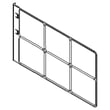
If your filter is damaged or missing, the correct replacement for this model is the room air conditioner air filter WJ85X21746.
Use this chart to decide what to do next.
| Symptom | What it often indicates | Best next step |
|---|---|---|
| Runs but barely cools | Dirty filter/coils, blocked airflow | Clean filter and coils; recheck airflow |
| Evaporator icing | Low airflow, very low set temp, dirty filter | Clean filter; raise set temp; let ice melt |
| Oily residue or hissing | Possible refrigerant leak | Turn off; schedule qualified service |
| Not cooling after basic cleaning | Control or sealed-system issue | Use troubleshooting steps; consider service |
For model-specific fault displays, use our GE error codes reference.
Refrigerant work is sealed-system service. On a window air conditioner like the GE AHQ06LYQ1, opening the system or attempting a DIY recharge can create a fire risk, damage the unit, and turn a repairable problem (like a clogged filter) into a major failure.
Last updated: January 2026
Which AC is best for a 600 sq ft room?
For a 600 sq ft room, we recommend sizing by BTUs, not “tons.” Most rooms around 600 sq ft need roughly 12,000 BTU to 14,000 BTU of cooling, adjusted for sun exposure, ceiling height, and insulation. Your GE AHQ06LYQ1 is a smaller room air conditioner, so it is typically better suited to a smaller space than 600 sq ft; confirm your unit’s capacity on the rating label and in the AHQ06LYQ1 owner’s manual.
Use this as a practical starting point, then adjust for real-world conditions.
- Baseline for 600 sq ft: 12,000 to 14,000 BTU
- Hot, sunny, west-facing room: add about 10% to 20%
- High ceilings (over 8 ft): add about 10%
- Poor insulation or lots of air leaks: add about 10% to 20%
- Kitchen or heat-producing equipment: add about 10% to 20%
| Room situation | Typical BTU range for ~600 sq ft |
|---|---|
| Average insulation, average shade | 12,000 to 14,000 BTU |
| Very sunny or top-floor heat load | 14,000 to 18,000 BTU |
| Very well insulated and shaded | 10,000 to 12,000 BTU |
An undersized window AC runs constantly and still feels warm. An oversized unit can short-cycle (turn on and off frequently), which reduces comfort and humidity control.
These steps help any GE room air conditioner perform closer to its rated capacity.
- Clean the air filter at least every 30 days (more often with pets or dust)
- Keep the front grille clear so airflow is not blocked
- Use Cool mode with High fan for maximum cooling, then reduce fan speed for comfort
- Remember the compressor may take about 3 minutes to restart after cycling off
- Avoid operating in freezing outdoor conditions (below 32°F)
If your unit is not cooling well, start with filter maintenance; the correct replacement for this model is the room air conditioner air filter WJ85X21746.
Last updated: January 2026
Why is my GE window air conditioner not cooling?
If your GE AHQ06LYQ1 window air conditioner runs but is not cooling, the most common causes are restricted airflow (dirty filter or blocked front grille), incorrect mode or temperature settings, or the unit being in a normal compressor delay after power loss. Use the AHQ06LYQ1 owner's manual settings and checks below to restore cooling.
- Confirm the unit is in Cool mode (not Fan Only); Fan Only circulates air but does not cool.
- Set the temperature to a colder setting (the set range is 64°F to 86°F).
- If there was a power interruption, wait about 3 minutes for the compressor protection delay.
- Make sure curtains, blinds, or furniture are not blocking the front airflow.
- Clean the air filter; GE recommends cleaning at least every 30 days.
A clogged filter or blocked grille can make the evaporator get too cold and reduce cooling.
- If the filter is damaged or won’t clean up well, replace the room air conditioner air filter WJ85X21746.
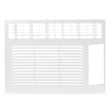
- If the front grille is cracked or not seated correctly, airflow can bypass the coil; inspect the front grille assembly WJ71X24801.
Use this table to spot a setting issue fast:
| What you see | What it means | What to do |
|---|---|---|
| Fan is blowing, room is not getting colder | Unit may be in Fan Only | Switch to Cool mode and set a lower temperature |
| Cooling starts late after restart | Normal compressor time delay | Wait about 3 minutes |
| Temperature seems to drift more than expected | Energy Saver cycles the fan with the compressor | Try turning Energy Saver OFF for steadier airflow |
Ice blocks airflow and stops cooling.
- Set mode to High Fan or High Cool.
- Set temperature as high as it can be set until the ice melts.
- Clean the filter and confirm airflow is not restricted.
A window air conditioner depends on steady airflow across the coils to move heat outside. When airflow is restricted or the unit is in the wrong mode, the compressor cannot remove heat effectively, so the room stays warm even though the fan runs.
Last updated: January 2026