


Should a 25 year old furnace be replaced?
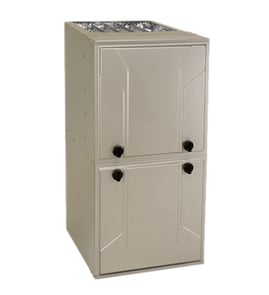
Yes. A 25-year-old York furnace like model P-FMD12F08501A is at the typical end of furnace life expectancy (about 15 to 25 years), so replacement is usually the smart move for reliability, efficiency, and avoiding a mid-season breakdown.
When replacement is the better choice
- You have repeated no-heat calls, short cycling, or hard starts
- Repair costs are rising or multiple parts are failing close together
- The blower motor struggles to start or hums before running (often tied to a weak run capacitor)
- You want lower heating bills through improved efficiency
- You plan to stay in the home and want fewer winter surprises
When it can make sense to keep it (short-term)
- It heats evenly, runs quietly, and has a clean service history
- A single, straightforward repair restores normal operation
- You are planning a near-term move and want to avoid a major install right now
Common decision rule we use
A practical guideline is: if a repair is expensive and the furnace is already 25 years old, replacement usually delivers better long-term value than putting more money into aging components.
Quick comparison
| Factor | Repairing a 25-year-old furnace | Replacing the furnace |
|---|---|---|
| Reliability | Lower; more age-related failures | Higher; new components and warranty coverage |
| Efficiency | Typically lower | Typically higher |
| Upfront cost | Lower today | Higher today |
| Risk of no-heat event | Higher | Lower |
If you are troubleshooting a “won’t start” or “hums then stops” symptom
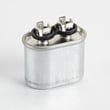
On many furnaces, a weak run capacitor can prevent the blower from starting correctly. If your P-FMD12F08501A uses a run capacitor and it tests out of range, replacing it can be a reasonable repair while you plan a full replacement.
- Use a meter with capacitance testing if available
- Shut off power before accessing electrical components
- If the capacitor is bulged or leaking, replace it
Relevant part for this model: capacitor 12907.
Why it matters
A furnace that is at end-of-life can fail without warning during cold weather. Planning replacement on your schedule helps avoid emergency downtime and can reduce operating costs.
Last updated: February 2026
How to find furnace model number?
For your York furnace, we look for the model number on the rating plate (data tag) attached to the furnace cabinet; it’s usually visible after removing the front access panel. For this model page, the model number is P-FMD12F08501A.
Where to look on a York furnace
Turn off power to the furnace at the switch or breaker first, then check these common locations:
- Inside the front blower door or burner compartment door
- On an interior side wall of the cabinet near the burner area
- On the blower housing area behind the lower access panel
- Near the gas valve area (often on the cabinet wall, not on the valve)
- Occasionally on the outside of the cabinet near the edge of a panel
What to write down (so parts match)
Copy the information exactly as shown on the data tag:
- Model number (example: P-FMD12F08501A)
- Serial number (helps with production date and revisions)
- Brand (York)
- Fuel type (gas or electric)
- Electrical ratings (voltage and frequency)
Quick checklist: model number vs. serial number
| Item | What it’s used for | Example format |
|---|---|---|
| Model number | Matching parts diagrams and replacement parts | P-FMD12F08501A |
| Serial number | Identifying manufacturing run and revisions | Letters and numbers |
Why it matters
Furnaces often have multiple versions that look similar. Using the exact model number helps us match the correct parts list and avoid ordering the wrong ignition, blower, control, or electrical components.
Related part you may see referenced
If you’re troubleshooting a blower that hums, struggles to start, or trips on overload, a weak run capacitor is a common cause. This model’s parts list includes a capacitor 12907.
Last updated: February 2026
What is the average lifespan of an oil furnace?
Most oil furnaces last 15 to 20 years. With consistent annual service and timely repairs, many units reach 25 years, and some run longer; for a York furnace like P-FMD12F08501A, lifespan still depends most on maintenance, fuel quality, and operating conditions.
Typical lifespan ranges
| Oil furnace condition | What we typically see | What it means |
|---|---|---|
| Average maintenance | 15 to 20 years | Common replacement window |
| Well maintained | 20 to 25 years | Often worth repairing if major parts are sound |
| Exceptional care and light use | 25 to 30 years | More frequent repairs become normal |
What shortens oil furnace life fastest
- Skipping annual tune-ups (combustion setup, safety checks, cleaning)
- Dirty or restricted air filter and return airflow
- Soot buildup from poor combustion or delayed cleaning
- Running with ignition or flame-sensing issues (hard starts, rumbling)
- Overheating from blocked vents or weak blower performance
- Water or corrosion damage around the heat exchanger area
Maintenance that helps you hit the high end of the range
- Replace or clean the air filter on schedule (often every 1 to 3 months during heating season)
- Schedule a yearly professional cleaning and combustion test
- Keep supply and return registers open and unobstructed
- Address unusual smells, smoke, or loud start-ups immediately
- If your blower motor struggles to start or hums, check the motor run capacitor; for this model, see the capacitor 12907
Why it matters
Oil furnaces can keep running past 20 years, but efficiency and reliability usually drop as wear builds up. Knowing the typical lifespan helps you decide when a repair (like a capacitor or electrical fix) makes sense versus planning for replacement.
Last updated: February 2026
What is the most expensive part to fix on a furnace?
The most expensive furnace repair is typically replacing the heat exchanger because it is a major, labor-intensive component and often drives the total cost into the four-figure range. On a York P-FMD12F08501A furnace, other high-cost repairs can include the blower motor assembly or the main control board.
Most expensive furnace repairs (typical)
These are the repairs that most often end up costing the most due to part price plus diagnostic and labor time:
- Heat exchanger replacement
- Blower motor (or blower assembly) replacement
- Main control board replacement
- Draft inducer motor replacement
- Gas valve replacement
Quick cost comparison (typical ranges)
Actual totals vary by region, access, and whether additional parts (gaskets, wiring, venting) are needed.
| Repair type | Why it gets expensive | Typical total cost range |
|---|---|---|
| Heat exchanger | High labor, major disassembly | $1,500 to $3,500+ |
| Blower motor/assembly | Part cost plus setup and airflow checks | $600 to $1,800 |
| Control board | Electrical diagnosis plus part cost | $400 to $1,200 |
| Inducer motor | Venting and pressure switch verification | $450 to $1,400 |
| Gas valve | Gas-line work and combustion setup | $500 to $1,500 |
How to keep repair costs down
We recommend focusing on the items that prevent overheating, electrical stress, and airflow problems.
- Replace the furnace filter on schedule to protect the blower and heat exchanger
- Keep supply and return vents open to maintain proper airflow
- Address unusual noises early (squeal, rumble, grinding)
- If the blower struggles to start, test the run capacitor and replace it if weak
- Inspect wiring connections for heat damage and loose terminals
If you suspect a blower-start issue, the capacitor 12907 is one of the common, lower-cost electrical parts that can contribute to hard starting or humming.
Why it matters
The “most expensive part” is usually expensive because it takes time to diagnose correctly and time to access safely. Catching airflow and electrical issues early helps prevent secondary damage to major components.
Last updated: February 2026
What is the most common part to fail on a furnace?
The most common furnace “failure” we see is actually a maintenance item: a dirty air filter that restricts airflow and overheats the furnace. For true component failures, the flame sensor, hot surface igniter, and blower motor run capacitor are among the most frequent culprits on furnaces like the York P-FMD12F08501A.
Most common furnace trouble spots
- Air filter: Clogs, trips high-limit safety, causes short cycling or no heat
- Flame sensor: Gets coated, burner lights then shuts off
- Hot surface igniter (or pilot/ignition system): No ignition, no heat
- Blower motor run capacitor: Blower hums, starts slowly, or will not start (common on PSC motors)
- Thermostat or low-voltage wiring: No call for heat, intermittent operation
- Door switch or rollout/high-limit switch: Safety circuit opens, furnace will not run
Quick checks you can do first (before replacing parts)
- Set thermostat to HEAT and raise setpoint 3 to 5 degrees.
- Replace the air filter and make sure supply and return vents are open.
- Check the furnace power switch and breaker.
- Watch the start-up sequence through the sight glass or access panel (if equipped): inducer, ignition, flame, blower.
- If the blower struggles to start, test the capacitor and consider replacing the capacitor 12907.
Symptoms and likely causes
| What you notice | Most likely cause | What to do next |
|---|---|---|
| Runs briefly, then shuts off | Dirty filter, dirty flame sensor | Replace filter; clean flame sensor if accessible |
| Clicks but never lights | Igniter/ignition issue | Inspect igniter; check for cracks or no glow |
| Blower hums or starts late | Weak run capacitor | Test capacitance; replace capacitor |
| Nothing happens at all | Power, thermostat, safety switch | Verify power; check door switch and wiring |
Why it matters
Furnaces shut down on purpose when airflow, ignition, or safety circuits are not right. Fixing the most common items first (filter, flame sensing, ignition, capacitor) restores heat faster and helps prevent repeated lockouts and overheating.
Last updated: February 2026