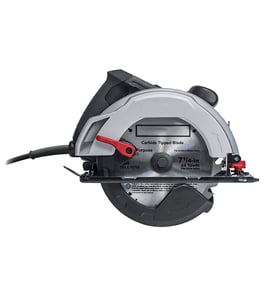

What size blade is a Craftsman 31527782 circular saw?
The Craftsman model 31527782 is a 7-inch electric hand saw, so it uses a 7-inch circular saw blade (measured by blade diameter). For best results, match the blade’s arbor (center hole) size and the saw’s maximum RPM rating when you buy a replacement blade on Sears PartsDirect.
How to confirm the blade size on your saw
Check these common spots on the Craftsman 31527782:
- The blade guard label (often lists blade diameter and arbor size)
- The motor housing nameplate (may list RPM and electrical rating)
- The blade itself (diameter is usually printed on the blade face)
- The arbor washer or flange (sometimes stamped with size)
What to match when choosing a replacement blade
Blade diameter is only the first step. Also match:
- Arbor size: Common sizes are 5/8 inch or 1/2 inch (use the size printed on the blade/guard)
- Blade type: Framing, plywood, finish, or general-purpose
- Tooth count: More teeth = smoother cut; fewer teeth = faster rip cuts
- Max RPM: The blade’s rated RPM must meet or exceed the saw’s no-load RPM
Quick blade selection guide
| Cutting task | Typical blade style | Typical tooth count (7-inch) |
|---|---|---|
| Fast ripping (2x lumber) | Carbide framing/ripping | 18 to 24T |
| General construction | General-purpose carbide | 24 to 40T |
| Cleaner crosscuts/plywood | Fine-finish plywood blade | 40 to 60T |
Why it matters
Using the correct 7-inch blade diameter helps the lower guard close properly and keeps the blade at the right depth range. Matching arbor size and RPM rating helps prevent wobble, poor cut quality, and unsafe operation.
Last updated: February 2026
What is a lock-off switch on a circular saw?
A lock-off switch on a circular saw is a built-in safety button or lever that helps prevent accidental starts. On the Craftsman 31527782 7-inch electric hand saw, you typically must press the lock-off and then squeeze the trigger to run the motor.
What it does (and why it’s there)
The lock-off switch is designed to reduce the chance of the saw starting if the trigger gets bumped while you’re carrying it, setting it down, or plugging it in.
- Helps prevent unintended trigger activation
- Requires a deliberate two-step action to start the saw
- Reduces risk during handling, transport, and setup
- Encourages safer grip and hand placement before the blade spins
How to use it safely
Use this quick routine every time you cut:
- Unplug the saw before changing blades or making adjustments
- Set the saw on a stable surface before plugging it in
- Grip the main handle firmly; keep your index finger off the trigger until ready
- Press and hold the lock-off, then squeeze the trigger to start
- Let the blade reach full speed before entering the material
- Release the trigger and wait for the blade to stop completely before setting the saw down
Common lock-off switch issues and what they point to
| Symptom | What it usually means | What to do next |
|---|---|---|
| Lock-off won’t press | Dust, pitch buildup, or a jammed mechanism | Clean around the button; check for debris |
| Trigger won’t move after pressing lock-off | Worn trigger/lock linkage or internal damage | Inspect for cracks or sticking; plan repair |
| Saw starts without using lock-off | Lock-off mechanism is worn or broken | Stop using until repaired |
Why it matters
A circular saw blade reaches high speed fast; the lock-off switch is one of the simplest, most effective controls for preventing accidental startups that can cause kickback, dropped-tool incidents, or unintended cuts.
If you’re shopping for replacement components for the Craftsman 31527782, start with the model-specific parts list, or search by model number on Sears PartsDirect.
Last updated: February 2026
How to change an old Craftsman circular saw blade?
To change the blade on your Craftsman 31527782 7-inch electric hand saw, unplug the saw, lock the blade, remove the arbor bolt and outer washer, then lift the old blade out and install the new blade with the teeth facing the correct direction.
Safety first (do this every time)
- Unplug the saw (do not rely on the trigger lock).
- Wear cut-resistant gloves; carbide teeth are sharp.
- Set the saw on a stable bench with the blade guard closed.
- Use the correct wrench for the arbor bolt.
- Confirm the replacement blade is the right diameter (7 inch) and arbor size for this saw.
Step-by-step: blade removal and installation
- Unplug the saw.
- Retract the lower blade guard just enough to access the arbor area.
- Press and hold the spindle (shaft) lock button to keep the blade from turning.
- Loosen and remove the arbor bolt (turn direction varies by saw; if it will not loosen, try the opposite direction while holding the spindle lock).
- Remove the outer washer (flange).
- Lift the blade off the inner flange and out through the guard opening.
- Install the new blade so it sits flat on the inner flange and matches the rotation arrow on the blade guard.
- Reinstall the outer washer and arbor bolt; tighten firmly while holding the spindle lock.
Quick checks before you plug it back in
- Blade sits flat; no wobble at the flange
- Teeth face the correct direction
- Guard snaps back freely and does not rub
- Arbor bolt is snug (not cross-threaded)
| What you see | Likely cause | What to do |
|---|---|---|
| Blade will not come off | Resin buildup on flange | Wiggle blade gently; clean flange surfaces |
| Bolt will not loosen | Wrong loosen direction or lock not engaged | Hold spindle lock; try opposite direction |
| Blade wobbles | Washer/flange installed wrong or debris | Re-seat blade; clean washers and flange |
Why it matters
A correctly installed blade cuts straighter, reduces kickback risk, and prevents premature wear on the arbor, washers, and blade guard.
For replacement parts and diagrams for model 31527782, start with the parts list for this saw; you can also search by model number on Sears PartsDirect.
Last updated: February 2026
Why is my Craftsman circular saw not spinning?
If your Craftsman circular saw model 31527782 won’t spin, the most common causes are a power supply problem, a failed trigger/switch circuit, or worn motor brushes that no longer make solid contact with the armature. Start with quick power checks, then move to brush and wiring inspection.
Quick checks first (fastest wins)
- Confirm the outlet has power by testing it with another tool or lamp.
- If you’re using an extension cord, try a different cord (short, heavier gauge).
- Unplug the saw and check the power cord for cuts, crushed spots, or a loose strain relief.
- Make sure the blade isn’t jammed in the guard or bound in the kerf (kickback can stall the blade).
- Let the saw cool for 15 to 30 minutes if it stopped mid-cut (some motors have thermal protection).
Likely causes and what to look for
Worn motor brushes
Motor brushes wear down over time. When they get too short, chipped, or heat-damaged, the motor won’t get consistent power and the blade won’t spin.
Bad trigger switch or internal wiring
A failing trigger can stop sending power to the motor. Loose spade connectors, broken leads, or damaged insulation can also interrupt current flow.
Seized bearings or mechanical bind
If the motor hums but the blade doesn’t turn, the arbor/bearings can be binding, or debris can be locking the lower guard or blade area.
Simple symptom guide
| What you notice | Most likely issue | What to do next |
|---|---|---|
| No sound at all | Cord, trigger switch, brush contact | Inspect cord, then check brushes and connections |
| Hums but won’t spin | Jam, seized bearing, weak start circuit | Remove blade, check free-spin, inspect for binding |
| Runs only if you wiggle cord | Broken conductor in cord | Replace cord/repair wiring |
| Runs intermittently with sparks/odor | Brushes or commutator issue | Inspect brushes; stop using until corrected |
Why it matters
A saw that won’t spin is usually an electrical interruption (cord, switch, brushes) or a mechanical bind. Fixing the root cause prevents overheating, arcing at the brushes, and damage to the motor armature.
Parts and diagrams
We recommend using the model 31527782 parts diagrams to match the correct switch, brush set, cord, or guard components; you can also search by model number on Sears PartsDirect. For electrical troubleshooting basics, follow how to use a multimeter to test electrical parts video.
Last updated: February 2026
