Owner’s manual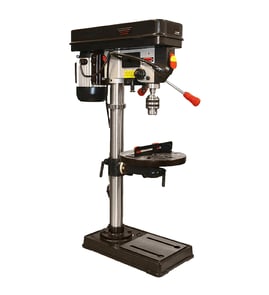

What is a good horsepower for a drill press?
A good horsepower depends on what you drill most often. For general home use, a 1/2 HP drill press handles wood and light metal well; for frequent larger bits, thicker stock, or harder metals, 3/4 to 1 HP is a better target. On the Craftsman 137229170 class of 17-inch drill presses, matching horsepower with correct speed and feed pressure matters as much as raw power (see the owner's manual).
Quick horsepower guide (what we recommend)
- 1/3 to 1/2 HP: wood, plastics, small bits, occasional metal drilling
- 3/4 HP: regular metalwork, larger Forstner bits, hole saws (within the tool’s limits)
- 1 HP and up: frequent heavy drilling, larger diameter bits, tougher alloys (best with slower speeds)
- More HP helps most when: you need torque at low RPM and you drill larger holes
- Less HP is fine when: you use sharp bits, correct RPM, and steady feed
How this applies to Craftsman 137229170 (17-inch drill press)
Even with a strong motor, performance comes from using the right setup:
- Use the correct spindle speed for the material and bit size
- Keep the belt guard closed and change speeds by belt position as directed
- Apply steady feed pressure; too fast can stall the motor or slip the belt
- For metal, use light lubrication to reduce heat and bit wear
Typical “power vs. capability” comparison
| What you’re drilling | Typical HP that feels comfortable | What matters most besides HP |
|---|---|---|
| Softwood, plywood | 1/3 to 1/2 | sharp bit, correct RPM, clamping |
| Hardwood | 1/2 to 3/4 | slower RPM, feed control |
| Mild steel/aluminum | 3/4 to 1 | low RPM torque, lubrication |
Why it matters
Choosing enough horsepower reduces stalling, belt slip, and burned bits, especially when drilling metal or using larger diameter bits. It also helps you maintain safer, smoother control at the feed handles.
Last updated: February 2026
How to take chuck off Craftsman drill?
To remove the chuck from your Craftsman drill press model 137229170, turn the power switch OFF, remove the yellow safety key, then use the spindle and quill keyholes with the included wedge key to pop the chuck and arbor out of the spindle. The step-by-step procedure is in the owner's manual.
Steps to remove the chuck and arbor (model 137229170)
- Turn the drill press OFF and wait for all motion to stop.
- Remove the yellow switch key so the tool cannot start accidentally.
- Set the depth stop so the quill is held at about 3 inches down (the manual uses this position for chuck removal).
- Rotate the chuck by hand to align the keyholes in the spindle and quill.
- Insert the key wedge into the aligned keyholes.
- Tap the wedge lightly with a plastic-tipped hammer until the chuck and arbor drop free.
- Keep one hand under the chuck to catch it as it falls.
Safety and setup tips
- Unplug the drill press before working around the chuck, spindle, or wiring.
- Use only light taps; heavy blows can damage the quill, spindle, or bearings.
- If the chuck will not release, re-check that the keyholes are fully aligned and the quill is held down by the depth stop.
What you are removing (quick reference)
| Item | What it is | What it does |
|---|---|---|
| Chuck | The 3-jaw holder | Grips the drill bit using the chuck key |
| Arbor | The tapered shaft between chuck and spindle | Seats the chuck into the spindle taper |
| Wedge key | The removal tool | Forces the arbor loose from the spindle taper |
Why it matters
Removing the chuck the correct way protects the spindle taper and keeps the chuck running true. A damaged taper or bent quill can cause wobble, poor hole accuracy, and premature bearing wear.
Last updated: February 2026
What are the three types of drill presses?
The three most common drill press types are benchtop, floor (standing), and magnetic drill presses. Your Craftsman 137229170 is a 17-inch drill press in the floor/standing category, built for stability, larger workpieces, and a wider speed range.
The 3 main drill press types (quick definitions)
- Benchtop drill press: Compact unit that bolts to a bench; best for lighter-duty drilling and smaller stock.
- Floor (standing) drill press: Taller, heavier press with a base and column; better leverage, stability, and capacity.
- Magnetic drill press: Portable drill that clamps to steel using an electromagnet; common for on-site metal fabrication.
How they compare
| Type | Best for | Typical setup | Key tradeoff |
|---|---|---|---|
| Benchtop | Small projects, limited space | Bolted to a workbench | Less capacity and leverage |
| Floor (standing) | Larger workpieces, repeat drilling | Bolted to floor or bench/base | Takes more space |
| Magnetic | Field work on steel | Magnet base on ferrous metal | Specialized use, not for wood benches |
What this means for Craftsman 137229170 owners
A floor drill press like the Craftsman 137229170 is designed to be secured and operated safely with the head and table locked in place. For best results, we follow the speed chart under the belt guard and clamp the work instead of holding it by hand.
Setup and safety basics we recommend
- Bolt the drill press securely to a workbench (and bolt the bench to the floor if it can move).
- Clamp the workpiece using a vise or clamps; keep hands out of the drill bit path.
- Keep the belt guard closed while operating.
- Set spindle speed by moving the belt on the pulley steps (this model uses multiple speeds).
- Avoid loose clothing, gloves, and anything that can catch the rotating spindle.
Why it matters
Choosing the right drill press type affects accuracy, safety, and the materials you can drill. A stable floor drill press helps reduce bit wandering, vibration, and binding, especially when drilling thicker wood or metal.
For model-specific operating details (including belt placement and the spindle speed chart), use the owner's manual.
Last updated: February 2026