 Owner’s manual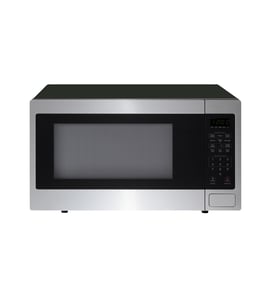



How many cubic feet is a Kenmore Model 72162349202 microwave?
The Kenmore 72162349202 countertop microwave has an oven cavity capacity of 1.6 cubic feet, based on the specifications listed in the 72162349202 use and care guide.
Where this capacity comes from
In the specifications section, the manual lists “Capacity of oven cavity: 1.6 Cu. Ft.” for this model series.
Quick specs that help confirm you have the right unit
These related specs are often listed near the capacity and can help you match the correct Kenmore microwave:
- Power supply: 120 V AC, 60 Hz
- Rated power consumption: 1,650 W
- Microwave output: 1,200 W
- Overall dimensions (W x H x D): about 22 3/32 in x 13 17/32 in x 17 5/16 in
- Oven cavity dimensions (W x H x D): about 16 9/16 in x 10 9/32 in x 16 1/16 in
Capacity vs. dimensions (what it means)
| Spec | What it tells you | Why you care |
|---|---|---|
| 1.6 cu. ft. capacity | Interior volume | Helps estimate what size dishes fit |
| Cavity dimensions | Interior width, height, depth | Helps confirm fit for specific cookware |
| Overall dimensions | Outside size of the microwave | Helps confirm counter space and clearance |
Why it matters
Capacity is the best quick way to compare countertop microwaves for usable interior space. For Kenmore model 72162349202, 1.6 cu. ft. is the number to use when shopping for accessories, planning countertop space, or comparing to a replacement unit.
Last updated: January 2026
What is a standard size countertop microwave?
A “standard size” countertop microwave is typically about 21 to 25 inches wide, 12 to 15 inches tall, and 16 to 20 inches deep, with roughly 1.0 to 2.2 cubic feet of capacity. For Kenmore model 72162349202, the manual lists 22 1/32 in. W x 13 17/32 in. H x 17 5/16 in. D and 1.6 cu. ft. capacity; see the 72162349202 owner's manual.
Standard countertop microwave size ranges
Most countertop microwaves fall into these common ranges:
- Width: ~21 to 25 inches
- Height: ~12 to 15 inches
- Depth (door closed): ~16 to 20 inches
- Capacity: ~1.0 to 2.2 cu. ft.
Quick comparison
| Size category | Typical capacity | Typical width | Best for |
|---|---|---|---|
| Compact | 0.7 to 1.0 cu. ft. | 17 to 20 in. | Dorms, small kitchens |
| Mid-size (most common) | 1.1 to 1.7 cu. ft. | 20 to 24 in. | Everyday reheating and cooking |
| Large | 1.8 to 2.2 cu. ft. | 24 to 25+ in. | Large plates, family portions |
What to measure before you buy or replace a microwave
To avoid fit issues on a counter, shelf, or cart, we recommend checking:
- Overall width, height, and depth (door closed)
- Door swing clearance in front
- Ventilation space around the cabinet (many models need a few inches on sides, top, and rear)
- Electrical needs (most are 120 V household outlets)
Why it matters
Microwave “standard size” is really a range; the right size depends on your available space and the dishes you use most. Matching the overall dimensions and allowing ventilation helps prevent overheating and nuisance shutdowns.
Last updated: January 2026
Can you put stuff on top of a countertop microwave?
Yes, you can place light items on top of a Kenmore countertop microwave model 72162349202 as long as you do not block ventilation. This model needs at least 4 inches of open space at the left, right, top, and rear for proper airflow, so anything stored on top must not reduce that clearance.
Safe guidelines for storing items on top
- Keep the top surface clear of anything that covers side or rear vents or traps heat.
- Use only light, non-breakable items (paper towels, oven mitts, plastic wrap box).
- Avoid anything that can melt or deform from warmth (candles, wax, some plastics).
- Do not store liquids (spills can run into the control panel or cabinet seams).
- Do not store metal objects that could fall into the door area.
Quick “OK vs not OK” table
| Item on top | Usually OK? | Why |
|---|---|---|
| Paper towels, napkins | Yes | Light and low risk if airflow stays open |
| Microwave cover (plastic dome) | Yes | Light, easy to remove before cooking |
| Cookbooks, cereal boxes | Sometimes | Can block airflow and trap heat |
| Small appliances (toaster, air fryer) | No | Heavy, heat buildup, vibration risk |
| Cleaning sprays or aerosols | No | Heat exposure and spill risk |
Why it matters
Countertop microwaves pull cooling air through inlet and outlet openings. If you reduce the required clearance (especially the top space), internal components can run hotter, which shortens the life of parts like the thermostat and high-voltage components.
Best practice for this model
Follow the spacing and placement guidance in the 72162349202 owner's manual. If you need extra counter space, a better option is to relocate the microwave to a shelf or cart that still maintains the 4-inch ventilation clearance.
Last updated: January 2026
Is Kenmore a good microwave?
Yes. Kenmore microwaves are a strong choice for everyday heating and defrosting, and the Kenmore 72162349202 is a practical countertop model with solid power and usable capacity for most households. For the exact specifications and operating tips, use the 72162349202 owner's manual.
What we can say about the Kenmore 72162349202
The manual for this model lists these key specs and setup requirements:
- Microwave output: 1,200 W
- Oven cavity capacity: 1.6 cu. ft.
- Power supply: 120 V AC, 60 Hz
- Rated power consumption: 1,650 W
- Ventilation clearance: at least 4 inches on the left, right, top, and rear
Key specs at a glance
| Spec | Kenmore 72162349202 | Why it matters |
|---|---|---|
| Microwave output | 1,200 W | Faster heating and better performance on larger portions |
| Cavity capacity | 1.6 cu. ft. | Helps you judge what dish sizes fit |
| Power supply | 120 V AC, 60 Hz | Works on a standard kitchen outlet |
| Rated power consumption | 1,650 W | Useful for planning circuit load |
What “good” means in day-to-day use
A microwave is “good” when it heats consistently, fits your space, and stays reliable with normal use. These checks help you judge performance quickly:
- Use a microwave-safe cup of water to confirm it heats normally.
- Keep the required ventilation clearance so it does not overheat.
- Install the turntable and roller rest correctly; never place the glass turntable upside down.
- Avoid chips or scratches on the turntable edges; damage can lead to breakage during use.
When “not heating” points to a repair
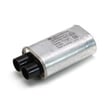
If the microwave runs but does not heat, the issue is typically in the high-voltage heating circuit. Common parts involved include the microwave magnetron 6324W1A001L, high-voltage diode, or capacitor. High-voltage components are hazardous; we recommend professional service for diagnosis and repair.
Why it matters
Many “bad microwave” complaints come from incorrect setup (clearance, turntable installation) or a developing heating-system failure. Using the model’s specs and troubleshooting guidance helps you separate normal behavior from a repair need.
Last updated: January 2026


