Owner’s manual
 Error Codes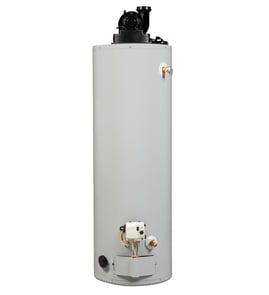



How do I read my water heater model number?
Your Kenmore gas water heater model number is printed on the model rating plate on the front of the tank. For model 153336566, use the exact model number from that plate (plus the serial number) whenever you look up parts, troubleshooting steps, or service information in the owner's manual.
Where to find the model number on the heater
Look for a label called the rating plate on the front of the water heater. It typically lists several items, but the key fields you need are:
- Model number (example: 153336566)
- Serial number (unique to your tank)
- Gas type (natural gas or propane)
- Capacity (gallons) and other specs (helpful, but not required for most parts lookups)
How to “read” it correctly (what to copy)
When you write down the model number, copy it exactly as shown.
- Use all digits (do not drop or shorten numbers)
- Keep punctuation/format if shown on the plate (some labels show dots or commas)
- Record the serial number too; it helps identify production details
- Note the gas type so you match the correct burner and pilot components
Quick example
| What you see on the rating plate | What to use for parts lookup |
|---|---|
| Model No. 153.336566 | 153336566 |
| Serial No. (varies) | Copy exactly |
Why it matters
Kenmore water heaters often share similar-looking parts across multiple tank sizes and fuel configurations. Using the exact model number helps us match the correct parts list and avoid ordering the wrong pilot assembly, burner tube, or valve.
Last updated: February 2026
Is it worth replacing the anode rod in a water heater?
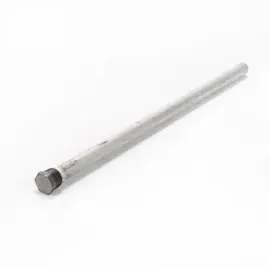
Yes. Replacing the anode rod in your Kenmore 153336566 gas water heater is worth it because the rod is designed to sacrifice itself to corrosion so the tank does not; keeping a good anode in place directly extends tank life and helps prevent premature leaks.
What the anode rod does (and why it fails)
The anode rod is submerged in the tank and slowly deteriorates as water ions attack it instead of attacking the steel tank. As it gets depleted, the tank loses corrosion protection, which is when rust and tank failure become much more likely.
What we recommend for this model
- Keep at least one working anode rod installed at all times.
- Inspect the anode more often if your water has high conductivity (a heavily pitted rod is a sign).
- At a minimum, check the anode annually after the warranty period.
- Replace the rod when it is significantly corroded, pitted, or reduced in diameter.
Which replacement part to use
This model has more than one anode rod option listed. Match by your model number and the part currently installed.
| Part option | Part name | Part ID | When it’s a good fit |
|---|---|---|---|
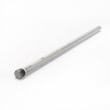
| Option A | Anode rod | 100109624 | When your existing rod matches this style/length/connection |
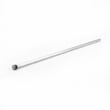
| Option B | Anode rod | 100108260 | When your existing rod matches this style/length/connection |
Relevant parts on this model page include anode rod 100109624 and anode rod 100108260.
Symptoms that point to a worn anode rod
- Rust-colored hot water (especially after sitting)
- Metallic odor or taste in hot water
- Faster-than-normal tank corrosion signs around fittings
- “Rotten egg” smell (can be related to anode reaction with certain water conditions)
Why it matters
An anode rod is a relatively low-cost maintenance part compared with replacing a leaking tank. Staying on top of anode inspection is one of the most effective ways to protect the tank and keep your Kenmore gas water heater operating reliably.
For model-specific maintenance and safety notes, follow the inspection guidance in the owner's manual.
Last updated: February 2026
What is the life expectancy of a Kenmore water heater?
Most Kenmore tank-style gas water heaters, including model 153336566, typically last 8 to 12 years. Regular maintenance (especially checking the anode rod and flushing sediment) helps the tank last longer and keeps heating performance steady; see the owner's manual.
What affects water heater lifespan most
- Anode rod condition: a depleted anode accelerates tank corrosion.
- Water quality and conductivity: higher conductivity can wear the anode faster.
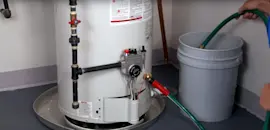
- Sediment buildup: reduces efficiency and can overheat the tank bottom.
- Installation environment: moisture, poor drainage, and restricted airflow shorten life.
- Operating habits: very high temperature settings increase stress on components.
Maintenance schedule we recommend
The manual notes that replacing a depleted anode rod can extend water heater life, and that anode inspection should be done at least annually after the warranty period.
| Task | Typical timing | Why it matters |
|---|---|---|
| Inspect anode rod | Yearly after warranty | Protects the tank from corrosion |
| Flush sediment from tank | Periodically (often yearly) | Helps heating efficiency and reduces rumbling |
| Check T&P relief valve and discharge piping | Yearly | Helps prevent unsafe pressure/temperature conditions |
| Drain tank for freeze shutdown | As needed | Prevents freeze damage |
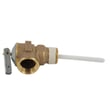
If you need a replacement, match the part to your model: anode rod 100109624 and water heater temperature and pressure relief valve 100108279 are examples of common wear items listed for this unit.
Signs your water heater is near end of life
- Rusty water or metallic odor that returns after flushing
- Popping or rumbling sounds from heavy sediment
- Frequent pilot outages or burner issues
- Moisture or water around the base of the tank
Why it matters
A water heater usually fails from tank corrosion or sediment-related stress. Staying ahead of anode wear and sediment buildup is the most reliable way to reach (and often exceed) the typical 8 to 12 year lifespan.
Last updated: February 2026
What is the most common problem with gas water heaters?
The most common gas water heater problem is ignition trouble, usually a pilot that will not stay lit. On Kenmore model 153336566, pilot outages can also be triggered by excessive condensation early in a heat-up cycle, especially with very cold incoming water.
What you will notice first
- Pilot light goes out or will not stay lit
- No hot water or water turns lukewarm quickly
- “Sizzling” or “frying” sounds during burner operation (often condensation dripping)
- Occasional smoke or odor at initial start-up (burn-off from manufacturing oils)
- Water on the floor that looks like a leak but stops after the tank warms
Common causes and the parts that relate
| Symptom | Common cause | What to check first | Parts that often apply |
|---|---|---|---|
| Pilot will not stay lit | Condensation dripping onto burner, dirty pilot, weak ignition | Let tank warm 1 to 2 hours; inspect pilot area | Water heater pilot assembly 100109290, water heater igniter 100109221 |
| Water appears to be leaking | Condensation on tank surfaces or piping | Confirm it stops after warm-up; check pipe joints | Tube gasket 100108744 (if a gasketed connection is seeping) |
| Drips from discharge pipe | Thermal expansion or high water pressure | Look for intermittent dripping only | Water heater temperature and pressure relief valve 100108279 |
| Rotten egg smell | Anode rod reaction with water chemistry | Inspect anode condition; do not remove and leave tank unprotected | Anode rod 100109624 or anode rod 100108260 |
Quick checks we recommend (safe, no disassembly)
- Make sure the tank is completely full and water flows from a hot faucet before turning gas on.
- If you see water after a cold start, wait about 1 to 2 hours; condensation often disappears once the tank warms.
- If the pilot drops out during “frying” noises, focus on condensation and venting conditions.
- If the relief valve drips, check for high pressure or thermal expansion conditions.
- If the system has been unused for 2 weeks or more, open a hot faucet for several minutes before using connected appliances.
Why it matters
Pilot and condensation issues can look like bigger failures (like a tank leak). Correctly identifying condensation, venting-related moisture, or a weak pilot/ignition prevents unnecessary part replacement and helps restore reliable hot water faster.
For model-specific lighting and safety steps, follow the owner's manual.
Last updated: February 2026