Error Codes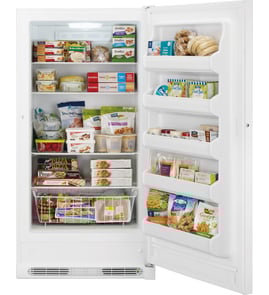





What is the average lifespan of an upright freezer?
Most upright freezers, including the GE FUF21SMRFWW, typically last 10 to 15 years. With steady indoor temperatures, good airflow around the cabinet, and routine cleaning, it’s common to reach the high end of that range before major sealed-system or control issues show up.
What affects lifespan the most
- Room temperature: Hot garages and unconditioned spaces make the compressor work harder.
- Airflow and dust: Dirty condenser areas raise operating temps and shorten compressor life.
- Door seal habits: Frequent door openings and poor sealing increase frost and run time.
- Defrost performance: Heavy frost from a defrost problem strains the evaporator fan and cooling system.
- Power quality: Surges and repeated outages can damage electronics.
Quick maintenance that helps you reach 15 years
- Vacuum dust from vents and lower rear areas every 6 to 12 months.
- Keep the freezer reasonably full (but do not block air vents).
- Confirm the door closes easily and stays shut; avoid overloading door bins.
- Defrost and clear ice buildup if you notice thick frost.
- Use a thermometer and keep temps near 0°F for normal food storage.
“Repair or replace?” rule of thumb
| Freezer age | Common situation | Practical next step |
|---|---|---|
| 0 to 7 years | Single failed part | Repair is usually worth it |
| 8 to 12 years | Repeated issues or cooling complaints | Compare repair cost vs. replacement |
| 13+ years | Sealed-system or major electronic failure | Replacement often makes more sense |
Why it matters
Knowing the typical lifespan helps you decide when a symptom is likely a simple part failure (like a relay or sensor) versus a bigger cooling-system problem. For example, a no-start or clicking issue can point to the freezer compressor start relay WR55X32224, which is a common wear item compared to a compressor replacement.
Last updated: February 2026
What's the difference between a regular upright freezer and a garage ready freezer?
A “garage ready” upright freezer is built and tested to keep safe freezer temperatures through a wider range of room temperatures than a standard upright freezer. For a GE FUF21SMRFWW, using a non-garage-rated unit in an unconditioned garage can lead to temperature swings, longer run times, and more wear on the cooling system.
What “garage ready” usually means
Garage-ready (or garage-rated) freezers typically include design choices that help them operate when the surrounding air is very hot or very cold.
Common differences include:
- Wider approved ambient temperature range
- Controls and sensors calibrated for colder spaces
- Better airflow management around the evaporator and condenser
- More robust compressor start performance in cold conditions
- Insulation and door sealing designed to reduce heat gain in hot garages
What can happen with a standard upright freezer in a garage
A standard upright freezer can work in a garage, but performance depends heavily on the garage temperature.
Typical symptoms when conditions are outside the freezer’s comfort zone:
- Food softening or partial thawing during hot spells
- Excess frost buildup and longer defrost recovery
- Compressor clicking or struggling to start in cold weather
- Higher energy use during extreme heat
- Shorter life for key cooling components
Quick comparison
| Feature | Standard upright freezer | Garage-ready upright freezer |
|---|---|---|
| Ambient temperature tolerance | Narrower | Wider |
| Cold-weather starting | More likely to struggle | Designed to start reliably |
| Hot-garage performance | Longer run times | More stable temps |
| Best location | Climate-controlled space | Garage, basement, utility area |
Why it matters
Freezers protect food by staying consistently cold. When the surrounding temperature is too hot or too cold, the freezer’s sensors, compressor, and defrost system can’t maintain stable operation, which risks food quality and increases wear.
If your FUF21SMRFWW is already in a garage
Use these practical checks to reduce problems:
- Keep the freezer out of direct sun and away from heat sources
- Leave proper clearance for airflow around the cabinet
- Set the temperature to maintain about 0°F (check with a thermometer)
- Watch for heavy frost or warm spots, which can point to airflow or defrost issues
- If you see repeated starting issues, inspect the compressor start components such as the freezer compressor start relay WR55X32224
Last updated: February 2026
What is the disadvantage of an upright freezer?
The main disadvantages of an upright freezer (including the GE FUF21SMRFWW) are higher energy use and less usable storage for bulky items compared with a chest freezer. Because cold air spills out when you open the door, uprights tend to run more often and can be more prone to frost and temperature swings.
Common drawbacks to expect
- Higher operating cost: more cold-air loss each door opening means more compressor run time.
- Less room for bulky items: shelves and door bins limit tall or awkward packages.
- More frost management: many uprights need periodic defrosting or can build frost in high-humidity areas.
- More parts involved: fans, sensors, and controls add convenience but also add failure points.
- Door seal sensitivity: a small gasket leak can quickly cause frost and warming.
Upright vs. chest freezer: quick comparison
| Feature | Upright freezer | Chest freezer |
|---|---|---|
| Organization | Excellent (shelves, bins) | Harder (stacking) |
| Energy efficiency | Typically lower | Typically higher |
| Bulky item storage | Typically harder | Typically easier |
| Cold-air loss when opened | Higher | Lower |
Why it matters for performance and repairs
When an upright runs more often, it puts more demand on the sealed system and airflow components. If you notice warming, heavy frost, or loud cycling, the issue is often tied to defrost or airflow.
Parts that commonly relate to upright-freezer symptoms
- Freezer temperature sensor WR55X27914 (temperature feedback to the control)
- Freezer defrost sensor WR09X27221 (helps manage defrost timing)
- Defrost heater WR09X31028 (melts frost off the evaporator)
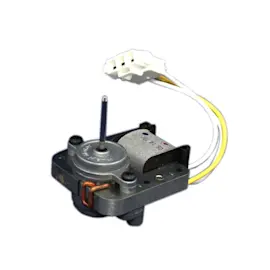
- Evaporator fan motor WR60X43391 (moves cold air through the cabinet)
Practical tips to reduce the disadvantages
- Open the door less often and close it firmly each time.
- Keep food packages from blocking interior vents.
- Leave space around the cabinet for airflow.
- If frost builds up, follow a safe manual defrost routine using how to defrost a freestanding freezer.
Last updated: February 2026
What is the most reliable brand of upright freezer?
GE is one of the most reliable upright freezer brands overall, and it is a strong choice if you want consistent temperatures, readily available replacement parts, and long-term serviceability. For your GE FUF21SMRFWW upright freezer, reliability also improves when you keep airflow clear and address cooling or defrost issues early.
What “reliable” means for an upright freezer
Reliability usually comes down to steady cooling, fewer defrost problems, and parts support over time. Across major brands, these factors matter most:
- Stable cabinet temperature (fewer warm-ups)
- A healthy sealed system (compressor, evaporator, drier)
- A working defrost system (heater, sensors)
- Good door sealing and door-ajar habits
- Easy access to model-specific replacement parts
Brand comparison (practical, ownership-focused)
| Brand | Typical strengths | What to watch for |
|---|---|---|
| GE | Strong parts availability, solid mainstream designs | Defrost and control issues can cause warming if ignored |
| Frigidaire | Consistent cooling designs in many models | Frost buildup if door sealing or defrost components weaken |
| Whirlpool | Straightforward layouts, good mid-range options | Temperature swings if airflow is blocked or sensors drift |
Parts that most often affect “reliability” in real life
If an upright freezer starts warming, frosting up, or running constantly, these are common culprits we see customers replace:
- Freezer compressor start relay WR55X32224 (no-start, clicking, intermittent cooling)
- Main control board WR55X43387 (erratic temps, no defrost cycles, dead display)
- Freezer temperature sensor WR55X27914 (incorrect temperature readings)
- Defrost heater WR09X31029 (heavy frost on evaporator, poor airflow)
- Evaporator fan motor WR60X43391 (warm cabinet, weak airflow, noisy fan)
Why it matters
A “reliable” brand still depends on maintenance and quick troubleshooting. A small issue like a failing start relay or a frosted-over evaporator can look like a major failure, but fixing the right component early often prevents food loss and reduces compressor wear.
Helpful next step
If you’re comparing reliability based on repairability, use your model’s parts list as a benchmark: when key items like sensors, control boards, and fan motors are readily available, long-term ownership is simpler.
Last updated: February 2026