
How many square feet will a 80,000 BTU furnace heat?
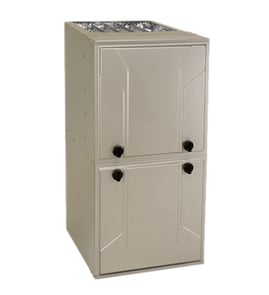
An 80,000 BTU furnace like the Ducane UHZB085A3 typically heats about 1,600 to 2,400 square feet, depending on your climate zone, insulation, ceiling height, and ductwork condition. In colder regions or older homes, expect the lower end of that range.
Quick sizing rule of thumb
Most homes land in a BTU per square foot range like this:
- Mild climate, tight/insulated home: 25 to 35 BTU per sq ft
- Moderate climate, average insulation: 35 to 45 BTU per sq ft
- Cold climate, older or leaky home: 45 to 60 BTU per sq ft
Square feet estimate = 80,000 ÷ (BTU per sq ft)
| Home/climate scenario | BTU per sq ft | Approx. area for 80,000 BTU |
|---|---|---|
| Mild, well insulated | 30 | ~2,650 sq ft |
| Moderate, average | 40 | ~2,000 sq ft |
| Cold, drafty/older | 55 | ~1,450 sq ft |
What changes the real-world coverage
These factors often move the result by hundreds of square feet:
- Ceiling height: tall ceilings increase the heated volume
- Insulation and air sealing: attic insulation and window/door leaks matter most
- Duct losses: leaky or uninsulated ducts reduce delivered heat
- Furnace efficiency (AFUE): higher efficiency delivers more usable heat to the home
- Thermostat setbacks and comfort expectations: warmer setpoints need more capacity
Why it matters
If the furnace is too small, it can run constantly and still struggle on the coldest days. If it is too large, it can short-cycle, feel less comfortable, and put extra wear on parts like the blower motor and limit controls.
Best next step for accurate sizing
For the most accurate answer, we recommend a Manual J load calculation (it accounts for your exact home size, insulation, windows, and local design temperature). If you are confirming you have the right model information before ordering parts, use our guide: how to find your appliance model number (and what it means for parts).
Last updated: February 2026
How do I find my furnace model number?
For your Ducane furnace, the model number is typically on the rating plate (data tag) attached to the cabinet. On the UHZB085A3 1/3-hp upflow horizontal oil furnace, you’ll usually find it behind an access panel or on an exterior cabinet wall; always shut off power before opening panels.
Where to look on a Ducane furnace
Check these common locations on the furnace cabinet:
- Inside the burner compartment door or blower compartment door
- On the inside wall of the cabinet near the burner assembly
- On the inside wall near the blower housing or motor area
- On an exterior side panel of the cabinet (less common)
- Near where the oil line or electrical wiring enters the cabinet
What to write down (so parts match)
Record the full information exactly as shown on the data tag:
- Model number (example: UHZB085A3)
- Serial number
- Brand (Ducane)
- Fuel type (oil) and any listed input/output ratings
Quick checklist before you open the furnace
Oil furnaces have electrical and combustion components; use basic safety steps.
- Turn the thermostat to OFF
- Shut off power at the furnace switch or breaker
- Let the unit cool for 10 to 15 minutes
- Remove only the access panel needed to view the rating plate
- Reinstall panels securely before restoring power
Model number vs. serial number (what each is for)
| Item | What it identifies | Why it matters |
|---|---|---|
| Model number | The furnace design and parts list | Ensures the correct replacement parts fit |
| Serial number | Your specific unit’s production run | Helps match revisions and date-related changes |
Why it matters
Using the exact model number prevents ordering the wrong igniter, motor, control, or safety switch; even small model variations can change wiring, mounting, and airflow specs.
For a quick visual guide to locating and recording the model number, use our article: how to find your appliance model number (and what it means for parts).
Last updated: February 2026
Should a 25 year old furnace be replaced?
Yes. A 25-year-old furnace is past the typical service life, so replacement is the right call for most homes, especially if your Ducane UHZB085A3 has frequent breakdowns, uneven heat, or rising fuel use. Replacing now helps avoid a no-heat failure during cold weather.
Typical furnace lifespan (what to expect)
Most furnaces last 15 to 20 years with regular maintenance. At 25 years, age-related wear commonly shows up in the burner system, blower motor, safety controls, and heat exchanger area.
| Age of furnace | What it usually means | Best next step |
|---|---|---|
| 0 to 10 years | Normal wear | Maintain and repair as needed |
| 10 to 20 years | More repairs, efficiency drop | Compare repair cost vs. replacement |
| 20+ years | End-of-life risk is high | Plan replacement; limit major repairs |
When replacement is the better choice
We recommend replacement when one or more of these are true:
- You have repeated service calls in the last 1 to 2 heating seasons
- The furnace short cycles (starts and stops often) or struggles to keep temperature
- You notice new noises (rumbling, squealing, grinding) from the blower or burner area
- You see soot, strong oil odors, or persistent smoke at startup
- A single repair estimate is large enough that it does not make sense for a 25-year-old unit
Quick checks you can do before deciding
These steps help you separate a simple issue (maintenance) from end-of-life problems:
- Replace or clean the air filter and confirm return vents are not blocked
- Verify the thermostat settings and fresh batteries (if applicable)
- Check the breaker/service switch and any furnace fuse
- Look for loose, overheated, or damaged wiring at accessible connections
- Confirm the blower compartment door is fully seated (door switch engaged)
For safe electrical testing basics, use our guide: how to use a multimeter to test electrical parts video.
Why it matters
A furnace this old can fail without warning, and major repairs rarely pay back because other aging components are close behind. Planning a replacement lets you choose the right capacity and efficiency level instead of making a rushed decision during an emergency.
Last updated: February 2026
How much does a new furnace cost for a 1000 sq ft house?
For a 1,000 sq ft home, a new furnace commonly costs about $3,500 to $7,000 installed, depending on fuel type (oil, gas, electric), efficiency rating, and whether ductwork, venting, or electrical upgrades are needed. Your Ducane UHZB085A3 is an oil furnace, and oil-furnace installs often land toward the higher end when venting and fuel-line work is involved.
What drives the price most
- Fuel type: oil vs. gas vs. electric (oil systems often have more involved setup)
- Efficiency (AFUE): higher efficiency typically costs more up front
- Blower and controls: ECM blower motors and advanced control boards raise cost
- Venting and chimney work: liners, draft requirements, and code updates
- Ductwork condition: sealing, resizing, or adding returns can add significant labor
- Permits and labor rates: vary by region and season
Typical cost breakdown (what you are paying for)
| Cost item | What it covers | Typical share of total |
|---|---|---|
| Furnace equipment | Cabinet, heat exchanger, burner components, blower | 40% to 60% |
| Labor | Removal, set, hookup, startup, tuning | 25% to 45% |
| Materials and upgrades | Venting, electrical, duct transitions, filter rack | 10% to 25% |
Quick sizing guidance for 1,000 sq ft
Most 1,000 sq ft homes land in the 40,000 to 70,000 BTU input range, but the right size depends on insulation, windows, ceiling height, and climate. Oversizing can cause short-cycling, uneven temperatures, and higher wear on the igniter/burner and blower.
Why it matters
Getting the correct furnace type and size protects comfort and operating cost. It also reduces stress on high-wear components like the blower motor, limit switch, and burner controls, which helps avoid nuisance shutdowns and premature repairs.
Helpful next step
If you are comparing replacement options or trying to confirm your exact model before ordering repair parts, use our guide: how to find your appliance model number (and what it means for parts).
Last updated: February 2026
What is the life expectancy of a ducane furnace?
A Ducane furnace, including model UHZB085A3, has a typical life expectancy of 15 to 20 years. Reaching the high end depends on clean airflow, correct combustion setup, and keeping safety controls and electrical connections in good condition.
Typical lifespan by furnace type
Because maintenance needs vary by fuel type, use this as a quick reference:
| Furnace type | Typical life expectancy | What most often shortens life |
|---|---|---|
| Gas (natural gas or propane) | 15 to 20 years | Overheating from restricted airflow, corrosion, poor venting |
| Oil | 15 to 20 years | Soot buildup, burner misadjustment, fuel delivery issues |
| Electric | 20 to 30 years | Blower motor wear, electrical/control failures |
What to do to reach 15 to 20 years
These steps apply to Ducane furnaces in general and help prevent early heat exchanger and blower problems:
- Change or clean the air filter on schedule (commonly every 1 to 3 months)
- Keep supply registers and return grilles open and unobstructed
- Have a yearly tune-up (combustion check, safety controls, venting inspection)
- Address unusual smells, soot, or repeated cycling right away
- Keep wiring connections tight and components dry and clean
Signs your furnace is near end of life
- Frequent no-heat events or repeated service calls in the same season
- Rising energy use with no change in thermostat settings
- Excessive noise from the blower or burner area
- Visible corrosion, soot, or recurring rollout/limit switch trips
Why it matters
Once a furnace is in the later part of its service life, small issues like restricted airflow or weak electrical connections can turn into repeated shutdowns and higher operating costs. Preventive maintenance protects reliability and comfort.
For safe DIY electrical testing during troubleshooting, use how to use a multimeter to test electrical parts video.
Last updated: February 2026