Installation guide
 Owner’s manual
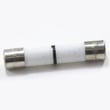


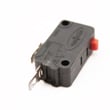
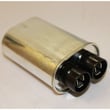
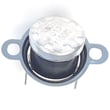
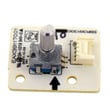
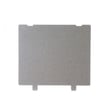
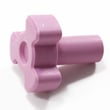
Is it worth repairing a GE microwave?
Yes, repairing a GE microwave is usually worth it when the fix is a common, lower-cost failure (especially door-interlock or safety components) and the unit is otherwise in good condition. For a built-in GE ZSC2202NSS02, repairs often make sense because replacement can involve additional installation labor; use the ZSC2202NSS02 owner's manual to match symptoms to features and normal operation.
Quick decision checklist
- The microwave powers on and runs, but has a specific symptom (no heat, no start, door error, sparking).
- The door closes firmly and the latch feels normal (no slop or misalignment).
- The problem is intermittent (often points to switches, latch alignment, or wiring connections).
- The repair is a single part and access is straightforward.
- You are not seeing repeated failures after a recent repair.
Repairs that are commonly worth doing
These are frequent, targeted fixes that can restore normal operation without replacing the whole unit:
- Door interlock switch issues: consider the primary switch WB24X10047 and monitor switch WB24X25397.
- Overheat or no-run protection trips: check the microwave thermal cut-off WB21X10148.
- Turntable not rotating: inspect the coupler and drive; the microwave turntable shaft WB02X11360 is a common wear item.
- Interior arcing or burn marks near the waveguide area: replace the microwave waveguide cover WB06X10828 and correct the cause (food splatter, damaged cover).
When replacement is usually the better value
| Situation | What it often indicates | Typical direction |
|---|---|---|
| Runs but does not heat | High-voltage circuit problem | Repair only if diagnosis is clear and cost-effective |
| Dead display or erratic controls | Control or power board issue | Compare repair cost vs. replacement |
| Multiple symptoms at once | Wiring harness, control, or multiple parts | Replacement often wins |
Why it matters (built-in models)
Built-in units like the GE ZSC2202NSS02 can cost more to replace because cabinet fit, trim, and installation steps matter. Following the installation guide helps you understand what is involved before you decide between repair and replacement.
Helpful troubleshooting resources
Last updated: February 2026
Do all GE microwaves use the same mounting bracket?
No. GE microwaves do not all use the same mounting bracket; bracket hole patterns, trim overlap, and cutout requirements vary by model and installation type. For the GE ZSC2202NSS02 built-in unit, we follow the model-specific cutout and support requirements in the ZSC2202NSS02 installation guide to ensure a secure, correctly aligned fit.
What to do when replacing a built-in GE microwave
- Match the replacement by exact model number (or approved replacement) before reusing any bracketry.
- Use the installation hardware specified for the new unit whenever it is provided.
- Verify the cabinet cutout width and that the oven support floor is solid, level, and rigid.
- Keep required clearances if installing above a wall oven or warming drawer.
- Have electrical connections made by a qualified electrician when required.
Key fit differences that prevent bracket swapping
Even within GE built-in and Speedcook-style installations, small differences can make an older bracket incompatible.
| Fit factor | Why it changes | What you check |
|---|---|---|
| Mounting points | Hole locations vary by chassis | Bracket-to-cabinet alignment |
| Trim/overlap | Overlaps conceal cut edges differently | Opening edges and reveal |
| Support floor | Must be rigid and flush with cutout bottom | 3/8-inch minimum plywood support |
| Stacked installs | Clearance needed between openings | 2-inch minimum separation |
Why it matters
A mismatched bracket can leave the microwave unsupported or misaligned, which can cause door fit issues, vibration, and unsafe mounting. Using the correct bracket and following the cutout and support specs protects the cabinet and the appliance.
Related installation notes for ZSC2202NSS02
From the installation requirements for this model family: the unit uses a dedicated, properly protected branch circuit and copper wiring, and power must be shut off during connections. For opening prep, the support surface is typically a solid 3/8-inch minimum plywood base supported on all sides, and stacked installations generally require at least 2 inches between openings.
Last updated: February 2026
What is the average lifespan of a GE microwave?
A GE microwave typically lasts 8 years. For a built-in model like GE ZSC2202NSS02, most owners see about 5 to 10 years depending on daily run time, ventilation, and how well the cavity and door are kept clean and undamaged.
Typical lifespan range (what to expect)
Most household microwaves fall into a predictable window:
- Light use (few minutes/day): 9 to 10 years
- Average use (10 to 20 minutes/day): about 8 years
- Heavy use (multiple cycles/day): 5 to 7 years
- Commercial-style use: replace sooner; parts wear faster
| Usage pattern | Typical lifespan | What usually wears first |
|---|---|---|
| Light | 9 to 10 years | Door switches, lamp, turntable parts |
| Average | ~8 years | Interlock switches, control board, motors |
| Heavy | 5 to 7 years | High-voltage components, switches, fans |
What shortens microwave life fastest
These are the most common life-reducers we see on built-in microwaves:
- Running the microwave empty (overheats components)
- Blocked airflow around the unit (built-ins need proper ventilation)
- Food splatter and grease buildup (can lead to arcing and overheating)
- Slamming the door or operating with a misaligned latch
- Repeated power interruptions or surges affecting the electronic control
Maintenance that helps you reach the full lifespan
We recommend these habits for ZSC2202NSS02:
- Wipe the cavity after messy cooking; keep the waveguide area clean
- Use microwave-safe cookware and avoid metal where not intended
- Keep the door closing smoothly; stop using it if the door does not latch consistently
- Follow the cleaning and care steps in the ZSC2202NSS02 owner’s manual
When repair makes sense vs. replacement
Why it matters: built-in microwaves cost more to install and remove, so a small part can be worth replacing.
- If the unit will not start and the door feels “off,” check the door interlock system; the primary switch WB24X10047 is a common wear item.
- If it runs but does not heat, use a symptom-based guide like why is my microwave not heating to narrow down likely causes before ordering parts.
Last updated: February 2026
What are the parts of a microwave?
A microwave like the GE ZSC2202NSS02 is built from a cooking cavity plus electrical and safety components that create microwave energy, move air, and prevent operation with the door open. Common parts include the control boards, door interlocks, turntable system, and high-voltage heating circuit.
Main microwave components (what they do)
- Control system: keypad/display and electronic boards that run cook cycles
- Door safety system: interlock switches and latch parts that confirm the door is closed
- High-voltage heating circuit: transformer and related components that power the heating system
- Cooking cavity: the metal interior where food sits and energy is contained
- Air movement: cooling/ventilation fan motor that moves air during operation
- Turntable system: tray, support, shaft, and motor that rotate food for even heating
- Waveguide cover (mica sheet): protective cover that helps keep splatter out of the waveguide area
Parts you will commonly see listed for this model
Here are examples of real, orderable parts for GE ZSC2202NSS02 that map to the systems above:
| System | Example part on this model | What you might notice when it fails |
|---|---|---|
| Door safety | Primary switch WB24X10047 | Unit will not start, stops when door moves, or acts intermittent |
| Door safety | Monitor switch WB24X25397 | Blown fuse symptoms or no-run condition after door events |
| Turntable | Microwave turntable shaft WB02X11360 | Tray wobbles, binds, or does not rotate smoothly |
| Heating/airflow | Circulating motor WB26X10182 | Poor airflow, unusual fan noise, uneven cooking results |
Why it matters
Knowing the major microwave parts helps you troubleshoot faster and order the right replacement. For example, the manual notes the turntable and clear glass tray should be in place when microwaving, and it also explains that arcing (sparks) is often caused by metal or foil contacting the oven walls. Those details point you toward checking the tray system, cookware choices, and the waveguide area before replacing electrical parts.
Where to confirm what your microwave uses
For GE ZSC2202NSS02, we recommend matching parts by the exploded-view diagrams and safety notes in the ZSC2202NSS02 owner’s manual.
Last updated: February 2026