



How do I tell if my furnace is upflow or downflow?
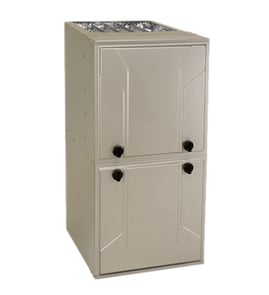
For your Icp gas furnace model GNJ050M12C1, you can tell upflow vs. downflow by identifying where the return air enters and where the heated supply air leaves. If air enters at the bottom and exits at the top, it is upflow; if it enters at the top and exits at the bottom, it is downflow.
Quick ways to identify airflow direction
- Look at the duct connections: the return duct connects where air enters the furnace; the supply duct connects where heated air leaves.
- Check the filter location: the filter is typically installed on the return air side (the side air enters).
- Find the blower compartment: in many furnaces, the blower sits on the return side of the heat exchanger.
- Follow the return grille path: return grilles lead back to the return plenum, which connects to the furnace inlet.
- Use a tissue test (heat running): a tissue will pull toward the return opening and blow away from a supply register.
Upflow vs. downflow at a glance
| Furnace type | Return air enters | Supply air exits | Common install location |
|---|---|---|---|
| Upflow | Bottom | Top | Basement, closet on slab |
| Downflow | Top | Bottom | Attic, some closet installs |
Why it matters
Airflow direction affects which duct transitions, filter rack orientation, and venting or condensate routing (on some systems) are used. Installing a furnace in the wrong orientation can cause poor airflow, nuisance limit trips, and comfort problems.
If you are troubleshooting airflow or heat issues
If you are checking airflow direction because the furnace is short-cycling, overheating, or not heating consistently, these checks often help:
- Replace a dirty filter and confirm it is installed on the return side
- Make sure supply registers are open and return grilles are not blocked
- Inspect the blower wheel for heavy dust buildup
- Watch for repeated high-temperature shutdowns (often tied to airflow)
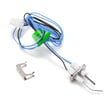
If you need to service ignition or flame sensing while diagnosing heat problems, match parts to your model, such as the furnace pilot igniter and sensor 1009524.
Last updated: January 2026
How to read a furnace model number?
For your Icp gas furnace model GNJ050M12C1, the model number is a short “code” that identifies the series and key specs. In many furnace model numbers, the digits often indicate the heating capacity (BTUs), while letters identify the product family and configuration.
Where to find the model number (and why it matters)
You’ll typically find the model and serial number on the furnace rating plate, often inside the burner compartment or on an interior cabinet panel.
- Use the model number to match parts and diagrams to your exact furnace
- Use the serial number to determine the manufacturing date (format varies by manufacturer)
- Confirm fuel type (natural gas vs. LP conversion) before ordering parts
- Confirm voltage and control style before replacing electrical components
Why it matters
Even small model-number differences can change the correct igniter style, limit switch temperature rating, or gas valve configuration. Matching the full model number helps prevent wrong-part returns and repeat repairs.
Breaking down GNJ050M12C1 (common industry pattern)
Manufacturers vary, but this is a practical way to interpret what you see:
| Segment | Example | What it commonly indicates |
|---|---|---|
| Brand/series prefix | GNJ | Product family/series (manufacturer-specific) |
| Capacity digits | 050 | Often about 50,000 BTU input class |
| Remaining suffix | M12C1 | Cabinet size, blower, revision, or configuration (manufacturer-specific) |
Tips to confirm capacity and the right replacement parts
If you are troubleshooting heat or ignition issues, confirm the rating plate details first, then match parts by model.
- If the furnace won’t light or won’t stay lit, check the furnace pilot igniter and sensor 1009524
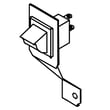
- If the burners shut off and the blower runs, check for overheating and inspect a limit switch 1013102 or limit switch 1013105
- If you suspect a fuel delivery issue, verify wiring and gas supply before replacing the valve 1170430
Quick safety note
Turn off electrical power to the furnace before removing panels or testing components. For gas valve diagnosis or fuel conversions, we recommend using a qualified technician.
Last updated: January 2026
How much is a furnace for an 800 sq ft house?
A new gas furnace for an 800 sq ft house typically runs $2,500 to $7,500 installed, depending on efficiency (AFUE), venting, and local labor. For Icp model GNJ050M12C1, price depends on whether you are repairing the existing unit or replacing it with a properly sized furnace.
Typical installed cost ranges
- Furnace equipment only: $1,200 to $4,000
- Installed total (most common): $2,500 to $7,500
- Complex installs: $8,000+ when venting, gas piping, electrical, or ductwork must be changed
| What changes the price most | Lower cost when | Higher cost when |
|---|---|---|
| Efficiency (AFUE) | Standard efficiency replacement | High-efficiency upgrade with condensate drain and new venting |
| Venting | Existing venting is compatible | New PVC venting, chimney liner, or reroute needed |
| Ductwork/airflow | Ducts are sized and sealed | Duct repairs, added returns, major sealing needed |
| Electrical/controls | Straight swap | New wiring, thermostat changes, control troubleshooting |
Sizing guidance for an 800 sq ft home
Most homes around 800 sq ft use a furnace in the 30,000 to 60,000 BTU input range. The correct size is set by insulation level, climate zone, window quality, and duct losses.
- Use a Manual J load calculation to pick the right BTU size
- Avoid oversizing; it causes short-cycling and comfort issues
- If your current furnace heats unevenly or short-cycles, sizing and airflow are the first checks
Repair vs. replace (often the biggest cost decision)
If your GNJ050M12C1 is failing due to ignition or safety shutdowns, a repair can cost far less than replacement. Common parts tied to “no heat” symptoms include the furnace pilot igniter and sensor 1009524 and the limit switch 1013102.
- No ignition or intermittent heat: igniter/sensor, pilot burner, gas valve diagnostics
- Blower runs but no heat: limit switch opening from overheating or restricted airflow
- Short cycling: overheating, venting problems, weak airflow, limit switch trips
Why it matters
Installed furnace cost is driven more by sizing and required venting or duct changes than by the furnace box itself. Getting the correct BTU size and safe venting prevents comfort problems and repeat service calls.
Last updated: January 2026