 Owner’s manual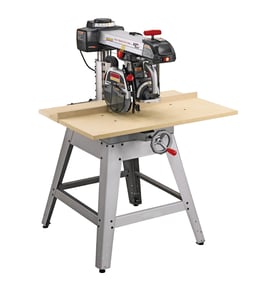

Are radial arm saws worth anything?
Yes. A Craftsman 11323301 12-inch radial arm saw is worth money and shop space when it is complete, tight, and accurately adjusted; it excels at repeatable crosscuts and certain dado or trenching setups, but it only pays off if you follow the safety and lock-down steps in the owner's manual.
What drives the value of a radial arm saw
Radial arm saw value is mostly about condition and how well it can be tuned for accurate, safe cuts.
- Completeness: guard, table/fence pieces, anti-kickback parts, and all knobs/locks present
- Mechanical tightness: arm latch, carriage travel, and bevel/swivel locks hold settings
- Accuracy potential: the saw can be indexed and locked consistently for repeat cuts
- Electrical condition: cord/plug condition and reliable start/run behavior
- Intended use: crosscutting and repeat work typically justify keeping one more than “do-everything” use
What this model is designed to do well
Your Craftsman 11323301 is described as a versatile saw with basic operations grouped into categories, and the manual emphasizes setup requirements for crosscut operations (tight arbor nut, guard installed, arm latch tight, work held firmly against the fence). Those strengths translate into real value when you use it for the jobs it does best.
| Task | Radial arm saw value | Notes for safer results |
|---|---|---|
| Wide crosscuts | High | Lock the arm and carriage; keep the work tight to the fence |
| Repetitive cut-to-length | High | Use consistent indexing and lock-down habits |
| Dados/trenching (with proper setup) | Medium to high | Use correct guarding and controlled feed |
| Ripping | Lower for most users | Requires careful anti-kickback setup and technique |
Safety and setup checks that protect value
A radial arm saw is only “worth it” when it is set up to resist movement and kickback.
- Tighten the arm latch before cutting
- Make sure the carriage lock is set appropriately for the operation
- Adjust the anti-kickback pawls so they just clear the work, then test that they grab against reverse movement
- Keep pawl tips sharp and maintained
- Use the manual’s “index in one direction” habit so settings repeat accurately
Why it matters
Most complaints about radial arm saws come from drift, loose locks, or unsafe setups. When the locks hold and the anti-kickback system is adjusted correctly, the saw becomes a reliable crosscut station, which is exactly where its resale and practical value come from.
Last updated: February 2026
What are the common problems with radial arm saws?
Common problems with the Craftsman 11323301 12-inch radial arm saw include excessive vibration or unfamiliar noise, inaccurate cuts caused by looseness (play) in the arm or column, unsafe cutting setups (wrong position for the operation), and electrical issues such as damaged cords or failed switches. When noise or vibration shows up, stop and correct the cause before using the saw again (see the 11323301 owner's manual).
Most common symptoms and what they usually mean
- Unfamiliar noise or excessive vibration: loose hardware, worn bearings, damaged blade, or misalignment.
- Saw “pulls” or grabs during a cut: carriage not locked when required, incorrect feed direction, or improper setup.
- Kickback while ripping: anti-kickback pawls not adjusted or dull, fence and feed technique issues.
- Inaccurate crosscuts or miters: play between the column and column support, indexing not locked, or arm/yoke not set correctly.
- Electrical problems (won’t start, intermittent power): failed electrical component, damaged wiring, or a bad connection.
Quick safety-first checks we recommend
- Unplug the saw before any adjustment, inspection, or blade change.
- Confirm guards are installed and set up for the operation (especially for dadoing or molding setups).
- Check for looseness (play) in the column and support, then tighten and adjust per the manual.
- Never cut free-hand; use the fence and proper support to prevent twisting or rotating.
- Stop immediately for vibration/noise and correct the source before resuming.
Setup mistakes that cause “problems” (and how to avoid them)
| Issue you notice | Common cause | What to do |
|---|---|---|
| Workpiece shifts or twists | Cutting free-hand | Use the fence and support devices |
| Saw feels like it lunges | Carriage lock not used when lowering into a cut | Lock carriage, then release only with a firm grip on the yoke handle |
| Kickback risk while ripping | Pawls not catching or dull | Test pawls, readjust, keep tips sharp |
| Poor accuracy after changing angles | Indexing not latched/locked | “Index” past the mark, return slowly, latch and lock |
Why it matters
Radial arm saw issues are often a mix of alignment and setup. Correct locking, indexing, guarding, and feed technique reduce vibration, improve cut accuracy, and help prevent kickback and loss of control.
Last updated: February 2026
When did Craftsman stop making radial arm saws?
Craftsman radial arm saws like model 11323301 were primarily produced and sold during the era when Sears carried a full radial arm saw lineup; most Craftsman-branded radial arm saw production is generally associated with the late 1950s through the early 1990s, with many models no longer sold new by Sears after that period. For model-specific identification details (including where to find the serial number), use the owner's manual.
What we can say for Craftsman model 11323301
This model is a Craftsman 12-inch radial arm saw (model 11323301). The manual focuses on assembly, operation, safety, and repair parts, and it shows where to locate the model and serial tag on the saw base.
Quick identification checklist
- Confirm the model number 11323301 on the tag (left-hand side of the base).
- Record the serial number; it helps narrow down production runs.
- Compare your saw’s guard, yoke, and carriage parts to the manual diagrams.
- Use the manual parts lists to match component names (guard, anti-kickback pawls, spreader).
- If you are restoring the saw, inspect the power cord and grounding plug condition before use.
How to estimate the age of your saw (practical method)
Because the exact “stop making” date varies by model family and retail availability, the most reliable way to date a specific saw is to use its serial number and configuration details.
| What to check | Where to find it | Why it matters |
|---|---|---|
| Model number | ID tag on base | Confirms you have 11323301 |
| Serial number | Same ID tag | Helps narrow manufacturing period |
| Guard and anti-kickback parts | Manual diagrams/parts list | Indicates which design generation you have |
| Motor plate markings | On motor housing | Often includes electrical ratings and identifiers |
Why it matters
Knowing the approximate production era helps you choose compatible repair parts, set realistic expectations for upgrades (guarding, alignment hardware), and follow the correct safety setup for crosscuts, rip cuts, and dado work.
Last updated: February 2026