
Is a walk behind a mower worth it?
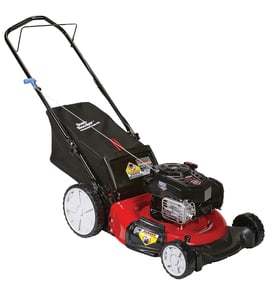
Yes, a walk-behind mower is worth it for many yards because it gives you better control and trimming precision than larger machines, while staying easy to store and maintain. For the Craftsman 29191601 16" hand lawn mower, it is especially practical for small to medium lawns and tight areas.
- Your yard is small to medium and has lots of edges, trees, or landscaping
- You want tighter turning and more precise cutting around obstacles
- Storage space is limited (shed, garage corner, or wall hooks)
- You prefer simpler upkeep (fewer complex systems than riding mowers)
- You want a quieter, lower-fuel approach (especially with manual or push-style units)
| Feature | Walk-behind mower | Riding mower |
|---|---|---|
| Best for yard size | Small to medium | Medium to large |
| Maneuverability | High | Medium |
| Storage space | Low | High |
| Maintenance complexity | Lower | Higher |
| Typical cost to own | Lower | Higher |
Even without model-specific documentation, most 16-inch hand mowers like the Craftsman 29191601 are a strong fit when you value control over speed.
- Cut width: A 16-inch deck favors precision over fast coverage
- Terrain: Works best on relatively even lawns; steep slopes and rough ground take more effort
- Cut quality: Consistent results depend on keeping the cutting system clean and properly adjusted
- Upkeep: Regular cleaning and periodic inspection of wear points helps performance
Choosing the right mower type affects cut quality, time spent mowing, and long-term maintenance. A walk-behind mower can reduce storage headaches and simplify routine care, which often makes it the best value for many homeowners.
For replacement parts, start with the parts list for Craftsman model 29191601; you can also search by model number on Sears PartsDirect.
Last updated: February 2026
What are the common problems with Craftsman lawn mowers?
Common problems on a Craftsman walk-behind mower like model 29191601 usually come down to cutting issues (dull or misadjusted blades), hard pushing (dragging wheels or tight reel), and uneven cutting from incorrect height settings or debris buildup. For model-specific replacement parts, start with the parts list for 29191601, or search by model on Sears PartsDirect.
- Uneven cut or missed grass: reel-to-bedknife clearance is off, blades are dull, or grass is too tall/wet
- Hard to push: wheel bearings are dirty, wheels are rubbing, or the reel is binding
- Grass clumps or jams: buildup in the cutting area, mowing too low, or mowing too fast
- Scalping: cutting height set too low or mower tilted on uneven ground
- Noisy scraping: reel contacting the bedknife (needs adjustment)
- Clean the cutting area: tip the mower safely and remove packed grass and debris.
- Check cutting height: raise it if the mower is bogging down or clumping.
- Spin the reel by hand: it should rotate smoothly without grinding.
- Inspect wheels: confirm both wheels roll freely and are not wobbling.
- Look for bent parts: a bent reel or frame can cause rubbing and uneven cutting.
| Problem you notice | Most likely cause | Best next step |
|---|---|---|
| Uneven cut | Dull reel or incorrect clearance | Clean, then adjust reel-to-bedknife clearance; sharpen if needed |
| Hard to push | Reel binding or wheel drag | Check reel spin and wheel roll; clean and lubricate moving points |
| Jamming/clumping | Wet/tall grass or low height | Raise height; mow more often; clean buildup |
| Scraping noise | Reel contacting bedknife | Back off adjustment slightly until it spins freely |
A reel mower depends on precise alignment between the reel and bedknife. When clearance is too tight, the mower gets hard to push and wears faster; when it is too loose, it leaves uncut strips.
- Keep the reel and bedknife clean and lightly protected from rust after use.
- Mow more frequently to avoid overloading the reel.
- If you need parts for Craftsman 29191601, match by model number to avoid fit issues.
Last updated: February 2026
Where can I find the Craftsman push mower model number?
On the Craftsman 29191601 16" hand lawn mower, the model number is typically printed on a product identification label on or near the cutting deck. Once you find it, use that exact number to match the correct diagrams and parts on Sears PartsDirect.
Check these common label locations first:
- Top of the cutting deck, near the front or side edge
- Rear of the deck near the height adjustment area (if equipped)
- Near the wheel brackets or axle area
- Around the handle mount points where the handle attaches to the deck
- On a sticker or small metal tag attached to the deck surface
Most Craftsman walk-behind and hand mowers use a sticker or tag that includes several identifiers. Look for:
- A line labeled Model or Model number
- A line labeled Serial or Serial number
- A prefix that may start with letters such as CM
| What you see | What it means | What to do next |
|---|---|---|
| Model number | Identifies the exact mower version | Use it to select the right parts list |
| Serial number | Production identifier | Keep it for records and service |
| Multiple numbers | Some are engine or component IDs | Use the mower model number from the deck label |
Using the exact model number helps us show the correct Craftsman diagrams and replacement parts for your cutting deck and hardware. That prevents ordering the wrong items when similar mowers share the same size or style.
- Wipe the deck label area with a damp cloth and mild soap; avoid harsh solvents
- Use a flashlight at an angle to make faded printing easier to see
- Take a close-up photo and zoom in to read the characters
Last updated: February 2026
Will a 42 inch mower fit through a gate?
A 42-inch mower typically needs more than 42 inches of clear gate opening to pass through because the widest point is often the tire-to-tire width or the discharge chute area. For your Craftsman 29191601 (a 16-inch hand lawn mower), gate fit is usually not an issue; measure your narrowest point to be sure.
Measure the tightest spot the mower must pass through, then compare it to the mower’s widest point.
- Measure the gate opening between posts at the narrowest point
- Measure the mower’s widest point (often outside of wheels, not the deck label)
- Include anything that sticks out: side discharge chute, bagger frame, or handle brackets
- Check for latches, hinges, and gate stops that reduce usable width
- Allow extra clearance for steering and uneven ground (about 1 to 2 inches)
These are practical rules of thumb we use for walk-behind and riding mowers.
| Mower size you’re shopping by | What that number usually means | Gate opening that usually works best |
|---|---|---|
| 42-inch mower | Often deck width, not overall width | 44 to 48 inches |
| 34 to 36-inch mower | Smaller deck / compact rider | 38 to 42 inches |
| 16-inch hand mower (Craftsman 29191601) | Cutting width is close to overall width | 18 to 24 inches |
If the gate is too tight, the mower can snag the chute, scrape the deck, or force you to approach at an angle that is hard on wheels and handles. A little extra clearance makes loading, storage, and daily use much easier.
If you’re comparing sizes or ordering replacement items, match by the full model number and the exact part listing.
- Use the model number 29191601 when searching
- Compare overall width, not just cutting width
- If a chute or handle is removable, plan for repeated removal only if it’s quick and secure
For broader model and parts lookup beyond what’s listed for this mower, search by model number on Sears PartsDirect.
Last updated: February 2026