Owner’s manual
 Error Codes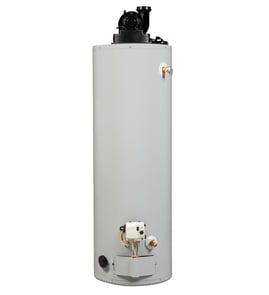





Why are gas water heaters being phased out?
Gas water heaters are being phased out in some areas because local air-quality and climate policies target nitrogen oxides (NOx) and greenhouse-gas emissions from gas-burning appliances. For a State GS650YOCT gas water heater, the key takeaway is that rules vary by location, so replacement options depend on local code and what your home can support.
Most phase-out efforts focus on reducing pollution from combustion appliances, especially in dense metro areas.
- Gas burners produce NOx, which contributes to smog
- Some regions set long-term targets to cut building emissions
- New-construction rules often change first; existing-home replacements may follow later
- Incentives sometimes encourage switching to electric heat pump water heaters
- Venting and combustion-safety requirements can also influence local policy
If your GS650YOCT fails, you typically still have practical paths forward; the “right” choice depends on local rules, venting, and electrical capacity.
| Situation | Common replacement direction | What to check first |
|---|---|---|
| Gas allowed for replacements | Like-for-like gas tank | Venting type, gas line size, clearance |
| Gas restricted for new installs | Heat pump or electric tank | Electrical panel capacity, space/airflow |
| Unsure about requirements | Compare options before buying | Local code requirements, permit needs |
If you are repairing (not replacing), we recommend using model-correct parts and following the lighting and service steps in the owner's manual.
Common service parts for this model include:
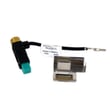
- Pilot assembly 100109290 (ignition and flame sensing)
- Igniter assembly 100109221 (spark/ignition component)
- Outer door 100109299 (burner access cover)
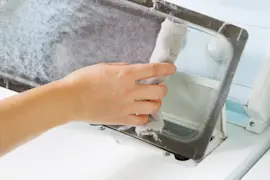
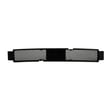
- Screen 100109216 (air intake or combustion screening)
Policy changes can affect cost, installation complexity, and timelines. Planning ahead helps you avoid emergency replacement decisions and ensures your next water heater meets code and venting requirements.
For parts and diagrams specific to State GS650YOCT, order from the parts list for this model or search by model number on Sears PartsDirect.
Last updated: February 2026
What's the average lifespan of a gas hot water heater?
Most tank-style gas water heaters, including the State GS650YOCT, typically last 8 to 12 years. With good water quality and regular maintenance (especially flushing sediment and checking the anode rod), many reach 10+ years, and some run closer to 15 years.
A gas water heater’s service life is driven by corrosion, sediment buildup, and burner wear.
- Water quality: Hard water speeds up scale and sediment.
- Maintenance: Annual flushing helps reduce rumbling and overheating.
- Anode rod condition: A depleted anode accelerates tank corrosion.
- Usage level: High demand means more burner cycles and wear.
- Installation factors: Poor venting or combustion air issues can shorten life.
Use this as a practical rule of thumb for a standard atmospheric-vent gas tank heater.
| What you’re seeing | Most common meaning | Usual next step |
|---|---|---|
| Rusty or metallic-smelling hot water | Tank corrosion starting | Plan replacement soon |
| Water around the base of the tank | Tank leak (often terminal) | Replace the heater |
| Popping or banging noises | Heavy sediment | Flush tank; evaluate age |
| Pilot will not stay lit | Pilot/ignition issue | Diagnose ignition system |
We recommend these habits for the GS650YOCT to reduce premature failure:
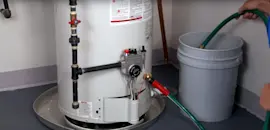
- Flush a few gallons from the drain valve periodically to reduce sediment.
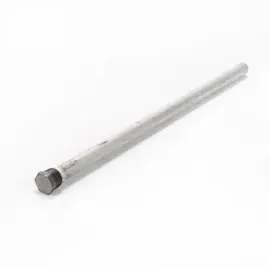
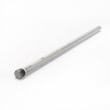
- Inspect and replace the anode rod when it’s heavily worn (a common life-extender); see 2-way 100109624.
- Keep the burner area and air intake screen clear; a clogged intake can cause poor combustion.
- Watch for recurring pilot issues; the pilot assembly 100109290 and igniter assembly 100109221 are common service parts.
- Follow the safety and maintenance schedule in the owner's manual.
Once a tank begins to corrode internally, failure can progress quickly. Replacing a worn anode rod and controlling sediment often buys meaningful time, while visible leaking usually means the tank has reached end of life.
You can order model-specific replacement parts from the parts list for your GS650YOCT, or search by model on Sears PartsDirect.
Last updated: February 2026
What is the average cost of replacing a gas hot water heater?
For a typical gas tank water heater replacement, we see most homeowners land around $1,600 to $2,400 installed for a standard swap. If you switch to a tankless system, total installed cost commonly runs $2,400 to $5,400 because venting, gas line sizing, and condensate handling often change. For model-specific operation and safety details on your State GS650YOCT, use the owner's manual.
A “replace a gas water heater” quote usually includes the heater, labor, and code-required materials. The biggest cost drivers are:
- Tank vs. tankless (equipment cost and labor time)
- Venting changes (chimney liner, power venting, PVC reroute)
- Gas line work (upsizing pipe, new shutoff, sediment trap)
- Water piping updates (shutoff valve, dielectric unions, expansion tank)
- Pan and drain needs (especially in finished spaces)
- Permit and inspection (varies by location)
These ranges reflect common U.S. pricing for a straightforward replacement; complex venting or gas work pushes totals higher.
| Replacement scenario | Typical installed total | Notes |
|---|---|---|
| Standard gas tank swap (similar size/venting) | $1,600 to $2,400 | Most common “like-for-like” job |
| Gas tank replacement with venting or gas line changes | $2,200 to $3,500 | Added materials and labor time |
| Tankless conversion (gas) | $2,400 to $5,400 | Often includes venting and gas upgrades |
We recommend these steps before you schedule work:
- Match capacity and recovery to your household needs so you do not overbuy.
- Confirm whether your current setup is atmospheric vent, power vent, or direct vent.
- Ask whether the quote includes a drain pan and drain line where required.
- Plan for routine maintenance parts; replacing a worn anode rod can extend tank life (see 2-way 100109624).
- If your heater is not heating reliably, check ignition-related components; a failing igniter or pilot can mimic “no hot water” symptoms (see igniter assembly 100109221 and pilot assembly 100109290).
A gas water heater replacement is not just the tank price; venting, gas supply, and safety controls determine both installation cost and safe performance. Getting the right configuration helps prevent nuisance shutdowns, poor recovery, and premature corrosion.
You can look up replacement parts for your State GS650YOCT from the parts list for this model, or search by model number on Sears PartsDirect.
Last updated: February 2026