Owner’s manual
 View engine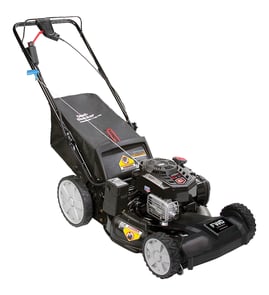



Should I use 87 or 89 gas for lawn mower?
For the Craftsman 917387301 rotary lawn mower, use fresh, clean regular unleaded gasoline with a minimum of 87 octane; 89 octane is not needed for normal operation. Don’t mix oil with gasoline, and buy only what you can use within about 30 days for best starting and performance.
What to use (and what to avoid)
- Use regular unleaded, 87 octane (minimum).
- Use fresh fuel; older gas can cause hard starting and rough running.
- Avoid fuel that has been sitting in a can for months.
- Don’t mix oil into the gas (this mower uses separate engine oil).
- Clean up any spilled gasoline before starting.
87 vs 89: what changes?
Higher octane does not add power in small mower engines designed for regular fuel; it mainly resists knock in high-compression engines.
| Fuel choice | Works in Craftsman 917387301? | When it makes sense |
|---|---|---|
| 87 octane (regular) | Yes (recommended minimum) | Everyday mowing, best value |
| 89 octane (mid-grade) | Yes | Only if 87 is unavailable |
Storage and stale-gas prevention
If the mower will sit 30 days or longer, we recommend preparing the fuel system for storage so you avoid carburetor and fuel-line issues.
- Run the mower dry before long storage (fuel system empty)
- Store fuel in an approved container, tightly sealed
- Keep the engine area free of grass and debris to reduce fire risk
- Let the engine cool before storing the mower indoors
For the full fuel and storage procedure, follow the owner's manual.
Why it matters
Using the correct octane and keeping fuel fresh helps prevent hard starting, surging, and carburetor varnish; it also protects the fuel system during off-season storage.
Last updated: February 2026
Why does my lawn mower run then sputters and dies?
On a Craftsman 917387301 rotary lawn mower, “runs then sputters and dies” is usually a fuel-delivery or airflow problem: stale gas, a restricted carburetor jet, or a dirty air filter. Over-priming can also flood the engine, especially in warm weather (see the owner's manual).
Quick checks that fix most cases
- Drain old fuel and refill with fresh gasoline (old fuel causes surging and stalling).
- Check the air filter; clean or replace it if it is dirty.
- Prime correctly; in warm weather, too much priming can flood the engine.
- Inspect the spark plug wire connection; make sure it is firmly seated.
- Clear grass and debris from around the engine and under the deck to improve airflow.
Priming and mowing conditions that can cause stalling
Your manual notes that in cooler weather you may need to repeat priming, but in warmer weather over-priming can flood the engine and prevent it from running. If you suspect flooding, wait a few minutes before restarting and do not re-prime.
Heavy, wet, or overgrown grass can also overload the engine and make it bog down or die. Use these mowing adjustments:
- Raise the cutting height.
- Slow your walking speed.
- Reduce the width of cut (take a smaller bite).
- Avoid mowing wet grass when possible.
Carburetor guidance for this model
The 917387301 carburetor uses a non-adjustable fixed main jet. If cleaning the fuel system basics does not stop the sputter-and-die symptom, the carburetor likely needs service/cleaning rather than adjustment.
Symptom-to-cause guide
| What it does | Most likely cause | What to do first |
|---|---|---|
| Starts, runs 10 to 60 seconds, then dies | Stale fuel or restricted carburetor | Drain/refill fuel; check for fuel flow |
| Runs rough, surges, then stalls | Dirty air filter or partial fuel restriction | Service air filter; clean debris |
| Dies right after priming | Flooded engine from over-priming | Wait a few minutes; restart without priming |
Why it matters
Repeated stalling makes the engine run hot and can leave uncut clumps; keeping airflow clear and fuel fresh helps the mower maintain blade speed for better mulching and longer engine life.
Last updated: February 2026
How do I find the model number on my 917387301?
On the Craftsman rotary lawn mower model 917387301, the model and serial numbers are printed on a decal attached to the rear of the mower housing. Use that exact model number when looking up parts, maintenance specs, and diagrams in the owner's manual.
Where to look on the mower
Check these common spots on a walk-behind mower like the 917387301:
- The rear of the mower deck (housing), on a decal or label
- Near the back wheels, facing upward or toward the operator position
- On the deck surface under the handle area (wipe off grass and dirt first)
- Occasionally on the side of the deck near the discharge opening
What to write down (and why)
Record both numbers exactly as shown; they are used to match the correct parts list and specifications.
- Model number: identifies the mower design (for example, 917.387301 on the decal)
- Serial number: identifies your specific production unit
- Date of purchase: helpful for your own records and maintenance tracking
Quick ID checklist
Use this table to confirm you are capturing the right information.
| Item on decal | What it’s used for | Tip |
|---|---|---|
| Model number | Finding the correct parts diagrams and repair parts | Copy every digit and punctuation exactly |
| Serial number | Matching production variations | Take a clear photo for reference |
| Product description | Confirms you are on the right label | Look for “rotary lawn mower” wording |
Why it matters
Using the exact model number prevents ordering the wrong blade, control cable, or hardware. Even small differences between similar Craftsman walk-behind mowers can change which parts fit.
Last updated: March 2026