
What is the most common part to fail on a furnace?
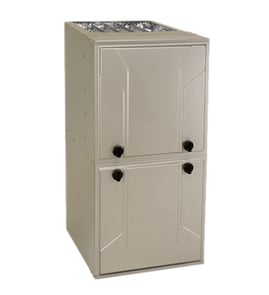
On a Thermal Zone gas furnace like model GU060M12A, the most common “failure point” we see is the air filter (when it gets clogged and overheats the furnace), followed closely by the flame sensor and the hot surface igniter. These issues commonly trigger safety shutdowns or no-heat symptoms.
- Air filter: Restricted airflow can overheat the heat exchanger area and trip the high-limit safety.
- Flame sensor: A dirty sensor can prevent the burner from staying lit.
- Hot surface igniter (HSI): Can crack or wear out, causing no ignition.
- Thermostat: Misconfiguration, weak batteries (if applicable), or a wiring issue can stop heat calls.
- Control board: Less common, but can fail and cause intermittent or total no-heat.
- Pressure switch: Can open if the venting or inducer system is not proving draft.
- Replace the air filter and confirm return vents are open and not blocked.
- Verify the thermostat is set to HEAT and the temperature is set above room temp.
- Check the furnace power switch and the circuit breaker.
- If the furnace starts then shuts off quickly, clean the flame sensor (light surface oxidation is common).
- If you have a meter and experience, test basic electrical items using how to use a multimeter to test electrical parts video.
| Symptom | Most likely culprit | What you typically see |
|---|---|---|
| Blower runs, no heat | Igniter or flame sensor | No glow at igniter, or burners light then drop out |
| Furnace short-cycles | Dirty filter or limit issue | Heat starts, then stops; repeats |
| Nothing happens | Thermostat or power issue | No inducer, no blower, no burner |
| Inducer runs, no ignition | Pressure switch or venting | Inducer on, burners never light |
These “common failures” are often maintenance-driven (especially filters and flame sensors). Fixing them early helps prevent nuisance lockouts, reduces wear on the control board, and keeps airflow and combustion operating safely.
If you need to look up parts by model number, start with the parts list for GU060M12A, or search by model on Sears PartsDirect.
Last updated: February 2026
Is it worth fixing a 20 year old furnace?
For a 20-year-old Thermal Zone gas furnace like model GU060M12A, it’s usually worth repairing only if the problem is minor and the furnace has been reliable; for major failures or repeated breakdowns, replacement is the better long-term value because efficiency and overall reliability typically drop with age. For parts lookup by model, use the parts list for GU060M12A or search GU060M12A on Sears PartsDirect.
We use these practical decision points for older furnaces:
- Repair makes sense when it’s a small, isolated issue (dirty flame sensor, loose wire, clogged condensate drain on high-efficiency units).
- Replace makes sense when the furnace has frequent no-heat calls, rising repair costs, or comfort problems (uneven heat, short cycling).
- Replace now if a technician finds a cracked heat exchanger or unsafe combustion conditions.
- If the repair estimate is high relative to the furnace’s age, replacement usually wins.
- If you plan to move soon, a low-cost repair can be reasonable.
| Repair type | Common examples | What it usually means at 20 years |
|---|---|---|
| Minor | Flame sensor cleaning, igniter, pressure switch tubing cleanup, thermostat issue | Often worth doing if the furnace is otherwise stable |
| Moderate | Inducer motor, gas valve, control board | Consider total cost and how often it has failed recently |
| Major | Heat exchanger failure, multiple expensive parts at once | Replacement is the better value and reliability move |
At around 20 years, many furnaces are at or past the point where efficiency losses and part wear start stacking up. Even after one successful repair, other components (inducer, blower motor, control board, limit switches) can be closer to end-of-life, which increases the chance of repeat service calls.
- Write down the exact symptom (no ignition, runs then shuts off, blower only, etc.).
- Note how often it’s failed in the last 12 months.
- Ask for a diagnosis that separates root cause from “parts swapping.”
- If you’re troubleshooting electrical issues, use a safe test approach; our how to use a multimeter to test electrical parts video helps you understand the basics.
Last updated: February 2026
What is the most expensive part to fix on a furnace?
On a Thermal Zone gas furnace like model GU060M12A, the most expensive repair is typically the heat exchanger because it is labor-intensive and often requires significant disassembly and setup. Other high-cost repairs commonly involve the blower motor, control board, and draft inducer.
These repairs cost the most because the parts are major components, diagnosis can take time, and labor is higher:
- Heat exchanger: highest labor time; may require moving the furnace or major tear-down
- Blower motor: can include the motor module and balancing or wheel issues
- Control board: higher part cost; must match the furnace’s ignition and safety logic
- Draft inducer motor: affects venting and ignition; replacement often includes gasket/seal work
- Gas valve: requires careful setup and leak checks after replacement
| Component | Why it’s costly | What you usually notice |
|---|---|---|
| Heat exchanger | Most labor; major disassembly | Poor heat, odd smells, repeated shutdowns |
| Blower motor | Part cost plus setup | Weak airflow, overheating, noisy operation |
| Control board | Part cost plus diagnosis | No heat, intermittent operation, no ignition |
| Draft inducer | Venting-related labor | Starts then stops, pressure switch issues |
We recommend doing these checks first so you do not replace a big part unnecessarily:
- Confirm the thermostat is calling for heat and the furnace has power
- Replace the air filter and make sure supply and return vents are open
- Check for a tripped breaker or blown fuse (if your system uses one)
- Listen for the sequence: inducer start, igniter glow/spark, burner light, blower start
- If you are testing electrical components, use safe meter practices (see how to use a multimeter to test electrical parts video)
High-cost repairs usually involve safety controls, ignition, airflow, or venting. Getting the diagnosis right prevents repeat failures and helps you decide whether a major component repair makes sense for your furnace’s age and condition.
For model-specific replacement parts and diagrams, start with the parts list for GU060M12A, or search by model on Sears PartsDirect.
Last updated: February 2026
What is the cost to replace a furnace part?
For a Thermal Zone gas furnace model GU060M12A, the cost to replace a furnace part depends on which component failed and whether you DIY or hire service. Most common furnace parts land in a wide range from about $20 to $600 for the part, plus labor often around $150 to $600+ depending on access and diagnostics.
These ranges cover common gas-furnace repairs for units like the GU060M12A.
- Flame sensor: $20 to $80 part; $150 to $300 installed
- Igniter (hot surface igniter): $30 to $200 part; $200 to $450 installed
- Pressure switch: $40 to $200 part; $200 to $450 installed
- Control board: $150 to $600 part; $350 to $900 installed
- Inducer motor: $150 to $600 part; $450 to $1,200 installed
- Blower motor (or module): $200 to $900 part; $500 to $1,500 installed
| What you’re replacing | Why the cost varies | What to check first |
|---|---|---|
| Sensor or igniter | Simple part, quick access | Dirty sensor, loose plug, cracked igniter |
| Switches and safeties | May require venting/pressure checks | Blocked intake/exhaust, clogged drain, weak inducer |
| Motors (inducer/blower) | Higher part cost and more labor | Capacitor (if used), wheel rubbing, seized bearings |
| Control board | Expensive part; must match exactly | Burn marks, loose low-voltage wiring, blown fuse |
We recommend narrowing the failure down so you do not replace the wrong component.
- Turn off power at the furnace switch or breaker before opening panels.
- Note the symptom: no heat, short cycling, blower runs with no heat, or ignition failure.
- Check the air filter and return vents; restricted airflow can mimic part failure.
- Inspect wiring connectors for heat damage or loose spade terminals.
- If you test electrical parts, use safe meter practices; our guide how to use a multimeter to test electrical parts video helps.
Furnaces use safety circuits (pressure switch, limit switch, flame sensing) that can shut heat down even when the “bad part” is something simple like airflow restriction, a blocked vent, or a loose wire. Correct diagnosis keeps repair cost down and restores safe operation.
Match parts by exact model number GU060M12A and the furnace’s rating plate information. You can shop using the parts list for this model, or search by model number on Sears PartsDirect.
Last updated: February 2026