Error Codes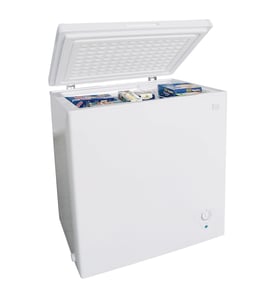




Is a Hotpoint chest freezer garage ready?
A Hotpoint chest freezer like model HCM9QWCWW is only “garage ready” when it can maintain safe freezer temperatures in the full range of temperatures your garage reaches. Most chest freezers are designed for indoor, climate-controlled spaces; in very hot or very cold garages, performance and energy use can suffer.
A freezer is considered garage ready when it can:
- Start and run reliably in low ambient temperatures
- Hold about 0°F for frozen food safety
- Avoid excessive run time and overheating in high ambient temperatures
- Prevent nuisance issues like weak cooling, warm spots, or heavy frost
If your garage swings from freezing winters to very hot summers, the ambient temperature can push the thermostat and sealed system outside their normal operating range.
Use these practical checks before committing to a garage location:
- Measure your garage temperature range over a typical week (morning and afternoon).
- Confirm the freezer can pull down to 0°F and recover after the lid is opened.
- Watch for long run times, unusually hot cabinet sides, or softening food.
- Check the lid seal for gaps and make sure the freezer sits level.
- Keep airflow space around the cabinet so the compressor can shed heat.
| Garage condition | What you may notice | What to do first |
|---|---|---|
| Very cold garage | Freezer warms up or cycles oddly | Move to a warmer spot or use a controlled environment |
| Very hot garage | Runs constantly, weak freezing | Improve ventilation, reduce heat load, relocate |
| Big temperature swings | Frost buildup, inconsistent temps | Stabilize location, check lid seal |
If the freezer is not holding temperature consistently, these model-specific parts are commonly involved:
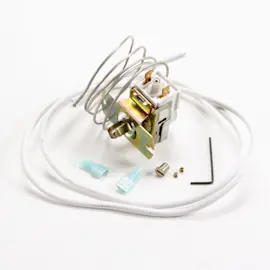
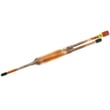
- Temperature control: thermostat WR09X46027
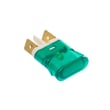
- Power indication (helps confirm power at a glance): power indicator light - green WR01X41889
When ambient conditions are outside the freezer’s design range, the unit may not maintain 0°F consistently. That can shorten food storage life and increase wear on the compressor and electrical components.
Last updated: February 2026
How long do chest freezers usually last?
Most chest freezers usually last 15 to 20 years with normal home use and basic maintenance. For your Hotpoint HCM9QWCWW chest freezer, keeping the lid seal tight, the condenser area clean, and frost under control helps you reach that typical lifespan.
A chest freezer is a simple appliance, but a few conditions make a big difference over time:
- Room temperature and ventilation: hot garages and tight clearances make the compressor work harder
- Lid gasket condition: air leaks cause longer run times and heavier frost
- Frost buildup: thick frost reduces efficiency and stresses the sealed system
- Power quality: frequent outages or voltage issues can damage compressor electricals
- Loading habits: overpacking can block airflow and slow freezing
These steps reduce wear on the compressor, thermostat, and wiring:
- Keep the freezer level so the lid closes evenly
- Leave a few inches of air space around the cabinet for heat to escape
- Defrost when frost reaches about 1/4 inch thick
- Wipe the lid gasket and mating surface so it seals cleanly
- If the unit has an indicator light, confirm it stays on during normal operation (power present)
If cooling becomes inconsistent or the unit will not run, these model-matched parts are often involved:
| Symptom | Common area to check | Example part for HCM9QWCWW |
|---|---|---|
| Warmer temps, runs too long | Temperature control | Thermostat WR09X46027 |
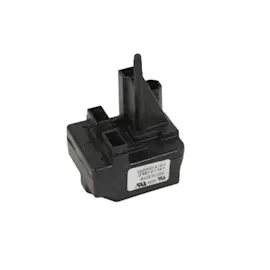
| No start or intermittent start | Compressor start circuit | Compressor electricals WR87X33865 |
| Power light out | Indicator circuit | Power indicator light - green WR01X41889 |
A chest freezer that is running longer than normal can still “work,” but the extra run time increases energy use and accelerates wear on the compressor and sealed system. Catching gasket leaks, heavy frost, and electrical issues early is the easiest way to protect long-term reliability.
Last updated: February 2026
What is the most reliable chest freezer brand?
No single chest freezer brand is the most reliable for everyone; reliability depends on build quality, correct sizing, stable temperatures, and how well the freezer is installed and maintained. If you already own a Hotpoint chest freezer like model HCM9QWCWW, keeping it running efficiently often comes down to basic care and replacing worn parts when symptoms show up.
Focus on factors that consistently predict fewer problems over time:
- Simple design: Fewer features usually means fewer failure points.
- Strong temperature control: Look for steady temps and a responsive thermostat.
- Good lid seal and hinges: A tight seal reduces run time and frost.
- Serviceability: Easy access to common parts (thermostat, hinges, handle, indicator light).
- Right capacity for your use: Overstuffing or frequent warm-loads increases compressor wear.
Chest freezers tend to be reliable when these systems stay healthy:
| System | What it affects | Common symptom when it’s not right |
|---|---|---|
| Temperature control | Food safety, compressor cycling | Too warm, too cold, wide temp swings |
| Lid/hinge/handle | Seal pressure, ease of closing | Lid won’t close evenly, frost buildup |
| Electrical indicators | Quick status checks | No power light even when outlet is good |
| Sealed system | Cooling performance | Runs constantly, won’t reach temp |
If your Hotpoint HCM9QWCWW starts acting unreliable, these are common “make-or-break” items to check or replace:
- Thermostat WR09X46027 (temperature control and cycling)
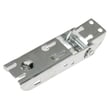
- Freezer door hinge WR12X27822 (lid alignment and sealing)
- White handle WR12X38876 (helps ensure the lid closes fully)
- Power indicator light - green WR01X41889 (status visibility)
A chest freezer that seals tightly and cycles normally protects food, uses less electricity, and reduces stress on the compressor and sealed system. Many “brand reliability” complaints trace back to airflow blockage, poor lid sealing, or a drifting thermostat rather than the brand name itself.
Last updated: February 2026
What is the downside to a frost free freezer?
A frost-free (auto-defrost) freezer trades convenience for efficiency: it typically uses more electricity, can cause more temperature swings, and can dry out or “freezer burn” food faster than a manual-defrost chest freezer like the Hotpoint HCM9QWCWW.
- Higher energy use: the defrost heater and extra fan run time add power consumption.
- More temperature fluctuation: periodic defrost cycles warm the cabinet slightly.
- More freezer burn risk: circulating air is drier and can pull moisture from unwrapped food.
- More noise: fans and defrost components can add sound compared to simpler designs.
- More parts to fail: defrost heater, defrost thermostat, timer/control, and fans add complexity.
Manual-defrost chest freezers usually hold a steadier temperature and humidity, which helps long-term storage. You do have to defrost them occasionally, but they are often simpler and more efficient.
| Feature | Frost-free freezer | Manual-defrost chest freezer (like HCM9QWCWW) |
|---|---|---|
| Frost buildup | Minimal | Builds up over time; needs manual defrost |
| Temperature stability | More swings during defrost | Typically steadier |
| Food dehydration | Higher risk | Lower risk |
| Complexity | More components | Fewer components |
- Use freezer-grade bags or vacuum sealing.
- Wrap tightly; push out as much air as possible.
- Label and rotate food (first in, first out).
- Keep the lid/door closed as much as possible.
- Set a consistent temperature and avoid overloading air spaces.
If you store meat and bulk foods for months, steadier temperatures and higher humidity usually protect quality better. If you open the freezer often and want zero defrosting, frost-free convenience can be worth the tradeoffs.
If your freezer is not holding temperature consistently, a failing cold control can contribute; the thermostat WR09X46027 is one model-matched part to check.
Last updated: February 2026
Is it worth repairing a chest freezer?
Yes, it’s usually worth repairing a Hotpoint chest freezer like model HCM9QWCWW when the problem is isolated (thermostat, wiring, lid hardware) and the freezer cabinet is in good shape; repairs often cost less than replacement and help you avoid food loss.
- The freezer is under ~10 years old and has been reliable.
- The issue is temperature control or electrical, not sealed-system.
- The lid seals and hinges are solid (no major air leaks).
- The interior liner and cabinet are not badly rusted or damaged.
- You can confirm the symptom with basic tests (outlet power, continuity checks).
Sealed-system repairs (refrigerant leaks, compressor replacement, drier/process work) tend to be the most expensive and are often the point where replacement makes more sense. Simpler repairs (controls, indicator light, handle, hinge parts) are usually cost-effective.
| Situation | Usually worth repairing? | Why |
|---|---|---|
| Not cold enough but has power | Often | Common causes include thermostat or wiring issues |
| Lid won’t close or handle/hinge is broken | Yes | Hardware repairs are typically straightforward |
| Compressor won’t start or is noisy | Sometimes | Can be electricals, but may be a major repair |
| Frost/ice buildup from poor sealing | Often | Fixing lid alignment or hardware can restore efficiency |
These are examples of parts on this model’s parts list that match common symptoms:
- Temperature control issues: thermostat WR09X46027
- Power light problems: power indicator light - green WR01X41889
- Lid hardware wear: freezer door hinge WR12X27822, white handle WR12X38876
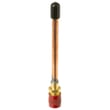
- If a sealed-system repair is being quoted: ge compressor WR87X43585, r600 drier w/ red cap WR87X30875
A chest freezer that’s running correctly protects food quality and typically uses less energy than one struggling with a bad control, poor lid closure, or intermittent power. Fixing the right part early can prevent bigger failures.
Last updated: February 2026