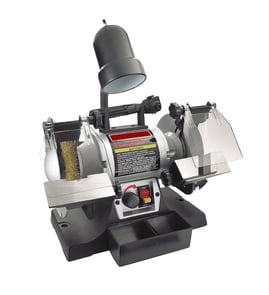

Is 1/3 hp enough for a bench grinder?
Yes. For a Wen 2901 bench grinder, a 1/3 HP motor is typically enough for light to medium bench-grinding work such as sharpening lawn tools, cleaning up small welds, and deburring metal. For heavy stock removal or long grinding sessions, more horsepower helps the grinder stay cooler and maintain speed.
What 1/3 HP handles well
A 1/3 HP bench grinder is a good match when you use a steady, moderate feed pressure and let the wheel do the work.
- Sharpening chisels, mower blades, and hand tools
- Removing small burrs and rust
- Light shaping on mild steel and small parts
- Occasional wire-wheel style cleanup (if your grinder is equipped for it)
When you may want more power
If your projects are larger or you grind aggressively, stepping up in horsepower reduces bogging and improves consistency.
- Frequent grinding on hardened steel
- Heavy material removal (fast reshaping)
- Long continuous run time where heat buildup becomes an issue
- Larger wheels or wider wheels (more load on the motor)
Quick sizing guide
| Task type | 1/3 HP | 1/2 HP | 3/4 HP to 1 HP |
|---|---|---|---|
| Sharpening and touch-ups | Best fit | Also works | Usually more than needed |
| General shop grinding | Works | Better margin | Best for frequent use |
| Heavy grinding and shaping | Limited | Good | Best fit |
Why it matters
Horsepower affects how well the grinder holds RPM under load. When a grinder slows down, it can overheat the workpiece, glaze the wheel, and make it harder to control your grind.
Parts and support tip
If you are matching a replacement motor, switch, capacitor, or wheel to your Wen 2901, use the model-based parts lookup first; then search by model number on Sears PartsDirect to confirm compatibility.
Last updated: February 2026
Is a 6 or 8 bench grinder better?
An 8-inch bench grinder is better for heavier sharpening and shaping because the larger wheel gives you more usable surface and a gentler grind curve; a 6-inch grinder is better when you want a smaller footprint and lighter-duty use. For Wen model 2901, choose based on your typical work (tool sharpening vs. quick cleanup) and available bench space; you can also compare options and parts by searching on Sears PartsDirect.
Quick comparison: 6-inch vs. 8-inch
| Feature | 6-inch bench grinder | 8-inch bench grinder |
|---|---|---|
| Best for | Light grinding, quick touch-ups | Frequent sharpening, heavier stock removal |
| Wheel curve (hollow grind) | More pronounced | Shallower, easier to control on edges |
| Space and weight | Smaller, easier to fit | Larger, more stable on the bench |
| Typical feel | Faster to “bite” into small parts | Smoother contact on wider tools |
How we recommend choosing
- Pick 8-inch if you sharpen chisels, plane irons, mower blades, or do longer grinding sessions.
- Pick 6-inch if you mainly deburr bolts, clean up small welds, or do occasional touch-ups.
- If overheating is a concern, prioritize a cooler-running setup (lighter pressure, frequent dips in water, and a dressed wheel) over wheel size.
- If you do precision sharpening, plan on using a tool rest/jig and keeping the wheel dressed and true.
- If your shop space is tight, a 6-inch unit often fits better without sacrificing basic capability.
Why it matters
Wheel diameter changes the grind geometry. A larger wheel (8-inch) creates a shallower hollow grind, which helps you control the edge and reduces the chance of digging in on wider tools. A smaller wheel (6-inch) can still do excellent work, but it rewards a lighter touch and more frequent cooling.
Practical setup tips (either size)
- Dress the wheel regularly so it cuts cleanly and runs true.
- Use the right wheel grit for the job (coarser for shaping, finer for sharpening).
- Keep guards and eye shields in place; wear eye protection.
- Let the wheel reach full speed before grinding; avoid side-loading the wheel.
Last updated: February 2026
What are the 4 important rules for a bench grinder?
The 4 most important bench grinder rules for your Wen 2901 are: wear proper eye and face protection, set the tool rest and guards correctly, use the correct wheel speed and condition, and keep hands, clothing, and work habits safe and controlled. These basics prevent most grinder injuries.
The 4 rules (with the key details that make them work)
- Protect your eyes and face every time: safety glasses plus a face shield; grinding sparks and wheel grit travel fast.
- Set the tool rest and guards before you start: keep the tool rest close to the wheel (commonly about 1/8 inch) and keep guards and spark deflectors in place.
- Use the right wheel and verify it is safe: match the wheel rating to the grinder speed, inspect for chips or cracks, and replace damaged wheels.
- Grind safely and stay in control: hold the work firmly, keep fingers clear, avoid loose clothing and jewelry, tie back long hair, and let the grinder reach full speed before contacting the wheel.
Quick setup checklist before grinding
- Unplug the grinder before adjusting rests, guards, or wheels.
- Confirm the wheel is seated and tightened correctly (no wobble).
- Spin the wheel by hand to ensure it clears the guards.
- Stand slightly to one side at startup for the first few seconds.
- Use light pressure; let the abrasive do the work.
Common do and do not table
| Task | Do | Do not |
|---|---|---|
| Adjusting the tool rest | Keep it close and square to the wheel | Leave a wide gap that can grab the work |
| Starting the grinder | Let it reach full speed | Start grinding immediately at startup |
| Grinding technique | Use the wheel face with steady, light pressure | Grind on the wheel side unless the wheel is designed for it |
| Clothing and PPE | Wear eye/face protection; secure hair/clothes | Wear gloves that can catch, loose sleeves, or dangling jewelry |
Why it matters
A bench grinder wheel can fracture, grab the workpiece, or throw debris. Correct guard spacing, wheel condition, and controlled technique reduce kickback and impact hazards while improving sharpening results.
For replacement parts and model lookups for Wen 2901, start with the parts list for this model, or search by model number on Sears PartsDirect.
Last updated: February 2026
Who makes the best bench grinder?
There is no single “best” bench grinder; the best choice depends on your work (heavy grinding, sharpening, polishing) and how often you use it. For Wen model 2901, keep in mind it is a wet wheel sharpening machine, not a traditional dry bench grinder, so it is “best” for cool, controlled edge sharpening rather than fast stock removal.
What “best” means for common grinder and sharpener types
Bench grinders and wet wheel sharpeners solve different problems; choosing the right type matters more than brand.
- Dry bench grinder (6-inch or 8-inch): Fast grinding, deburring, shaping metal
- Slow-speed bench grinder: Cooler grinding for sharpening with less risk of overheating edges
- Wet wheel sharpening machine (like Wen 2901): Water-cooled sharpening and honing for edge tools
- Combination setups: Bench grinder for shaping plus wet wheel for final edge refinement
Quick comparison: which type fits your job?
| Your main task | Best tool type | Why it’s the best fit |
|---|---|---|
| Remove lots of metal quickly | Dry bench grinder | Higher material removal rate |
| Sharpen chisels, plane irons, knives with minimal heat | Wet wheel sharpening machine | Water cooling protects temper |
| General shop touch-ups with less heat | Slow-speed bench grinder | Better control for edges |
| Polish and buff | Bench grinder with buffing wheels | Better accessory compatibility |
How we recommend choosing a brand and model
Use these decision points to narrow down brands (Wen, DeWalt, Rikon, Baldor, and others) without overbuying.
- Pick the tool type first (bench grinder vs. wet wheel sharpening machine)
- Match duty level (occasional DIY vs. daily shop use)
- Prioritize low vibration (heavier base, better wheel balance)
- Confirm accessory support (tool rests, jigs, wheel types)
- Consider serviceability (common wear items, straightforward adjustments)
Why it matters
A bench grinder that excels at aggressive grinding can ruin an edge by overheating it; a wet wheel sharpening machine like the Wen 2901 excels at controlled sharpening but is slower for heavy material removal.
Parts and model matching
When you service Wen 2901, always match parts by the full model number to avoid fit issues. If you do not see what you need listed for this model, we recommend searching by model number on Sears PartsDirect.
Last updated: February 2026