 Owner’s manual
 Error Codes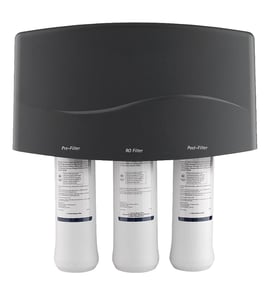



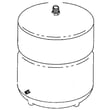

What is the average cost of a whole house reverse osmosis system?
A whole-house (point-of-entry) reverse osmosis system typically costs $1,000 to $4,800 for the equipment, and the installed total commonly lands around $1,500 to $5,500; higher-capacity systems with pre-treatment can run $8,000+. The Kenmore 625384720 is a drinking-water RO system, so whole-house pricing is usually higher than this model’s category.
Whole-house RO cost depends mainly on flow rate and how much conditioning your water needs before it reaches the RO membrane.
- Capacity and flow (gallons per day, peak demand)
- Number of stages (sediment, carbon, RO membrane, postfilter)
- Pre-treatment needs (softener, iron/sulfur treatment, sediment load)
- Water pressure: RO systems commonly need 40 to 100 psi; pressure outside that range can add parts and labor
- Tank size and footprint (larger storage and plumbing complexity)
- Installation complexity (well vs. city water, drain routing, code requirements)
| System type | Typical equipment cost | Typical installed total |
|---|---|---|
| Under-sink drinking-water RO (like Kenmore 625384720) | $150 to $700 | $300 to $1,200 |
| Whole-house RO (point-of-entry) | $1,000 to $4,800 | $1,500 to $5,500 |
| Whole-house RO with heavy pre-treatment | $3,500 to $8,000+ | $5,000 to $10,000+ |
Sizing a whole-house RO system incorrectly can lead to low pressure at fixtures, frequent filter changes, and higher waste water. Matching the system to your water pressure and water quality limits is what keeps operating costs predictable.
Use these steps to get a realistic budget before you buy:
- Get a water test (TDS, hardness, iron, chlorine, nitrates)
- Confirm your incoming pressure and whether you need a pressure-reducing valve
- Decide if you need RO for the whole home or only for drinking and cooking
- Price out filter and membrane replacements as part of annual cost
- Review installation requirements and limits in the Kenmore 625384720 owner’s manual
Last updated: January 2026
What is a major problem with reverse osmosis?
A major problem with reverse osmosis (including the Kenmore 625384720 system) is water waste: as the membrane filters out minerals and impurities, the system sends a portion of the incoming water to the drain as reject (waste) water while only a smaller portion becomes drinking water. See the Kenmore 625384720 owner’s manual.
Reverse osmosis works by pushing water through a semi-permeable membrane. The clean “product water” goes to the faucet or storage tank, and the concentrated “reject water” carries dissolved solids to the drain.
Common things you may notice:
- The drain line runs while the system is making water.
- Production is slow (often around ounces per minute), especially with cold feed water.
- You may hear periodic flow to the drain even when you are not dispensing water (during tank refill cycles).
This model uses an automatic shutoff valve designed to close when the RO faucet is closed and the storage tank is full. If that shutoff system is not sealing correctly, the unit can waste more water than normal.
Parts commonly involved in shutoff and flow control issues:
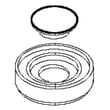
- Waterworks reverse osmosis system valve diaphragm 7099296
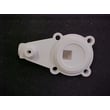
- Reverse osmosis system automatic cut-off cover 7229532
- Reverse osmosis system plunger and spacer 7234325
- Confirm the feed water is within the pressure and quality limits listed in the manual.
- Replace prefilter and postfilter cartridges on schedule; chlorine can damage the RO membrane if prefiltration is neglected.
- Check for constant drain flow when the tank is full; that points to an automatic shutoff or valve sealing problem.
- Inspect tubing connections for kinks or restrictions; use the correct size connectors and fittings.
- Verify the storage tank is filling and delivering normally; a weak tank can cause frequent refill cycles.
| Symptom | What it usually points to | What to check first |
|---|---|---|
| Drain runs constantly | Automatic shutoff not closing | Valve diaphragm, plunger/spacer, cut-off cover |
| Very slow RO water | Low pressure, clogged filters, cold water | Supply pressure, filter age, tubing restrictions |
| Bad taste/odor | Postfilter exhausted | Postfilter replacement interval |
Water waste is normal for RO, but excessive waste usually signals a maintenance or shutoff problem. Fixing it protects the RO membrane, reduces drain flow, and helps the system keep a steady supply of clean water in the storage tank.
Last updated: January 2026
Why am I thirsty after drinking reverse osmosis water?
Reverse osmosis water from Kenmore model 625384720 can leave you feeling thirsty because the RO membrane removes minerals (total dissolved solids) along with impurities; some people find very low-mineral water less satisfying for hydration, especially after sweating or exercise.
Your 625384720 uses household water pressure to push water through a semi-permeable membrane; minerals and impurities go to the drain, and treated water goes to the faucet or storage tank. This is normal RO operation and is described in the 625384720 owner’s manual.
Common reasons you still feel thirsty:
- Very low mineral content: RO reduces dissolved minerals that can affect taste and “mouthfeel.”
- Higher fluid needs: Exercise, dry air, caffeine, and salty meals increase hydration needs.
- Taste perception: Some people drink less because RO water tastes “flat,” then feel thirsty later.
- System performance issues: If filters are overdue, water quality and taste can change.
- Drink a full glass, then wait 10 to 15 minutes; thirst can lag behind intake.
- Pair water with food that contains electrolytes (fruits, vegetables, soups).
- If you prefer, remineralize in a simple way (for example, add a small pinch of mineral salt to a pitcher, or use mineral drops made for drinking water).
- Keep up with routine cartridge changes and sanitizing/purging steps per the manual.
- If your unit has a monitor faucet feature, use it; otherwise, test your water at least every 6 months to confirm the system is performing properly.
| What you notice | Most likely cause | What to do |
|---|---|---|
| Water tastes “flat” but looks clear | Normal low TDS RO water | Consider remineralizing for taste |
| Taste/odor shows up | Postfilter nearing end of life | Replace postfilter; sanitize system |
| Slow flow at faucet | Low tank pressure, restricted tubing, or filter restriction | Check tank, tubing, and cartridges |
| Water seems “off” over time | Supply water quality changed | Test water; verify supply is within specs |
RO systems are designed to reduce total dissolved solids and improve drinking water quality. If thirst persists, the fix is usually about hydration habits and taste preference, not a safety problem. Keeping the RO system maintained helps ensure consistent water quality.
Last updated: January 2026
Is it good for you to drink reverse osmosis water?
Yes. Reverse osmosis water from the Kenmore 625384720 is good for drinking when your incoming water is already potable because the system is designed to reduce total dissolved solids (TDS) and improve taste and odor using an RO membrane plus prefilter and postfilter stages.
The 625384720 uses household water pressure to push water through a semi-permeable membrane; clean water goes to the faucet or storage tank, and concentrated waste water goes to the drain.
- Reduces dissolved solids (TDS) through an RO membrane
- Uses replaceable pre and postfilter sediment-carbon cartridges
- Prefilter helps remove sediment and chlorine before the membrane
- Postfilter helps remove remaining tastes and odors before the RO faucet
- Automatic shutoff valve helps prevent water waste when the tank is full
RO improves water quality, but it is not intended to make unsafe water safe.
- Use only with a safe, disinfected water supply
- Do not use on microbiologically unsafe water or water of unknown quality without adequate disinfection
- Follow local plumbing and sanitation codes during installation and use
RO water tastes “cleaner” because it has fewer dissolved minerals and impurities. We treat RO water as hydration water, not a source of dietary minerals.
| Topic | What to expect with RO water | Practical takeaway |
|---|---|---|
| Taste | Lower mineral taste | Many people prefer it for drinking and cooking |
| Minerals | Lower mineral content | Get minerals from food and a balanced diet |
| Best use | Potable water improvement | Start with safe incoming water |
- Follow the care and specifications in the 625384720 owner’s manual
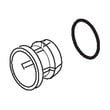
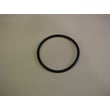
- If you see leaking at a filter housing, replace sealing parts such as the water filtration system filter o-ring 7223633
- If flow is weak, check for kinked tubing, low supply pressure, or overdue filter changes
Keeping supply water within spec and replacing worn treatment components protects taste, TDS reduction, and storage tank output.
Last updated: January 2026