
What is a standard size countertop microwave?
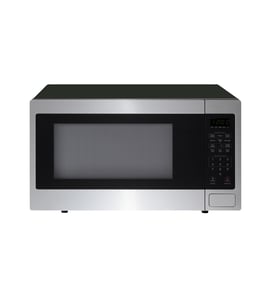
A “standard size” countertop microwave is typically about 20 to 24 inches wide, 12 to 14 inches tall, and 15 to 20 inches deep. For your Sharp R-3A66 countertop microwave, use these ranges to plan space, then confirm your exact cutout and clearance needs before placing it.
Typical countertop microwave size ranges
Most countertop microwaves fall into a few common size bands:
- Compact: ~17 to 19 in. wide; ~10 to 12 in. tall; ~13 to 16 in. deep
- Mid-size (most common): ~20 to 24 in. wide; ~12 to 14 in. tall; ~15 to 20 in. deep
- Large: ~24 to 30 in. wide; ~14 to 17 in. tall; ~19 to 22 in. deep
Capacity vs. outside dimensions (quick guide)
Outside size and cooking capacity (cubic feet) usually track together, but not perfectly.
| Capacity class | Typical capacity | Typical outside width |
|---|---|---|
| Compact | 0.7 to 0.9 cu. ft. | 17 to 19 in. |
| Mid-size | 1.0 to 1.6 cu. ft. | 20 to 24 in. |
| Large | 1.7 to 2.2 cu. ft. | 24 to 30 in. |
Clearances we recommend planning for
Even for a countertop model like the Sharp R-3A66, the space around the cabinet matters for airflow and door swing.
- Leave 2 to 3 inches on each side when possible
- Leave at least 3 inches above the top for ventilation
- Keep the rear clearance open (avoid pushing it tight to the wall)
- Make sure the door can open fully without hitting a backsplash or cabinet edge
- Use a dedicated, properly grounded outlet (avoid extension cords)
Why it matters
Microwaves that are squeezed into a tight space can run hotter, trip a fuse, or perform poorly. Planning around standard dimensions helps prevent overheating and makes everyday use safer and more convenient.
For additional safety and placement tips, follow our guidance in never do these things with a microwave.
Last updated: February 2026
Can you use an over-the-range microwave as a countertop?
In most cases, we do not recommend using an over-the-range (OTR) microwave as a countertop unit. OTR microwaves are designed to be mounted to a wall and cabinet with a bracket and top bolts; using one on a counter can block ventilation, create stability issues, and increase the risk of overheating.
What to check before you try it
If you already have an OTR microwave and want to place it on a counter temporarily, verify these basics first:
- Ventilation path: confirm the intake and exhaust vents will not be blocked by the counter, wall, or backsplash.
- Stability: the unit must sit flat and resist tipping when the door opens.
- Clearances: leave open space around the sides and back (many OTR designs pull air from the top/front and exhaust out the top/back).
- Power: use a properly grounded outlet; avoid extension cords.
- Weight and footprint: OTR units are heavier than most countertop models and can overhang shallow counters.
Why OTR and countertop microwaves are built differently
OTR microwaves rely on their mounting setup for safe support and airflow management. Countertop microwaves are built to sit on a flat surface with their vents positioned for that use.
| Feature | Over-the-range microwave | Countertop microwave |
|---|---|---|
| Primary support | Wall bracket + cabinet bolts | Rubber feet on counter |
| Venting design | Integrated with hood fan and ducting/recirculation | Self-contained airflow around cabinet |
| Typical risk when placed on counter | Blocked vents, tipping, heat buildup | Low when clearances are followed |
What we recommend for your Sharp R-3A66
Because the Sharp R-3A66 is a countertop microwave model, we recommend using it as designed: on a stable counter with adequate airflow around the cabinet. If your microwave is not heating, trips the breaker, or shuts off, use our troubleshooting steps in why is my microwave not heating before replacing parts.
Why it matters
Microwaves generate significant heat and use high-voltage components. Proper mounting and ventilation prevent nuisance shutdowns, premature component failure (like thermal cutouts), and unsafe operating temperatures.
Last updated: February 2026
What size is the Sharp R-3A66 microwave?
The exact exterior dimensions for the Sharp R-3A66 countertop microwave vary by version and are best confirmed from the model’s spec label and your cabinet clearance needs. Most countertop microwaves of this type are roughly 20 to 22 inches wide, 11 to 13 inches tall, and 15 to 18 inches deep.
How to measure your R-3A66 correctly
Use a tape measure and record the outside dimensions of the cabinet (not the cavity).
- Measure width: left side panel to right side panel
- Measure height: countertop to the top of the case
- Measure depth: front face to the back of the case (exclude the cord)
- If it sits in a nook, measure the opening width, height, and depth too
- Note whether the door handle or trim sticks out past the front edge
Clearance guidelines that matter for fit and ventilation
Even if the microwave “fits,” it still needs airflow so it does not overheat.
| What to check | Typical target | Why it matters |
|---|---|---|
| Side clearance | 2 in. or more | Helps airflow around the cabinet |
| Rear clearance | 2 in. or more | Prevents heat buildup behind the unit |
| Top clearance | 3 in. or more | Reduces overheating risk |
| Counter depth | 18 to 25 in. | Ensures the unit is stable and not overhanging |
Where to find the most reliable size info
For the Sharp R-3A66, the most dependable “source of truth” is the model and rating label on the microwave.
- Check inside the door frame or along the door opening
- Look on the back panel near the power cord entry
- Write down the full model number (R-3A66) and any suffixes
- Compare your measurements to the space where it will sit
Why it matters
Microwave sizing is about more than width and height; correct depth and ventilation clearance help prevent nuisance shutdowns, poor performance, and heat damage to nearby cabinets.
Related help: why is my microwave not heating
Last updated: February 2026
What are the parts of a microwave?
A Sharp countertop microwave like model R-3A66 is built from a few key systems: the high-voltage heating circuit (magnetron and related components), the cooking cavity and turntable parts that move food for even heating, and the door and controls that manage safety and operation.
Main microwave parts (what they do)
- Magnetron: creates the microwave energy that heats food.
- High-voltage transformer/inverter, capacitor, and diode: supply and control the high voltage needed for heating.
- Waveguide and stirrer (or mode stirrer): directs and distributes microwave energy into the cavity.
- Cooling fan and vents: move air to keep the magnetron and electronics from overheating.
- Control board and keypad/display: run cook programs, timing, and power levels.
- Door assembly (latches, hinges, interlock switches): ensures the microwave only runs when the door is fully closed.
Parts you see and use every day
- Turntable tray and turntable support/roller ring
- Turntable motor (under the cavity)
- Interior light
- Cooking rack (on some models)
- Grease and odor filters (more common on over-the-range units)
Quick map: where parts are located
| Area | Common parts found there | What you notice when it fails |
|---|---|---|
| Behind the control panel | Control board, keypad, door switches | Dead display, won’t start, starts then stops |
| Behind the outer cover | Magnetron, HV parts, fan | Runs but doesn’t heat, loud hum, burning smell |
| Under the cavity | Turntable motor, coupler | Tray won’t rotate, uneven heating |
| Door frame | Latches, hinges, interlocks | Won’t run with door closed, door feels loose |
Why it matters
Knowing which system is involved helps you troubleshoot faster. For example, “runs but won’t heat” points to the heating circuit, while “won’t start” often points to door interlocks, a fuse, or the control circuit.
Next step for troubleshooting
- If it runs but doesn’t heat, use our guide: why is my microwave not heating
- If it’s completely dead, start with: how to replace a microwave fuse
- If you see sparks or burn marks, follow: how to repair arc or burn marks in a microwave video
Last updated: February 2026
Are Sharp microwaves good quality?
Sharp microwaves are good quality for everyday home use; they are known for consistent heating, straightforward controls, and solid reliability when they’re installed correctly and kept clean. For your Sharp model R-3A66, long life mostly comes down to ventilation, door-latch alignment, and avoiding arcing.
What “good quality” means in real use
Most customers judge microwave quality by three things: heating performance, durability, and how often common wear items need attention.
- Heating performance: even cooking, fewer cold spots (with proper container placement and turntable use)
- Durability: door switches and latch parts stay aligned; keypad holds up to daily use
- Serviceability: common issues are usually isolated to fuses, door switches, or the turntable drive system
- Noise and vibration: stable fan and turntable operation
- Interior wear: less paint damage when spills are cleaned quickly
Typical lifespan and what affects it
A countertop microwave like the Sharp R-3A66 typically lasts 7 to 10 years with normal use.
Biggest factors that shorten lifespan
- Running it empty (overheats internal components)
- Repeated arcing from metal, foil, twist ties, or damaged waveguide cover
- Slamming the door or operating with a misaligned latch (stresses door switches)
- Blocked vents or tight cabinet clearances (heat buildup)
- Heavy grease buildup on the cavity walls and ceiling
Quick quality check: symptoms and likely meaning
| What you notice | What it usually points to | What to do first |
|---|---|---|
| Runs but doesn’t heat | High-voltage circuit issue or safety interlock problem | Stop using; troubleshoot heating system |
| Dead, no display | Blown fuse, outlet issue, or door switch issue | Check power source; then inspect fuse/switches |
| Sparks or burn marks | Arcing from metal or damaged interior surface | Stop use; address arcing source |
| Loud humming or rattling | Fan/turntable issues or vibration | Check turntable seating and load placement |
Why it matters
Microwaves can look “fine” but still be unsafe or unreliable if the door interlocks, ventilation, or interior surfaces are compromised. Keeping the cavity clean and preventing arcing protects the magnetron and high-voltage components, which are the most expensive failures.
Helpful DIY resources
- If it runs but won’t warm food: why is my microwave not heating
- If it’s completely dead: how to replace a microwave fuse
- If you see sparks or scorch marks: how to repair arc or burn marks in a microwave video
- To avoid common damage: never do these things with a microwave
Last updated: February 2026