



What is the life expectancy of a Goodman furnace?
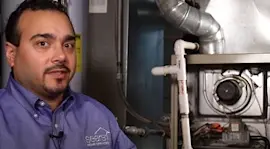
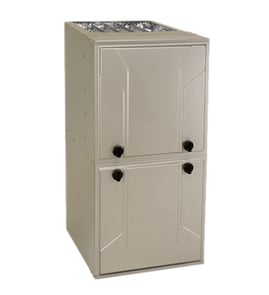
A Goodman gas furnace like model GMP125-4 typically lasts 15 to 20 years. With consistent maintenance and correct setup, it reaches 20 to 25 years; with poor airflow, dirty filters, or frequent short-cycling, it often fails closer to 10 to 15 years.
Typical lifespan ranges
- Most Goodman furnaces: 15 to 20 years
- Well-maintained systems: 20 to 25 years
- Hard-use or neglected systems: 10 to 15 years
- Heat exchanger (often the limiting component): 15 to 25 years
What makes a furnace last longer
- Replace or clean the air filter on schedule (restricted airflow overheats the furnace)
- Keep supply and return vents open and unobstructed
- Have the burners and flame sensor cleaned during routine service
- Confirm the venting and combustion air path stay clear
- Address unusual noises early (rattles can point to a loose blower wheel)
Quick “repair vs. replace” guide
| What you’re seeing | What it usually means | What we recommend |
|---|---|---|
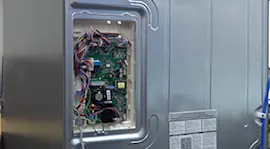
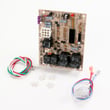
| Frequent cycling, no ignition, or random shutdowns | Control or ignition issue | Diagnose the ignition sequence; the board B1809913S is a common control component in this model’s parts list |
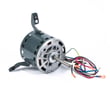
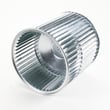
| Weak airflow or vibration | Blower assembly wear or imbalance | Inspect the blower area; a damaged blower wheel D6723306S can reduce airflow and stress the motor |
| Rising gas bills with longer run times | Airflow, duct, or combustion efficiency issue | Start with filter and venting checks; then schedule a full tune-up |
Why it matters
A furnace near the end of its expected life is more likely to have intermittent no-heat problems, reduced efficiency, and higher repair frequency. Keeping airflow correct and ignition reliable helps protect expensive components and extends the service life of your GMP125-4.
Last updated: February 2026
What is error code 4 on Goodman furnace?
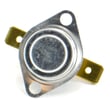
On a Goodman GMP125-4 gas furnace, error code 4 (four flashes) points to an open high-limit switch condition. That usually means the furnace is overheating or the limit circuit is opening because airflow is restricted, a venting issue exists, or there is a wiring/connection problem.
What to check first (most common causes)
- Replace or clean the air filter; a clogged filter is the most common overheating trigger.
- Make sure all supply registers and return grilles are open and not blocked.
- Check the blower compartment for heavy dust buildup and confirm the blower wheel is not packed with debris.
- Inspect the flue/venting for blockage, sagging, or disconnections.
- Look for loose, damaged, or overheated wires at the limit switch and control board.
- If the furnace cycles on limit repeatedly, stop running it and correct the airflow or venting problem before continuing.
Quick troubleshooting flow
| What you observe | What it usually means | What to do next |
|---|---|---|
| Code 4 appears after a few minutes of heat | Heat exchanger is getting too hot | Filter, registers, blower airflow checks first |
| Code 4 appears quickly after startup | Limit circuit/wiring issue is more likely | Inspect wiring, connectors, and harness routing |
| Code 4 happens only on very cold days | System is near its airflow limit | Verify filter type, duct restrictions, blower performance |
Parts that can be involved
These parts are not always the cause, but they are commonly involved in limit-related faults:
- If the blower is weak or airflow is poor due to a dirty or damaged wheel, inspect the blower wheel D6723306S.
- If you suspect a control/ignition sequence issue or you see signs of heat damage at the board connections, inspect the board B1809913S.
Why it matters
The high-limit switch is a safety device. When it opens, it is protecting the furnace from unsafe temperatures. Fixing the root cause (usually airflow or venting) prevents repeated shutdowns and helps protect components like the blower motor, wiring, and control board.
Last updated: February 2026
What is the most expensive part to fix on a furnace?
The most expensive furnace repair is typically replacing the heat exchanger because it is labor-intensive and often drives a repair-versus-replace decision. On a Goodman gas furnace like model GMP125-4, other high-cost repairs commonly include the blower motor assembly and the ignition/control electronics such as the board B1809913S.
Most expensive furnace repairs (typical)
These are the repairs that most often land at the top of the cost range due to part price plus labor time:
- Heat exchanger replacement (often the costliest single repair)
- Blower motor or blower assembly work (motor, wheel, housing)
- Control board or ignition control issues
- Draft inducer motor replacement
- Gas valve replacement
What makes a repair “expensive”
Cost is usually driven by a mix of access time, diagnostic time, and whether the repair requires full disassembly and combustion setup checks.
| Repair type | Why it runs high | What you usually notice |
|---|---|---|
| Heat exchanger | Major teardown and reassembly | Furnace may short-cycle, run poorly, or fail safety checks |
| Blower system | Multiple parts and balancing/airflow setup | Weak airflow, noise, overheating, limit trips |
| Control electronics | Specialized diagnosis and part cost | No heat, intermittent ignition, repeated lockouts |
How to reduce the chance of a major repair
These steps help prevent the most expensive failures on many gas furnaces, including Goodman units:
- Replace or clean the air filter on schedule to protect the blower and heat exchanger
- Keep supply and return vents open to maintain proper airflow
- Listen for new blower noises (rubbing, rattling, squealing) and address them early
- Inspect wiring connections for heat damage or looseness during service
- Use correct replacement parts for your exact model (GMP125-4)
Why it matters
High-cost repairs usually involve core safety and performance systems (combustion, airflow, and controls). Catching airflow restrictions or electrical issues early can prevent overheating, nuisance shutdowns, and cascading component damage.
Last updated: February 2026
How much should a 100,000 BTU furnace cost?
A 100,000 BTU gas furnace typically costs about $1,500 to $6,000+ for the unit, and $3,500 to $9,000+ installed. For a Goodman furnace like model GMP125-4, the final price mainly depends on efficiency (AFUE), blower type, and how complex the venting, gas, and electrical work is.
What drives the price the most
- Efficiency (AFUE): 80% units usually cost less than 90%+ high-efficiency units.
- Blower motor type: Variable-speed (ECM) systems typically cost more than standard PSC blowers.
- Staging: Single-stage is usually cheaper than two-stage or modulating.
- Installation scope: New venting, condensate drain, gas line changes, or electrical upgrades add cost.
- Accessories: Thermostat upgrades, filtration, humidifier, or zoning can raise the total.
Typical cost ranges (unit vs. installed)
| What you’re paying for | Typical range | What’s included |
|---|---|---|
| Furnace unit only | $1,500 to $6,000+ | Furnace cabinet, burners, blower, controls |
| Installed total | $3,500 to $9,000+ | Labor, fittings, venting changes, startup, disposal |
| Higher-complexity installs | $9,000+ | Major venting reroute, code upgrades, tight access |
Quick checks to keep quotes apples-to-apples
- Confirm the exact BTU input and output being quoted.
- Ask whether the quote includes new venting/liner (common cost swing).
- Verify if the installer is including a new thermostat and any ductwork modifications.
- Make sure the quote includes startup/combustion setup and a safety check.
Why it matters
A 100,000 BTU furnace that is oversized or installed with incorrect venting or airflow can short-cycle, waste fuel, and wear out parts faster. Getting the right efficiency and installation scope up front protects comfort and long-term reliability.
Parts note for Goodman GMP125-4
If you’re budgeting because the furnace is acting up, some repairs can be far less than replacement. For example, ignition and control issues may involve the board B1809913S, while airflow problems can relate to the blower wheel D6723306S or a weak run capacitor.
Last updated: February 2026
What is the most common part to fail on a furnace?
On a Goodman gas furnace like model GMP125-4, the most common “failure” is usually a maintenance item or safety sensor issue: a clogged air filter, a dirty flame sensor, or an igniter/control problem that prevents reliable ignition. If your furnace is dead or short-cycling, start with airflow and ignition checks, then move to controls such as the board B1809913S.
Most common furnace failures (in order we see most often)
- Dirty air filter: restricted airflow overheats the heat exchanger area and trips safety limits.
- Flame sensor: gets coated and stops proving flame; burners light then shut off.
- Ignition system (hot-surface igniter or ignition control): no ignition or repeated retries.
- Thermostat or low-voltage wiring: no call for heat, intermittent operation.
- Blower issues (motor capacitor, wheel): poor airflow, overheating, noisy operation.
- Power problems: tripped breaker, blown fuse, loose door switch.
Quick symptom-to-part checklist
| What you notice | Most likely area | What we check first |
|---|---|---|
| Furnace won’t start at all | Power/control | Breaker, fuse, door switch, control board connections |
| Burners light then shut off in 2 to 10 seconds | Flame sensing | Clean flame sensor, check grounding |
| Hums, struggles to start blower, or trips on limit | Blower airflow | Capacitor, blower wheel, filter/vents |
| Runs but weak airflow or loud rumble | Blower assembly | Wheel condition, set screw, debris |
Parts on this model that commonly relate to “no heat” complaints
These are not always the root cause, but they are frequent players in diagnosis on GMP125-4:
- Board B1809913S (ignition/control logic)
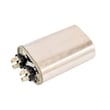
- Capacitor 10 12908 (helps the blower motor start and run)
- Blower wheel D6723306S (moves air through the duct system)
Why it matters
Most furnace shutdowns are safety-related. A simple airflow restriction (filter, blocked return, closed registers) can trigger limit switches and make the furnace look “broken” when it is protecting itself.
Last updated: February 2026