Owner’s manual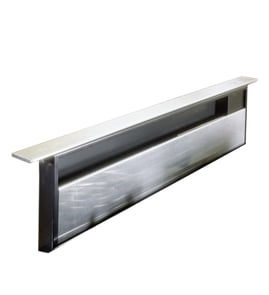




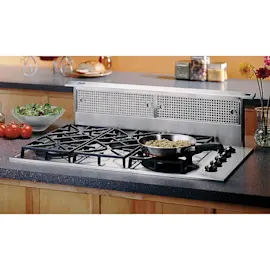
Do downdraft vents need to be vented outside?
No. A downdraft ventilation setup can be ducted to vent air outside, or it can be configured to recirculate air back into the kitchen using filtration, depending on the Broan EB6 installation and the downdraft system it’s paired with. For best smoke and odor removal, outside venting performs better.
Best practice for performance
Outside venting is the preferred setup because it physically removes heat, moisture, smoke, and odors from the home instead of filtering and returning them.
- Better capture and removal of smoke and cooking odors
- Helps reduce moisture buildup in the kitchen
- Typically quieter at the cooktop (less restriction than filters)
- Less frequent filter maintenance compared with recirculating setups
When recirculating (ductless) can make sense
Recirculating configurations are used when routing ductwork outdoors is not practical (for example, some island or slab foundation layouts). In these setups, airflow passes through filters and returns to the room.
- Works when exterior duct routing is limited
- Requires regular filter cleaning or replacement
- Odor removal is more limited than ducted venting
Quick comparison
| Setup type | Where the air goes | Odor/smoke removal | Ongoing maintenance |
|---|---|---|---|
| Ducted (outside vent) | Outdoors | Best | Inspect duct, keep grille clear |
| Recirculating (ductless) | Back into kitchen | Good (varies by filters) | Clean/replace filters regularly |
What to check on your EB6-BASED installation
Because the EB6 is an external blower used with a downdraft system, the deciding factors are usually the downdraft unit’s design and your home’s duct path. We recommend confirming the approved venting method, duct size, and termination requirements in the EB6 owner’s manual.
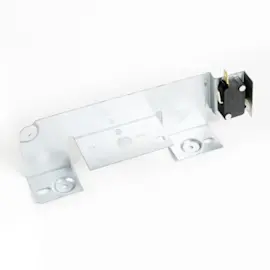
If you’re troubleshooting weak airflow, also inspect for common restrictions and air leaks around the blower housing and duct connections. A damaged seal can reduce performance; the range hood air box cover seal S99100517 is one example of a sealing component used on this model.
Why it matters
Choosing ducted vs. recirculating affects real-world capture of smoke and grease, how often you’ll maintain filters, and how hard the blower motor has to work. A properly ducted, sealed system usually delivers the most consistent ventilation.
Last updated: January 2026
Do downdraft vents work with a gas cooktop?
Yes. A downdraft vent can work with a gas cooktop, but performance depends on burner size, cookware height, and airflow. With a Broan EB6 external blower setup, you typically get the best capture by using the right fan speed and keeping the airflow path as unrestricted as possible; see the EB6 owner's manual for your specific installation requirements.
What to expect with gas burners
Gas flames and hot air naturally rise, so a downdraft system has to pull that heat and smoke downward. It can work well for light to moderate cooking, but it is less effective with tall pots, high-heat searing, or strong cross drafts.
Tips that usually improve capture:
- Use the highest practical blower setting when cooking with high heat or heavy smoke.
- Center pans over the burner and keep lids on when possible.
- Use rear burners when the downdraft intake is behind the cooktop.
- Avoid very tall stockpots when you need maximum smoke capture.
- Reduce cross drafts (open windows, ceiling fans) that push smoke away from the intake.
Quick setup and airflow checks (common causes of weak venting)
Even a strong external blower can underperform if the ducting is restrictive.
- Confirm the damper opens freely and is not stuck.
- Check for crushed flex duct, sharp elbows, or long duct runs.
- Make sure the intake grille is clean and unobstructed.
- Verify the blower is running at full speed when selected.
Symptoms and likely causes
| Symptom | Most common cause | What to check first |
|---|---|---|
| Smoke stays above cooktop | Fan speed too low or tall cookware | Increase speed; lower cookware height |
| Weak airflow at intake | Duct restriction or blockage | Duct run, elbows, damper |
| Rattling or vibration | Loose mounting or worn isolators | Mounting hardware; bushings |
Why it matters
Good downdraft performance on a gas cooktop is mostly about airflow management. When the duct path is tight and the blower is healthy, you capture more smoke and grease before it spreads through the kitchen.
Last updated: January 2026
How does a downdraft ventilation system work?
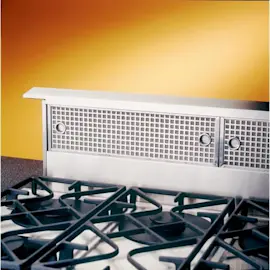
A downdraft ventilation system pulls cooking smoke, steam, grease, and odors downward across the cooktop surface into an intake, then moves that air through ductwork to vent outdoors (or through filters if the setup is recirculating). For the Broan EB6 external blower, the blower provides the suction that keeps airflow moving.
What’s happening when you turn it on
- The downdraft intake creates a low-pressure area near the cooking surface.
- Airflow carries fumes and heat toward the intake instead of letting them rise.
- The blower motor moves air through the air box and duct path.
- A grille helps protect the intake opening and smooth airflow.
- Seals and covers help prevent air leaks that reduce performance.
Key parts involved (and what they do)
| Part | What it does | When it matters most |
|---|---|---|
| External blower motor | Creates suction and moves air | Weak airflow, noisy operation |
| Air box | Directs air into the duct connection | Rattles, leaks, poor capture |
| Grille | Intake protection and airflow shaping | Grease buildup, airflow restriction |
| Seals/covers | Reduce air leaks and vibration | Whistling, reduced venting |
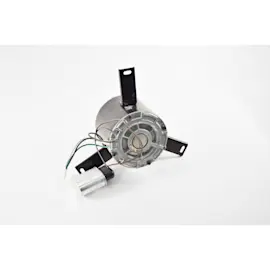
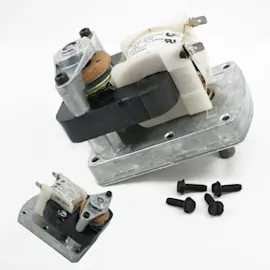
If you are troubleshooting airflow or vibration on this model, common components to inspect include the motor S99080397, airbox assembly S97011795, and grille S98008511.
Why downdraft performance can vary
Downdraft systems work best when the airflow path is efficient. These factors usually make the biggest difference:
- Duct length and number of elbows (more resistance reduces airflow)
- Blocked or dirty intake grille
- Air leaks at the air box cover or seal
- A failing capacitor (motor may hum, start slowly, or run weak)
- Loose mounting hardware causing vibration
Quick checks we recommend
- Confirm the intake area is clear and the grille is clean.
- Listen for motor symptoms: humming, slow start, surging, or grinding.
- Check for air leaks around covers and seals.
- Verify the duct path is not crushed, blocked, or disconnected.
For model-specific airflow direction, wiring, and installation requirements, use the EB6 owner's manual.
Why it matters
Good downdraft capture keeps smoke and grease from spreading through the kitchen, and it also reduces strain on the blower motor by keeping the duct path sealed and unobstructed.
Last updated: January 2026
How much does downdraft ventilation cost?
For a Broan downdraft setup that uses the EB6 external blower, total cost depends on the downdraft vent system you choose plus installation work (ducting, electrical, and cabinetry). We use the EB6 owner's manual to confirm what your installation requires before pricing parts and labor.
What drives the total cost
Downdraft projects vary widely because the vent, blower, and home layout all affect what has to be installed or modified.
- Downdraft vent system price (the pop-up vent assembly and controls)
- External blower requirement (EB6 is an external blower, not a complete downdraft vent)
- Duct run complexity (length, number of elbows, wall or roof termination)
- Electrical work (wiring, junction box, circuit capacity)
- Cabinet or countertop modifications (cutouts, reinforcement, access panels)
- Replacement parts if you are repairing an existing system (motor, capacitor, seals)
Typical cost buckets (use this to build an estimate)
Instead of a single price range, we recommend estimating by category so you can match your home and the exact downdraft unit you are installing.
| Cost bucket | What it covers | What changes it most |
|---|---|---|
| Equipment | Downdraft vent unit plus compatible blower | Brand, size, airflow needs, finish, controls |
| Installation labor | Mounting, wiring, duct routing, testing | Access, cabinet layout, local labor rates |
| Materials | Ducting, clamps, sealant, electrical supplies | Duct diameter, run length, termination type |
| Repairs | Replacing failed components | Which part failed and whether wiring is damaged |
If you are repairing an EB6 system
If the blower runs poorly or will not start, common service items include the motor S99080397 and the cap 15mfd S99271110. Match parts by model EB6 and confirm wiring and mounting details in the manual.
Why it matters
Downdraft performance and noise depend heavily on correct ducting and a properly matched blower. Planning the duct path and electrical requirements first prevents paying for rework and helps the system capture smoke and steam effectively.
Last updated: January 2026