Owner’s manual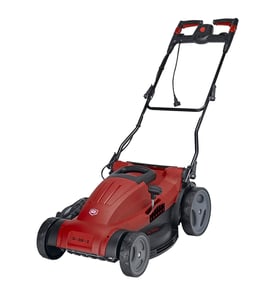


How to find mower blade part number?
For the Black & Decker MM1800 walk-behind mower, the most reliable way to find the correct blade part number is to use the model number (MM1800) to look up the blade in the parts breakdown, then confirm it matches your blade’s mounting pattern and length. Check the owner's manual for blade identification and safe removal steps.
- Use the mower model number MM1800 when searching the parts list for your exact blade.
- Check the blade for a stamped or printed number near the center mounting holes.
- Measure the blade tip-to-tip length (most walk-behind mower blades are commonly 16 to 21 inches).
- Confirm the center hole style (round, star, D-shaft, or multi-hole pattern).
- Compare the mounting hole spacing to avoid ordering a blade that will not seat correctly.
Measure the old blade after unplugging the mower and securing it so it cannot tip.
| What to check | What to record | Why it matters |
|---|---|---|
| Blade length | Tip-to-tip in inches | Ensures proper cut path and deck clearance |
| Blade width | Widest point | Affects lift and airflow under the deck |
| Center/mount | Hole shape and count | Must match the adapter and spindle |
| Thickness | Approximate gauge | Impacts strength and fit on the mount |
Using the correct blade for the MM1800 helps the mower cut evenly, reduces vibration, and prevents damage to the blade adapter, motor shaft, and deck. A blade that is the wrong length or mount pattern can loosen, wobble, or strike the housing.
If your mower’s label is worn or you are unsure whether you have a TYPE 1 configuration, confirm the full identification details in the owner's manual so the blade you select matches your exact build.
Last updated: February 2026
What are all the parts on a lawn mower?
Most lawn mowers share the same core systems: cutting (blade and deck), drive (wheels and height adjusters), power (motor or engine), and controls (switches, handles, safety interlocks). For your Black & DECKER MM1800 electric walk-behind mower, the “parts list” focuses on electric-drive and cutting components rather than fuel and carburetion; see the owner's manual for your exact component names and layouts.
- Cutting system: blade, blade bolt/washer, blade adapter, mower deck (housing), discharge chute or mulch plug
- Height adjustment: height adjust levers, axles, spacers, bushings
- Wheels and handling: wheels, wheel bearings/bushings, handle assembly, knobs, folding locks
- Power system (varies by mower type):
- Electric: motor, motor controller/switch, wiring harness, cord retainer, overload protection
- Gas: engine, fuel tank, carburetor, air filter, spark plug, recoil starter
- Safety and controls: bail lever (operator presence control), start button/switch, safety key/interlock, cable (on some designs)
| System | Electric walk-behind (like MM1800) | Gas walk-behind |
|---|---|---|
| Power source | Corded power to motor | Gasoline to engine |
| “Fuel” parts | Cord, cord retainer, switch, wiring | Fuel tank, fuel line, carburetor |
| Ignition | Switch and electrical protection | Ignition coil, spark plug, flywheel |
| Typical maintenance parts | Blade, wheels, switches, wiring | Blade, air filter, spark plug, carburetor parts |
Knowing which system a part belongs to helps you troubleshoot faster. For example, a mower that will not start on an electric model often points to the cord, safety key/interlock, switch, or wiring, while a gas model often points to fuel delivery or ignition.
- Match parts by model number MM1800 and type (TYPE 1) before ordering.
- Use the deck and handle diagrams in the manual to confirm names.
- Unplug the mower before inspecting wiring, switches, or the blade.
- If the mower vibrates, inspect the blade, blade adapter, and deck for damage.
Last updated: February 2026
What is the average lifespan of MM1800?
A Black & Decker MM1800 electric walk-behind mower typically lasts 8 to 12 years with normal residential use and basic maintenance. Lifespan depends most on how well the blade is kept sharp, how clean the deck stays, and whether the cord and switches are protected from damage.
- Blade condition: a dull or bent blade overloads the motor and shortens life.
- Deck cleanliness: packed wet grass traps moisture and accelerates corrosion.
- Cord care: nicks, crushed sections, and loose connections cause electrical stress.
- Storage: dry, covered storage prevents rust and switch corrosion.
- Cutting habits: mowing tall, wet grass repeatedly increases motor load.
| Task | Frequency | Why it matters |
|---|---|---|
| Clean underside of deck | After each mow | Prevents buildup and corrosion |
| Inspect blade for dullness/bends | Every 3 to 5 mows | Reduces motor strain, improves cut |
| Check fasteners and handle hardware | Monthly in season | Prevents vibration damage |
| Inspect power cord and plug | Every use | Prevents shorts and intermittent power |
| End-of-season deep clean and dry storage | Yearly | Extends motor and deck life |
- Motor sounds strained or bogs down in normal grass
- Frequent tripping of the outlet or GFCI
- Intermittent start, especially after warming up
- Excessive vibration even with a good blade
- Burning smell or visible heat damage near wiring
Electric mowers like the MM1800 rely on steady airflow and reasonable cutting load to keep the motor cool. Keeping the blade sharp and the deck clean is the fastest way to add years of reliable service.
For model-specific care and safety steps (including cord routing and cleaning guidance), use the [MM1800 owner's manual].
Last updated: March 2026