Owner’s manual





Can a heat pump both heat and cool?
Yes. A heat pump is designed to both cool and heat by moving heat in or out of the space; in cooling it removes heat from the room, and in heating it brings heat into the room. On the LG LP153HD3A, you can select COOL or HEAT modes using the controls described in the LP153HD3A owner's manual.
How this applies to the LG LP153HD3A
This model supports both cooling and heating operation modes. The manual describes COOL, FAN, and HEAT modes, along with temperature settings and fan behavior.
- Use COOL for air conditioning.
- Use HEAT for heating.
- Use FAN for air circulation without heating or cooling.
- Set temperature from 54°F to 86°F in 2°F increments.
- After switching the unit off or to FAN, wait at least 3 minutes before restarting cooling.
Quick mode comparison
| Mode | What it does | What you should expect |
|---|---|---|
| COOL | Removes heat from the room | Compressor cycles; fan may run continuously or cycle in energy saver |
| HEAT | Adds heat to the room | A slight odor at first heat use after the cooling season is normal |
| FAN | Air circulation only | No heating or cooling output |
Why it matters
Knowing whether your system can both heat and cool helps you choose the right mode, avoid unnecessary run time, and troubleshoot correctly. For example, selecting FAN will not cool the room, and opening the ventilation damper can reduce heating or cooling efficiency.
When to suspect a problem (not just a mode setting)
If the unit is set correctly but performance is poor, these are common checks we recommend:
- Confirm the mode is HEAT or COOL, not FAN.
- Make sure the temperature setpoint is far enough from room temperature to call for heating or cooling.
- Check for airflow restrictions (dirty filter, blocked grille, closed louvers).
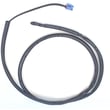
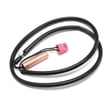
- If temperature sensing seems inaccurate, a failed sensor such as the room air conditioner evaporator thermistor EBG61325803 can cause incorrect cycling.
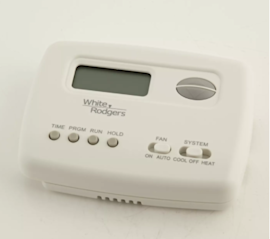
- If the unit will not respond to mode changes, a control issue can involve the room air conditioner thermostat control board 6871A00086A.
Last updated: January 2026
What are common problems with the LG LP153HD3A?
Common problems with the LG LP153HD3A heating and cooling combined unit include weak cooling or heating, poor airflow, water leaking or not draining correctly, and control or temperature-sensing issues. We start with filter and coil cleaning, then confirm proper installation clearances and electrical supply using the LP153HD3A owner's manual.
Most common symptoms and likely causes
- Not cooling well: dirty filter or coils, blocked airflow, incorrect mode or setpoint
- Not heating well (heat pump models): airflow restriction, sensor issues, control problems
- Unit runs but doesn’t start the compressor: capacitor or control board problems
- Water leaks or musty odor: restricted drain path, dirty base/pan, unit not level
- Erratic temperature or short cycling: thermistor/sensor out of range or loose connection
Quick checks we recommend first (no parts required)
- Clean the air filter and make sure the intake and discharge are not blocked.
- Verify the unit is installed securely to reduce vibration and noise.
- Keep the rear of the unit clear; many PTAC-style installs need open space behind the unit for heat rejection.
- Confirm the outlet and breaker match the unit’s electrical requirements; power interruptions can cause performance issues.
- Reset the unit by turning it off, waiting 5 minutes, then restarting.
Parts that commonly relate to these problems
If basic cleaning and setup checks do not fix the issue, these model-specific parts are often involved:
| Symptom | Part to consider | What it does |
|---|---|---|
| Temperature seems wrong, cycles oddly | Room air conditioner evaporator thermistor EBG61325803 | Senses coil temperature for control logic and defrost/protection |
| No start, humming, weak compressor start | Electric capacitor EAE43285407 | Helps start and run the compressor/fan motor circuit |
| Buttons/display act up, wrong operation | Room air conditioner thermostat control board 6871A00086A | Manages temperature control and operating modes |
| Leaking or poor drainage | Pan asy,drai 3087A20033A | Collects and routes condensate for proper draining |
Why it matters
Airflow and drainage problems reduce comfort and efficiency, and they can lead to icing, nuisance shutdowns, or water damage around the unit. Catching a clogged filter, restricted drain, or failing sensor early usually prevents bigger repairs.
Last updated: January 2026
What is the major disadvantage of a heat pump?
The biggest disadvantage of a heat pump is that heating performance drops as outdoor temperatures get very cold, so it may need supplemental heat. For an LG unit like model LP153HD3A, using outside air ventilation can also reduce heating efficiency.
What this means for comfort and energy use
In mild to moderate weather, heat pumps are efficient because they move heat rather than create it. In colder conditions, they have to work harder, which can increase run time and electric use.
Common drawbacks customers notice:
- Higher upfront cost versus basic electric heat in some setups
- Reduced heating capacity and efficiency in extreme cold
- More reliance on electricity (no heat during a power outage)
- May require supplemental heat in very cold climates
- Installation and controls can be more complex than a straight cool-only unit
Model-specific tip for LP153HD3A: ventilation affects efficiency
Your LP153HD3A manual explains that opening the ventilation damper pulls outdoor air into the room, and that reduces cooling or heating efficiency. If you are trying to heat efficiently, keep ventilation closed unless you specifically need fresh air.
- Reference: LP153HD3A owner's manual
- Related component: the ventilation damper (air intake door) can affect performance; if it sticks open, heating and cooling efficiency drop.
Quick comparison: heat pump vs electric resistance heat
| Feature | Heat pump heating | Electric resistance heating |
|---|---|---|
| Cold-weather performance | Drops in very low outdoor temps | Stays consistent |
| Efficiency in mild weather | High | Lower |
| Upfront cost | Typically higher | Typically lower |
| Power outage impact | No heat | No heat |
Why it matters
If you live where winter temperatures regularly fall well below freezing, the “major disadvantage” becomes practical: you may not get the heat output you expect without supplemental heat, and you may see higher electric bills during cold snaps.
Last updated: January 2026