Error Codes





How do I know if my thermocouple is bad on my gas water heater?
On a State PR640CCVIT gas water heater, a bad thermocouple (or flame-sensing circuit, depending on your ignition style) shows up as a pilot that lights only while you hold the control down, then goes out when you release it. The gas valve closes because it is not receiving a strong “flame proven” signal.
Symptoms that point to a bad thermocouple or weak flame signal
- Pilot will not stay lit after you release the knob/button
- You have to relight the pilot frequently
- Burner shuts off early and water turns lukewarm
- Pilot flame is weak, yellow, or does not fully heat the sensor tip
- Pilot stays lit but the main burner will not stay on consistently
Checks to do first (often fixes the problem)
- Pilot flame quality: It should be steady and mostly blue, aimed directly at the thermocouple tip.
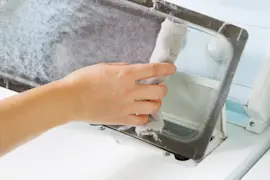
- Dirty pilot/burner: Lint and dust reduce flame heat and mimic a failed thermocouple.
- Thermocouple connection: Tighten the thermocouple nut at the gas control valve (snug, not over-tight).
- Combustion air and venting: Downdrafts or restricted air can blow out or cool the pilot.
- Gas supply: Confirm the shutoff valve is fully open and other gas appliances run normally.
Quick test guide (millivolt check)
A healthy thermocouple typically produces about 20 to 30 mV when heated; under load it is commonly 10 to 15 mV or higher.
| Test result | What it means | Next step |
|---|---|---|
| Very low or unstable mV | Thermocouple weak or flame not heating it | Clean pilot; reposition; replace thermocouple if needed |
| Good mV but pilot still drops | Gas control valve or safety circuit issue | Use diagnostics such as State gas water heater error codes |
Parts note for PR640CCVIT
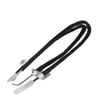
The listed ignitor,pg 100109355 is an ignitor component, not a thermocouple. If you need a thermocouple, match it by your exact PR640CCVIT parts diagram and the part description used for “thermocouple” or “pilot assembly.”
Why it matters
The thermocouple or flame-sensing system is a safety device; it shuts the gas valve if a stable flame is not detected, preventing unburned gas from flowing.
Last updated: February 2026
Is it cheaper to repair or replace a water heater?
For a State PR640CCVIT gas water heater, it’s cheaper to repair when the problem is a single, replaceable component and the tank is sound; it’s cheaper long-term to replace when the tank is leaking, the heater is 10+ years old, or repairs are becoming frequent and expensive.
Quick decision checklist
- Replace now if you see water leaking from the tank body (not a fitting or valve).
- Repair if the issue is ignition or control related and the tank is not leaking.
- Replace if you’ve had multiple service calls in the last 12 to 24 months.
- Repair if the fix is a single part and labor is straightforward.
- Replace if corrosion, heavy sediment, or rusty water keeps returning after maintenance.
Repair vs. replace cost rule of thumb
Use this simple comparison to decide fast.
| Situation | Usually cheaper | Why |
|---|---|---|
| Tank is leaking | Replace | Tank leaks are not a practical repair on residential units |
| One failed component (ignition/switch) | Repair | Parts replacement restores operation without replacing the tank |
| Repair estimate is over ~50% of replacement | Replace | You avoid sinking money into an aging system |
| Heater is 10+ years old with recurring issues | Replace | Newer units reduce breakdown risk and improve efficiency |
Common “repairable” problems on PR640CCVIT
These symptoms often point to a part-level repair rather than full replacement:
- No ignition or intermittent ignition
- Burner won’t stay lit
- Error code or status light indicates an ignition/control fault
Model-matched parts we commonly see involved:
For code-based troubleshooting, use State gas water heater error codes.
Why it matters
A water heater replacement is a full system expense (unit, installation, venting checks, gas and water connections). When the tank is healthy, a targeted repair can restore safe hot water quickly; when the tank is failing, replacement prevents repeat downtime and water damage.
Last updated: February 2026
What are common problems with state select water heaters?
Common problems we see on State Select style gas water heaters (including the State PR640CCVIT) are ignition failures, inconsistent water temperature, nuisance shutdowns, and leaks or rumbling from sediment. Most fixes start with checking the ignition system, safety switches, and basic maintenance items.
Most common symptoms and what they usually point to
- No hot water or burner will not light: ignitor/flame-sensing issue, gas supply issue, or a tripped safety device
- Pilot will not stay lit (or repeated ignition attempts): dirty burner area, weak ignition, or a failing ignition component
- Water temperature swings: temperature control problem, restricted airflow/venting, or scale/sediment affecting heat transfer
- Error code or blinking status light: a specific safety or ignition fault (use the model’s code chart)
- Rumbling, popping, or banging: sediment buildup in the tank
- Water around the heater: leaking fittings, drain valve, T and P relief valve discharge, or tank leak
Parts that commonly get involved on PR640CCVIT
If your symptoms match, these model-listed parts are good starting points for diagnosis and replacement:
| Symptom | Likely area | Example part for this model |
|---|---|---|
| No ignition / won’t light | Ignition system | Ignitor,pg 100109355 |
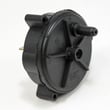
| Random shutdown / won’t run | Safety/limit circuit | Switch 100111732 |
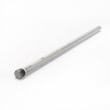
| Odor, rusty water, faster corrosion | Tank protection | 2-way 100109624 |
Quick checks we recommend before replacing parts
- Confirm the gas shutoff valve is fully open and other gas appliances work.
- Verify the thermostat setting is reasonable (many homes run best around 120°F).
- Look for blocked air intake, lint, or dust around the burner area.
- If you have a status light, read the blink pattern and match it to State gas water heater error codes.
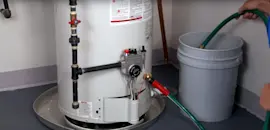
- If you hear rumbling, plan a tank flush to reduce sediment.
Why it matters
Ignition and safety-related problems can stop hot water completely, while sediment and corrosion issues reduce efficiency and shorten tank life. Catching the cause early helps avoid repeat shutdowns and prevents secondary damage to components.
Last updated: February 2026
What company makes state water heaters?
State water heaters (including model PR640CCVIT) are made by A. O. Smith; the State brand is part of the A. O. Smith family of water-heating products.
How to confirm what you have at home
Use the rating plate on the tank (usually on the side) to match the brand and model details before ordering parts or troubleshooting.
- Look for State as the brand name and PR640CCVIT as the model number
- Record the serial number (helps identify production details)
- Note fuel type: gas water heater
- If you see ignition or sensor-related faults, capture any status light pattern or code
Why the manufacturer matters for parts and troubleshooting
Knowing the maker helps you choose compatible components (ignitor, switch, anode rod) and follow the right diagnostic flow for your gas control system.
| What you’re doing | Why “A. O. Smith / State” matters | Example on PR640CCVIT |
|---|---|---|
| Ordering repair parts | Ensures correct fit and electrical/ignition compatibility | Replacing an ignitor or switch |
| Diagnosing a no-heat issue | Points you to the right error-code logic | Reading LED flashes or fault codes |
| Planning maintenance | Helps match service intervals and common wear items | Checking the anode rod condition |
Helpful next steps for PR640CCVIT owners
- Use the model number PR640CCVIT when searching parts to avoid mismatches
- If you’re troubleshooting ignition problems, start with the State gas water heater error codes
- For common wear items, inspect the anode rod periodically; if yours matches the listed part, see 2-way 100109624
Why it matters
State and A. O. Smith products often share design platforms; using the correct brand family guidance reduces repeat failures and helps you order the right gas ignition and safety-control parts the first time.
Last updated: February 2026
What is the average cost of a 50 gallon gas water heater?
A typical 50-gallon gas water heater costs about $600 to $1,500 for the unit, and about $1,000 to $3,000+ installed once labor, permits, and venting changes are included. For a State water heater like model PR640CCVIT, the final price depends most on venting type, efficiency, and local install requirements.
What changes the price the most
- Venting type: atmospheric vent vs. power vent vs. direct vent
- Efficiency level: standard vs. higher-efficiency designs
- Warranty length: common options are 6-year, 9-year, or 12-year coverage
- Gas and plumbing updates: shutoff valve, sediment trap, flex connector, piping changes
- Code and permit needs: seismic strapping, expansion tank, drip pan, discharge piping
- Labor rates: vary widely by region and job complexity
Typical cost ranges (quick guide)
| Cost item | Common range | Notes |
|---|---|---|
| Water heater unit (50-gal gas) | $600 to $1,500 | Higher for power-vent and specialty models |
| Basic installation labor | $400 to $1,500 | Removal and haul-away may be extra |
| Venting, gas, or plumbing upgrades | $100 to $1,000+ | Depends on what must be brought up to code |
| Total installed cost | $1,000 to $3,000+ | Complex venting can push higher |
How to estimate your installed price fast
- Identify your current venting (metal flue up the chimney vs. fan-assisted vent)
- Check if the replacement is a like-for-like swap (same venting and footprint)
- Ask whether the quote includes permits, haul-away, and code upgrades
- Confirm if a new expansion tank, drip pan, or shutoff valve is required
- Compare warranty length and efficiency, not just tank size
Why it matters
A 50-gallon gas water heater price swings most when the job is not a simple swap. Venting changes and code upgrades often cost more than the difference between two tank models.
For troubleshooting costs tied to ignition or lockout issues (which can influence repair vs. replace decisions), use our State gas water heater error codes reference.
Last updated: February 2026
What parts can be replaced on a hot water heater?
On the State PR640CCVIT gas water heater, many service parts are replaceable, including ignition and safety controls, tank protection parts, and common plumbing valves. Replacing the right part can restore reliable hot water, improve efficiency, and help prevent leaks or nuisance shutdowns.
Common replaceable parts (gas water heaters)
- Ignition parts (ignitor, flame sensor style components, wiring as applicable)
- Safety and control parts (switches, control components, limit devices)
- Tank protection parts (anode rod)
- Plumbing service parts (drain valve, temperature and pressure relief valve)
- Burner and pilot components (pilot assembly, thermocouple, burner parts, depending on design)
- Gas control valve and related fittings (model dependent)
Model-relevant examples for PR640CCVIT
These are examples of parts we commonly see replaced on this model:
- Ignitor,pg 100109355
- Switch 100111732
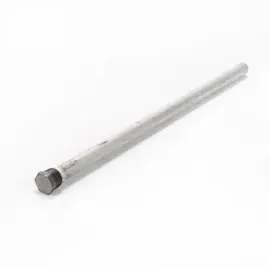
- 2-way 100109624 (anode rod)
Quick “symptom to part” guide
| What you notice | Parts to check first | Why |
|---|---|---|
| No ignition or repeated ignition attempts | Ignitor, wiring, switch/limits | Ignition and safety chain must prove correctly |
| Burner shuts off unexpectedly | Switch/limits, venting/airflow, gas supply | Safety devices open when conditions are unsafe |
| Rusty smell or discolored hot water | Anode rod | Anode protects the tank from corrosion |
| Water leaking from a valve area | Drain valve or T&P relief valve | Valves can wear, clog, or fail to seal |
Why it matters
Water heaters combine gas, flame, and pressurized hot water. Using the correct replacement part for the PR640CCVIT helps keep ignition reliable and safety controls working as designed, and replacing wear items like the anode rod helps extend tank life.
Helpful troubleshooting resource
If your heater is flashing an error or acting like it is in lockout, use State gas water heater error codes to narrow the failure to ignition, venting, or safety circuits before ordering parts.
Last updated: February 2026
What's the average lifespan of a gas hot water heater?
Most gas water heaters, including the State PR640CCVIT, last 8 to 12 years. With consistent maintenance (flushing sediment, checking venting, and keeping the burner area clean), it’s common to reach 12 to 15 years before major components start failing.
What affects lifespan the most
- Water quality: hard water speeds up tank corrosion and sediment buildup
- Maintenance: annual flushing and periodic inspections extend tank life
- Temperature setting: higher setpoints increase stress on the tank and parts
- Usage level: heavy daily demand shortens life compared to light use
- Installation quality: correct venting and gas supply help prevent overheating and ignition issues
Typical lifespan by condition
| Condition | What you’ll usually see | Typical lifespan |
|---|---|---|
| Well maintained | Flushed regularly; stable hot water | 12 to 15 years |
| Average maintenance | Occasional flushing; some sediment | 8 to 12 years |
| Poor conditions | Hard water; no flushing; overheating | 6 to 10 years |
Signs your gas water heater is nearing end of life
- Rust-colored water or metallic smell at hot taps
- Rumbling or popping sounds from heavy sediment
- Pilot or ignition problems that keep returning
- Water around the base of the tank (possible tank leak)
- Hot water runs out faster than it used to
Why it matters
A failing tank can waste gas, deliver inconsistent hot water, and eventually leak. Catching wear early helps you plan repairs or replacement before you lose hot water unexpectedly.
For troubleshooting ignition or status lights on State units, use our State gas water heater error codes guide.
Last updated: February 2026
Why are gas water heaters being phased out?
Gas water heaters are being phased out in some areas because local air-quality and climate policies target emissions from burning natural gas, especially nitrogen oxides (NOx) that contribute to smog. For a State PR640CCVIT gas water heater, the practical impact is that replacement options and installation rules can vary by city and utility.
What is driving the phase-outs?
Most phase-outs are policy decisions aimed at reducing pollution from combustion appliances.
- Smog reduction: Gas burners can produce NOx, a key smog-forming pollutant.
- Climate goals: Some jurisdictions want fewer on-site fossil-fuel appliances over time.
- Building electrification: New construction is often the first target (then replacements later).
- Regional differences: Rules can be city-, county-, or air-district-specific.
- Incentives: Rebates sometimes encourage heat pump water heaters or other alternatives.
What it means for PR640CCVIT owners
You can usually keep using a working gas water heater; the biggest changes tend to show up when you replace the unit or pull permits.
| Situation | Typical outcome | What we recommend |
|---|---|---|
| Existing heater is working | Continued use is allowed | Maintain it; address error codes promptly |
| Repair vs. replace decision | Repairs often still allowed | Price the repair parts first |
| Full replacement with gas | May require low-NOx or may be restricted | Confirm local permit requirements |
| Switching to electric/heat pump | Often encouraged with rebates | Check electrical capacity and space |
Smart next steps before you spend money
- Check your local permit requirements for water heater replacement.
- If your heater is acting up, look up the diagnostic light or code using State gas water heater error codes.
- If ignition is the issue, confirm wiring and burner area condition before replacing parts like ignitor,pg 100109355.
- If you have nuisance shutdowns, inspect safety circuits and connections before replacing a control part like switch 100111732.
- If you are maintaining tank life, plan periodic inspection of the anode rod such as 2-way 100109624.
Why it matters
Phase-outs can change what is legal to install, what qualifies for rebates, and what parts and service paths make the most sense. Knowing your local rules helps you avoid buying a gas replacement that cannot be permitted, and it helps you decide whether a repair is the better short-term move.
Last updated: February 2026