Installation guide
 Owner’s manual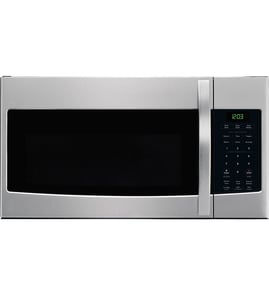


How can I tell what size my microwave is?
For your GE JVM7195DF1WW microwave/hood combo, “size” usually means either the oven capacity (cubic feet) or the physical cutout and overall dimensions. The quickest way is to check the model’s specs in the JVM7195DF1WW owner’s manual or confirm fit using the JVM7195DF1WW installation guide.
What “size” can mean (and which one you need)
- Capacity (cu ft): how much food fits inside the cavity.
- Overall dimensions: width, height, depth of the microwave.
- Installation space: cabinet opening, mounting plate location, and clearances.
- Range compatibility: over-the-range units are designed to fit over standard cooktops.
Quick checks you can do at home
- Measure the width across the front of the microwave (most over-the-range models are about 30 inches wide).
- Measure height and depth (depth can vary depending on handle and door style).
- Confirm cabinet and wall layout: this model must mount to a top cabinet and a wall, and it must be secured to at least one wall stud.
Typical over-the-range microwave sizing guide
| What you’re checking | Typical value for this style | Best place to confirm |
|---|---|---|
| Width | About 30 inches | Installation guide specs and templates |
| Max range width it fits over | Up to 36 inches | Owner’s manual safety/installation notes |
| Weight (for install planning) | About 63 to 85 lb | Installation guide |
Why it matters
Getting the right “size” prevents installation problems (cabinet fit, vent alignment, stud placement) and helps you choose compatible replacement parts like a microwave mounting plate WB56X10446 if your original hardware is damaged.
Last updated: January 2026
How to get rid of control lock on GE microwave?
On the GE JVM7195DF1WW microwave/hood combo, you turn Control Lock off by pressing and holding CANCEL/OFF for about 3 seconds. When the lock is active, the display briefly shows CONTROL LOCKED if you press other keys; holding CANCEL/OFF again unlocks it (see the JVM7195DF1WW owner's manual).
Steps to unlock the controls
- Make sure the door is fully closed.
- Press and hold CANCEL/OFF for about 3 seconds.
- Watch the display for the lock message to clear.
- Try a simple function (for example, set the timer) to confirm the keypad responds.
- If the panel still seems locked, repeat the 3-second press and hold.
If it still will not unlock
A control lock that will not clear is usually caused by a stuck key, a control panel issue, or a door switch/interlock problem that prevents normal keypad operation.
- Unplug the microwave (or switch off the breaker) for 1 minute, then restore power and try the 3-second CANCEL/OFF hold again.
- Check that the door closes firmly and latches smoothly.
- If the door feels loose or does not latch consistently, inspect the latch components; a damaged latch can keep the unit from responding normally.
- If the keypad is unresponsive or behaves erratically, the control interface may need service.
| Symptom | Most likely area to check | What to do next |
|---|---|---|
| “CONTROL LOCKED” appears when you press keys | Control lock is on | Hold CANCEL/OFF 3 seconds |
| No response from any keys | Power reset or control issue | Power cycle, then retry unlock |
| Door does not close or latch smoothly | Door latch/interlock | Inspect latch parts and alignment |
Why it matters
Control Lock prevents accidental starts during cleaning and helps keep children from operating the microwave. If it will not turn off, addressing door latch or control issues restores safe, normal operation.
Last updated: January 2026
What is the average lifespan of a GE microwave?
Most GE microwaves average 9 to 10 years of service life with normal household use and basic care. For your GE JVM7195DF1WW microwave/hood combo, keeping the venting and interior clean and avoiding overheating events helps you reach (and often exceed) that typical lifespan; see the JVM7195DF1WW owner’s manual for model-specific care and operating guidance.
Typical lifespan and what affects it
A microwave’s life is driven more by heat, airflow, and door safety switching than by cooking hours alone.
- Ventilation and grease buildup: clogged filters trap heat and stress internal components.
- Door use and slamming: repeated impact can wear the latch and interlock system.
- Overheating: running empty, blocked vents, or long cook cycles can trip thermostats.
- Power quality: frequent surges can shorten control board life.
- Cleaning habits: food splatter and steam can lead to corrosion and arcing.
What “end of life” usually looks like
These are the most common symptoms we see as a microwave ages.
| Symptom | Common area involved | What to do first |
|---|---|---|
| Runs but does not heat | High-voltage system | Stop using and schedule service |
| Dead display/no power | Fuse, wiring, control | Check outlet/breaker; then service |
| Starts when door closes or will not start | Door interlock system | Inspect latch alignment; service if intermittent |
| Loud hum or burning smell | High-voltage components | Stop using immediately and service |
Maintenance that helps you hit the 9 to 10 year mark
- Wash or replace the grease filter regularly; your model uses a microwave grease filter WB02X11534.
- Keep the vent grille and intake areas clear of dust and grease.
- Use microwave-safe covers to reduce splatter and moisture.
- Avoid running the microwave empty.
- If the door feels loose or misaligned, address it early to protect the interlock system.
Why it matters
A microwave/hood combo like the JVM7195DF1WW depends on proper airflow and a reliable door interlock for safe operation. Good venting and gentle door use reduce heat stress and help prevent premature failures in the control and high-voltage sections.
Last updated: January 2026