View engine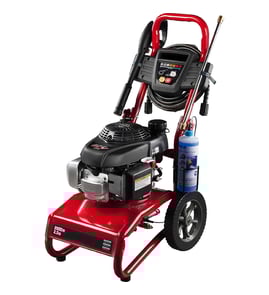




Can you put 87 gas in a pressure washer?
Yes. For the Briggs 020734-00 gas pressure washer, regular unleaded gasoline with an 87 octane rating is the standard fuel choice for normal operation. Use fresh fuel and avoid mixing oil into the gas (this is a 4-cycle engine).
What fuel to use (and what to avoid)
- Use fresh, regular unleaded gasoline (87 octane).
- Higher octane (89 to 93) is fine, but it typically does not improve cleaning power.
- Do not use mixed gas (2-cycle mix) in a 4-cycle pressure washer engine.
- Avoid old or stale fuel; fuel that has been sitting for 30 days or more commonly causes hard starting and surging.
- If your area sells ethanol-blended fuel, keep it fresh and store it in a sealed, approved container.
Quick checklist before you fuel up
- Shut the engine off and let it cool.
- Fill outdoors, away from ignition sources.
- Do not overfill; leave a little space for expansion.
- Wipe up spills before starting.
- If the washer will sit, run it dry or plan to refresh the fuel before the next use.
Oil matters too (separate from gasoline)
This model uses a 4-cycle engine, so engine oil goes in the crankcase and gasoline goes in the fuel tank.
| Item | What to use | Where it goes |
|---|---|---|
| Gasoline | Unleaded 87 octane | Fuel tank |
| Engine oil | SAE 30 (typical for warm weather) | Crankcase |
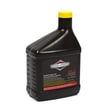
A convenient option we list for maintenance is Briggs & statton lawn & garden equipment 4-cycle engine oil, sae30, 18-oz 100005.
Why it matters
Using the right fuel helps prevent carburetor varnish, surging, and hard-start problems, and using the correct 4-cycle oil protects the engine under load when the pump is building pressure.
Last updated: February 2026
What is the life expectancy of a gas pressure washer?
A gas pressure washer typically lasts 5 to 10 years in normal homeowner use when it gets regular maintenance and is stored correctly. For a Briggs 020734-00, the engine oil, pump care, and winterizing habits usually matter more than the brand name for overall lifespan.
Typical lifespan ranges (what we see most often)
- Homeowner, occasional use: 5 to 10 years
- Frequent use (weekly, long run times): 3 to 7 years
- Heavy commercial-style use: 2 to 5 years
| Usage pattern | What wears first | What extends life most |
|---|---|---|
| Occasional cleaning | Fuel system, seals from storage | Fresh fuel, proper storage |
| Regular weekly use | Pump seals/valves, unloader wear | Correct nozzle use, cool-down practices |
| Long continuous run time | Pump overheating, engine wear | Avoid extended bypass, steady water supply |
Maintenance that adds years
- Change engine oil on schedule; keep the level correct (SAE 30 is common for many small 4-cycle engines; use Briggs & statton lawn & garden equipment 4-cycle engine oil, sae30, 18-oz 100005 if it matches your needs).
- Use clean, fresh gasoline; don’t store fuel in the tank for long periods.
- Keep a steady water supply and purge air from the hose before starting.
- Don’t let the washer idle in bypass (trigger not pulled) for more than 1 to 2 minutes; heat builds fast in the pump.
- Winterize before freezing temps (drain water; protect the pump from ice damage).
Signs it’s near end-of-life
- Pressure surges or won’t hold steady even with a clean nozzle
- Water leaking from the pump or fittings repeatedly
- Hard starting, stalling under load, or excessive smoke
- Loss of pressure that returns only briefly after restarting
Why it matters
Most “pressure washer failures” are really pump seal damage, overheating from bypassing, or fuel-related issues. Preventing those problems is the fastest way to keep your Briggs 020734-00 running strong for the full expected life.
Last updated: February 2026
Why is my gas pressure washer not building pressure?
If your Briggs 020734-00 gas pressure washer runs but won’t build pressure, the most common causes are a restricted water supply, a clogged or mismatched spray nozzle, air trapped in the pump, or an unloader valve that’s stuck open. Start with the nozzle and water-in checks before assuming a pump failure.
Quick checks that fix most low-pressure problems
- Verify the garden hose is fully open and not kinked; use a short, high-flow hose if possible.
- Remove and clean the spray tip; debris in the orifice drops pressure immediately.
- Try a different tip size (a worn tip or wrong orifice acts like a pressure leak).
- Purge air: with the engine off, squeeze the trigger until water flows smoothly with no sputter.
- Check for leaks at quick-connects, the gun, and hose ends; even small leaks reduce pressure.
- Confirm you are not in “low pressure/soap” mode if your wand has an adjustable setting.
Nozzle and connector parts to consider
If cleaning doesn’t restore pressure, a damaged nozzle or connector can be the culprit on this model.
| Symptom | Likely cause | What to do |
|---|---|---|
| Pressure is weak and spray pattern looks uneven | Clogged or worn nozzle | Clean or replace the nozzle |
| Pressure pulses or drops when you move the wand | Quick-connect not sealing | Inspect O-rings; replace connector if needed |
| Good flow with trigger open, but no “bite” on surfaces | Wrong tip/orifice size | Switch to the correct tip for the job |
Helpful parts from our list include nozzle 709745 and nozzle quick-connector 195983VGS.
Unloader valve and pump-related causes
If water supply and nozzle are good, the unloader valve is the next most common reason a washer won’t build pressure. When it sticks open, water bypasses inside the pump so you get flow but not pressure.
- Tap the trigger on and off a few times to see if pressure “catches.”
- Don’t let the unit idle with the trigger released for more than 1 to 2 minutes; heat buildup can worsen unloader sticking.
- If pressure never returns and the engine sounds normal, plan on unloader service or replacement.
Why it matters
Running a pressure washer with low pressure often means water is bypassing or restricted; that can overheat the pump, wear seals faster, and turn a simple nozzle issue into a bigger repair.
Last updated: February 2026
How to tell if your pressure washer pump is bad?
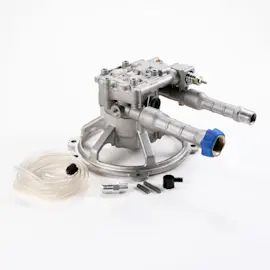
A bad pump on your Briggs 020734-00 gas pressure washer usually shows up as low or surging pressure, water leaking from the pump area, or the washer failing to build pressure even with good water supply. Confirm the basics first, then inspect for leaks, air leaks, and worn pump components.
Quick signs the pump is failing
- Pressure pulses or surges while spraying (even with a steady water supply)
- Pressure stays low no matter which nozzle you use
- Water leaks from the pump body or where hoses connect
- Unusual pump noises (grinding, squealing, or loud knocking)
- Pump gets hot quickly, or the engine bogs when you pull the trigger
- You see milky oil in the pump (if your pump has an oil reservoir)
Rule out common non-pump causes first
Before you blame the pump, we check these items because they create the same symptoms:
- Water supply: full-flow hose, no kinks, clean inlet screen
- Air in the system: run water through the hose and gun for 30 to 60 seconds with the engine off
- Nozzle restriction: try a different tip; a partially clogged tip causes pulsing
- Chemical pickup: a cracked chemical tube can pull air; inspect the pressure washer chemical hose 705076
- Quick-connect leaks: worn couplers or O-rings can cause pressure drop; inspect the nozzle quick-connector 195983VGS
Simple diagnostic checks (no special tools)
- With engine off, turn on the water and squeeze the trigger until flow is steady.
- Start the engine and test with a known-good nozzle.
- Watch for leaks at the pump head and fittings while spraying.
- If pressure still surges, remove the nozzle and test flow through the wand; strong flow with no pressure points to a nozzle or unloader issue, not always the pump.
What the symptoms usually mean
| Symptom | Most common cause | What we do next |
|---|---|---|
| Pulsing pressure | Air leak, clogged nozzle, sticking unloader | Purge air, swap nozzle, inspect couplers |
| Low pressure only | Worn nozzle, unloader setting, inlet restriction | Check inlet screen, try another nozzle |
| Leaking from pump body | Worn seals or cracked pump housing | Inspect for visible cracks and seal leaks |
| No pressure at all | Unloader stuck open, pump valves damaged | Check unloader behavior; inspect pump head |
Why it matters
Running a pressure washer with a failing pump can quickly damage seals and valves, and it can overheat the pump if water flow is restricted. Catching leaks and air intrusion early helps prevent a full pump replacement.
Last updated: February 2026