Owner’s manual

How big of a log can a 28 ton log splitter handle?
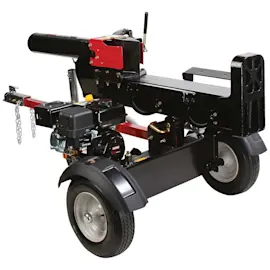
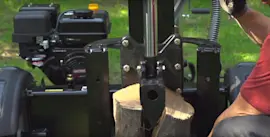
For the Swisher LS728H 28-ton log splitter, the maximum log length is 25 1/2 inches per the specifications, but for safer handling we keep working pieces 24 inches or less as the manual recommends. Diameter is not a fixed spec; wood type and knots set the real limit (see the owner's manual).
LS728H log size limits (what we use)
- Absolute length limit (spec): 25 1/2 inches
- Recommended working length (manual guidance): 24 inches or less
- Diameter: varies by species, moisture, knots, and grain direction
- Orientation: split with the grain only (never across the grain)
Quick guide: spec vs. safer day-to-day practice
| Item | LS728H specification | Safer operating guidance |
|---|---|---|
| Log length | 25 1/2 in. max | 24 in. or less to reduce sliding and shifting |
| Log diameter | Not specified | Start smaller on knotty or green hardwood |
| Log weight | Not specified | Roll or lift with help; keep hands clear of pinch points |
If a round is “too big” for 28 tons
A 28-ton rating is splitting force, not a guaranteed diameter. When a round stalls or won’t split cleanly:
- Reposition the round and split from an edge (take smaller bites)
- Rotate the round to avoid knots and crotches
- Shorten the piece (stay within the length guidance)
- Split the round into quarters with easier grain lines first
Why it matters
Staying within the LS728H length limits helps prevent the log from sliding out during operation and reduces strain on the hydraulic cylinder, pump, and valve. It also lowers the chance of kick-out injuries.
For hydraulic performance issues that show up as stalling or weak splitting, use how to maintain the hydraulic system in a log splitter.
Last updated: February 2026
How often should hydraulic fluid be changed in a log splitter?
For the Swisher LS728H log splitter, change the hydraulic fluid in the reservoir after every 100 hours of operation. Also change the hydraulic filter after every 50 hours (use a 10-micron hydraulic filter) and check the reservoir level before each use; details are in the owner's manual.
LS728H hydraulic maintenance schedule
Use this hour-based schedule to keep the pump, valve, and cylinder protected from wear and contamination.
- Change hydraulic fluid: every 100 hours
- Change hydraulic filter: every 50 hours (use only a 10-micron hydraulic filter)
- Check hydraulic reservoir level: before operation
- Inspect nuts, bolts, screws, clamps, and fittings: periodically for tightness and seepage
Quick reference table
| Service item | Interval | Why it matters |
|---|---|---|
| Hydraulic fluid | 100 hours | Clean fluid prevents pump damage and erratic operation |
| Hydraulic filter | 50 hours | A restricted filter slows cycle time and strains the pump |
| Reservoir level | Before use | Low oil supply causes severe pump damage |
What fluid to use in the LS728H hydraulic reservoir
Fill the hydraulic reservoir to the top mark on the dipstick with one of these approved fluids:
- Dexron III or Mercon III automatic transmission fluid
- 10W AW hydraulic fluid
- Pro-Mix AW-32 hydraulic oil
After refilling, start the engine and cycle the cylinder several times to purge air, then shut down and top off to the safe operating range on the dipstick.
Why it matters
Hydraulic systems run hot and pull in moisture and debris over time. Fresh fluid and a clean filter keep splitting power consistent and prevent premature wear in the hydraulic pump and control valve.
Last updated: February 2026
What are common problems with log splitters?
Common problems on the Swisher LS728H log splitter include hydraulic issues (low fluid, air in the system, leaks, or a weak pump), engine starting or running problems, and unsafe setup or log handling that makes splitting difficult. Our owner's manual also highlights key operating and safety rules that prevent many “problem” situations.
Most common issues (and what they look like)
- Low or contaminated hydraulic fluid: slow cycle time, weak splitting force, noisy pump
- Air in the hydraulic system: jerky ram movement, foamy fluid, inconsistent power
- Hydraulic leaks: wet cylinder rod, dripping hoses/fittings, fluid level dropping
- Control valve problems: ram creeps, won’t hold position, or won’t retract smoothly
- Engine problems: won’t start, runs rough, or leaks fuel/oil
- Setup and log handling issues: log slips, binds, or won’t split cleanly (often from poor footing or log placement)
Quick checks we recommend first
- Confirm safe setup: operate on level ground with wheels blocked; keep the work area clear.
- Check hydraulic fluid level and condition: top off to the correct level; replace fluid if it looks milky, dark, or smells burnt.
- Inspect for leaks: look at the cylinder, pump, valve, hoses, and fittings for fresh oil.
- Verify log prep: cut ends square; keep log length 24 inches or less.
- Basic engine checks: fresh fuel, clean air filter, correct oil level, good spark plug connection.
Symptom-to-cause guide
| Symptom | Most likely cause | What to do next |
|---|---|---|
| Ram is slow or weak | Low fluid, air in system, worn pump | Check level; bleed air; inspect pump |
| Oil on cylinder or hoses | Seal, hose, or fitting leak | Tighten fittings; replace leaking component |
| Ram won’t extend/retract | Valve issue, air, blockage | Inspect valve operation; check for kinks |
| Engine won’t start | Fuel, spark, carburetor | Work through fuel and ignition checks |
Why it matters
Hydraulic oil and gasoline are flammable, and the LS728H can cause severe injury if operated unsafely. Following the operating rules (single operator, proper PPE, level ground, hands on the sides of the log) prevents many common failures and dangerous “stuck log” situations.
Helpful DIY troubleshooting
- Log splitter symptoms landing page
- Log splitter hydraulic cylinder leaks
- Log splitter hydraulic pump leaks
- Log splitter valve leaks
- Log splitter engine won't start
Last updated: February 2026
What is the most reliable log splitter brand?
Reliability depends more on build quality, hydraulic design, and maintenance than the name on the beam. For a homeowner-grade splitter like the Swisher LS728H, the most reliable “brand” is the one you can keep properly serviced with the correct hydraulic fluid, engine oil, and safety checks listed in the LS728H owner's manual.
What “reliable” means for a log splitter
A reliable log splitter consistently starts, builds hydraulic pressure, and cycles the cylinder without leaks or binding.
Common reliability markers:
- Minimal hydraulic leaks at the cylinder, pump, valve, and hoses
- Consistent wedge travel (extends and retracts smoothly under load)
- Engine starts easily and runs without surging or misfiring
- No frame cracking, loose fasteners, or control-handle slop
- Easy access to service points (oil, filter screens, fittings)
How to choose a reliable brand (what to compare)
When you compare Swisher, Iron & Oak, Huskee, Champion, CountyLine, or other brands, focus on these factors first.
| What to compare | What to look for | Why it matters |
|---|---|---|
| Hydraulic system | Quality hoses, tight fittings, clean fluid practices | Leaks and contamination are top causes of failures |
| Cylinder performance | Full extension under load, no drift | Weak splitting often traces to pressure loss |
| Valve/control feel | Positive detents, no sticking | A sticking valve can cause unsafe operation |
| Parts support | Clear parts diagrams and model identification | Faster, correct repairs |
Maintenance that makes any brand more reliable
The LS728H manual emphasizes safe operation and using replacement parts that meet manufacturer specifications. These habits improve reliability on any splitter:
- Check hydraulic fluid level and condition before heavy use
- Inspect hoses and fittings for wetness, cracks, or abrasion
- Keep engine oil at the correct level; fix fuel or oil leaks promptly
- Tighten loose hardware and inspect the beam and wedge area
- Wear eye and hearing protection during operation
For step-by-step upkeep, use how to maintain the hydraulic system in a log splitter.
Why it matters
Most “unreliable splitter” complaints come from hydraulic leaks, contaminated fluid, or neglected engine maintenance, not the brand itself. A well-maintained Swisher LS728H can be dependable for seasonal wood splitting, while any brand can become troublesome if leaks and fluid issues are ignored.
Last updated: February 2026