 Owner’s manual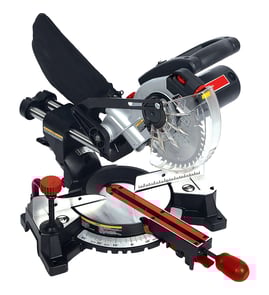


What should you never cut with a miter saw?
You should never cut any workpiece you cannot securely control on your Craftsman 315212350 12" compound miter saw, especially stock that is too small to clamp or safely keep your hands out of the blade path. Never make free-hand cuts; always support and secure the material per the 315212350 owner's manual.
Never cut these (or cut them only with the right setup)
- Tiny pieces you cannot clamp: If it is too small to clamp, it is too risky to cut.
- Anything you are holding by hand near the blade: Keep hands out of the cutting area and away from the blade path.
- Material that is not supported (long or heavy boards): Unsupported stock can pinch the blade and kick back.
- A workpiece clamped on both sides of the blade: The manual warns the work must remain free on one side to prevent binding and kickback.
- Scrap ends you are trying to “catch” or restrain: Never hold or bind the free scrap end during a cut.
Safe setup rules we follow for this saw
- Clamp or bolt the saw firmly to a stable bench at about hip height.
- Lock the miter table and bevel (saw arm) before cutting.
- Start the saw only when the blade is clear of the workpiece; let it reach full speed.
- Keep your body out of line with the blade path.
- Release the trigger and let the blade stop completely before raising it.
Quick guide: what to do instead
| Situation | Safer approach |
|---|---|
| Piece is too small to hold safely | Use a clamp, auxiliary fence, or a purpose-built jig; keep hands well away |
| Board is long/heavy | Add outfeed support stands or a helper support to prevent tipping and pinching |
| Cut creates a loose offcut | Let the offcut fall free; do not grab it near the blade |
| You need parts or accessories | Use the model parts list, or search by model on Sears PartsDirect |
Why it matters
Most miter saw injuries happen when the work shifts, binds, or pulls a hand into the cutting path. Clamping the workpiece, supporting long stock, and keeping the scrap end free reduces binding, kickback, and loss of control.
Last updated: February 2026
How big of a board can you cut with a 12-inch miter saw?
On the Craftsman 315212350 12-inch compound miter saw, the included 12-inch blade can cut material up to 4 inches thick or up to 7-7/8 inches wide, depending on the miter and bevel angle you set. For exact cut capacity by angle, use the 315212350 owner's manual.
Typical board sizes you can cut (real-world guidance)
Your maximum cut changes with the cut type and how the board is positioned against the fence.
- At 90° (straight crosscut): most 12-inch miter saws handle about a 2x8 in one pass
- At 45° miter: most 12-inch miter saws handle about a 2x6 in one pass
- Thicker stock: capacity is limited by the saw’s 4-inch max thickness rating
- Wider boards: you may need to flip the board to finish the cut cleanly
- Crown/base molding: capacity depends on whether you cut nested or flat
What changes the maximum cut size
Even with the same 12-inch blade, these factors reduce usable capacity:
- Miter angle (turning the table)
- Bevel angle (tilting the saw arm)
- Fence position and clearance (especially on bevel and compound cuts)
- Blade kerf and tooth style (fine-finish vs framing blades)
- Workpiece support (sagging boards pinch the blade and reduce control)
Quick reference table
| Cut setup | What it affects | What to expect |
|---|---|---|
| 0° miter, 0° bevel | Maximum straight crosscut | Closest to the 7-7/8 in. width limit |
| 45° miter | Wider “effective” cut path | Width capacity drops (often around 2x6) |
| 0° miter, 45° bevel | Bevel clearance at fence | Width capacity drops; fence clearance matters |
| Compound (miter + bevel) | Most restrictive setup | Smallest usable width and thickness |
Why it matters
Choosing a board wider than the saw’s capacity leads to incomplete cuts, binding, and kickback risk. We always recommend clamping the workpiece, supporting long boards, and locking the miter table and bevel settings before cutting.
If you need to look up diagrams or order replacement parts by model number, search using Sears PartsDirect.
Last updated: February 2026
How to unlock an old Craftsman miter saw?
On the Craftsman 315212350 12 inch compound miter saw, “unlocking” usually means releasing the transport lock pin so the saw arm can raise, then loosening the miter lock handle (and bevel lock knob if needed) so the table or arm can move to a new angle. See the owner's manual for the exact control locations.
Quick unlock steps (most common)
- Unplug the saw before adjusting locks.
- Pull the saw arm down slightly to take pressure off the lock.
- Pull out the lock pin to release the saw arm from the transport position.
- Loosen the miter lock handle, then lift the miter lock plate to disengage and rotate the miter table.
- If you need bevel movement, loosen the bevel lock knob, set the bevel angle, then tighten it.
- Tighten the miter lock handle and bevel lock knob securely before cutting.
What each lock does
| Lock or control | What it unlocks | When you use it |
|---|---|---|
| Lock pin (transport lock) | Saw arm up and down movement | Moving from stored position to cutting position |
| Miter lock handle and lock plate | Miter table rotation left or right | Setting miter angles (crosscuts, miters) |
| Bevel lock knob | Saw arm tilt for bevel cuts | Setting bevel angles (0 to 45 degrees) |
If it still will not move
- Check for sawdust buildup around the miter table, lock plate, and pivot points; clean and try again.
- Make sure you are not tightening one lock while trying to move the other (miter vs bevel).
- Confirm the blade is not contacting the workpiece; start cuts only after the motor reaches full speed.
- Support long workpieces and clamp when possible to prevent binding and kickback.
Why it matters
Operating with the miter table or saw arm partially locked can let the table or arm shift during a cut, which increases the risk of blade binding and kickback. Locking the miter and bevel controls securely is a key safety step on this Craftsman compound miter saw.
For replacement parts and diagrams for model 315212350, start with the model parts list or search by model on Sears PartsDirect.
Last updated: February 2026
Which is the best mitre saw to buy?
The best miter saw to buy is the one that matches your most common cuts, material size, and how portable you need it to be. If you already own the Craftsman 315212350 12-inch compound miter saw, it is a strong all-around choice because it uses a 15-amp motor with ball bearings and a 12-inch blade; see the 315212350 owner's manual for capacity and safe setup.
How we recommend choosing the “best” miter saw
- Blade size: 10-inch for lighter trim and easier portability; 12-inch for wider boards and more capacity.
- Saw type: standard miter for angle cuts; compound for bevel plus miter cuts (common for crown molding).
- Power: most corded saws run 12 to 15 amps; 15 amps is ideal for tougher stock.
- Support and stability: look for a solid fence, table extensions, and a clamp for repeatable cuts.
- Accuracy features: clear miter and bevel scales, positive stops, and minimal play in the pivot points.
Quick comparison guide
| Your typical work | Best fit | Why it matters |
|---|---|---|
| Baseboards, casing, small trim | 10-inch compound | Lighter, easier to store and carry |
| 2x lumber, wider boards, mixed DIY | 12-inch compound (like 315212350) | More crosscut capacity and versatility |
| Repetitive cuts | Stand, extensions, stop blocks | Faster, more consistent results |
| Long boards | Extensions, roller support | Reduces sagging and improves accuracy |
What stands out on the Craftsman 315212350
From the manual, this model includes practical features for trim and framing:
- 15-amp motor with ball bearings for handling tougher cutting jobs
- 12-inch blade included
- Table extensions and roller support for longer workpieces
- Work clamp to help stabilize material during cuts
Why it matters
A saw feels “best” when it cuts square and repeatable without forcing the tool. Matching blade size, compound capability, and work support (extensions, roller support, clamp) improves accuracy, reduces tear-out, and helps keep cuts safer.
Buying parts and keeping your saw running
When you need repair parts, always use model number 315212350 to match the correct diagrams and hardware. If you are searching beyond the model parts list, we also offer model-based search on Sears PartsDirect.
Last updated: February 2026
Does Craftsman make a double bevel miter saw?
Yes, Craftsman makes double bevel (dual bevel) miter saws; however, Craftsman model 315212350 is a 12-inch compound miter saw that bevels 0° to 45° in one direction (single bevel). Use the 315212350 operator's manual to confirm the bevel range and lock locations.
What “double bevel” means (and why it is different)
A double bevel miter saw tilts the blade left and right, so you can cut opposing bevels without flipping the workpiece. Model 315212350 is a compound miter saw with bevel capability, but it is designed for single-direction bevel cuts.
- Single bevel: tilts one way (you flip the board for the opposite bevel)
- Double bevel: tilts both ways (less flipping, faster trim work)
- Compound: combines miter and bevel for crown molding and complex angles
- Sliding: adds rail travel for wider crosscuts (separate feature from bevel)
How we confirm bevel direction on model 315212350
The operator’s manual describes making a bevel cut by setting the blade angle between 0° and 45°, which indicates a single-direction bevel range for this saw.
- Check the bevel scale for a 0° to 45° range on the bevel side
- Locate the bevel lock and verify the head tilts through that single range
- Use the miter table at 0° for a straight bevel cut, then combine with miter for compound cuts
Quick comparison
| Feature | Single bevel (315212350) | Double bevel (other models) |
|---|---|---|
| Bevel directions | One direction only | Left and right |
| Opposite bevel cut | Flip the workpiece | No flip needed |
| Best for | General trim, framing | Repetitive crown/trim work |
Why it matters
Knowing your saw is single bevel helps you plan cuts correctly, especially for crown molding and mirrored trim pieces; you will typically flip the board to create the matching bevel on the opposite side.
If you need parts or want to compare other Craftsman saw designs, start with the model-based parts lookup and search options on Sears PartsDirect.
Last updated: February 2026