



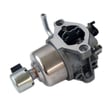
What is the lifespan of a B&S engine?
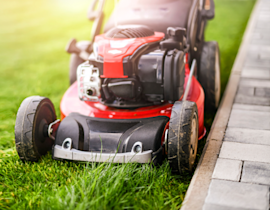
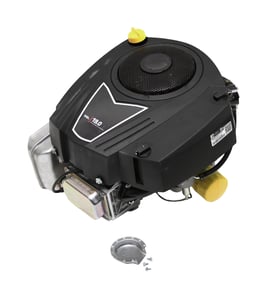
A Briggs lawn and garden engine like model 31R977-0017-G1 typically lasts 1,000 to 2,000 hours with normal residential use and consistent maintenance; engines that are neglected often fail closer to 500 hours, while well-maintained units in lighter duty can exceed 2,000 to 3,000 hours before needing major work.
What most affects engine life
- Oil quality and change interval (dirty oil accelerates wear)
- Airflow and cooling (debris on cooling fins causes overheating)
- Fuel freshness (stale fuel leads to varnish and carburetor issues)
- Filtration (oil and fuel filters reduce internal contamination)
- Load and run time (constant heavy mowing or towing shortens life)
- Storage habits (off-season fuel and moisture problems add up)
Maintenance that extends lifespan
For the 31R977-0017-G1, the biggest “hours gained” usually come from basic service items you can replace on schedule:
- Change oil on time and keep the level correct
- Replace the oil filter regularly using the correct part
- Replace the fuel filter if you see restricted flow, debris, or age-related cracking
- Keep the engine shrouds and cooling areas clean
- Address hard-starting early (often fuel delivery or ignition related)
Helpful parts commonly used in routine service:
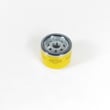
- Briggs & stratton lawn and garden equipment engine oil filter 696854
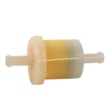
- Briggs & statton lawn & garden equipment engine inline fuel filter 84001895
- Briggs & stratton lawn & garden equipment engine fuel filter (white) 394358S
Quick lifespan guide by usage
| Usage pattern | Typical outcome | What to prioritize |
|---|---|---|
| Light residential (short weekly mowing) | Often 1,500 to 3,000 hours | Clean cooling, fresh fuel, on-time oil changes |
| Average residential | Often 1,000 to 2,000 hours | Oil and filtration, seasonal storage habits |
| Heavy residential or semi-commercial | Often 500 to 1,500 hours | Cooling, oil change frequency, fuel system upkeep |
Why it matters
Engine lifespan is mostly a maintenance story: clean oil, clean airflow, and clean fuel prevent the wear, overheating, and carburetor problems that end an engine’s useful life early. Replacing low-cost service parts on schedule is usually far cheaper than a carburetor or internal rebuild.
Last updated: February 2026
What are common B&S engine problems?
Common Briggs lawn and garden engine problems on model 31R977-0017-G1 come from fuel delivery (stale gas, clogged filter, dirty carburetor), ignition (weak spark), and air or exhaust restrictions. These issues typically show up as hard starting, surging, rough running, or loss of power.
Most common symptoms and likely causes
- Won’t start or starts then dies: clogged fuel filter, carburetor varnish, fuel shut-off solenoid not opening
- Surging or hunting at idle: partially clogged carburetor, vacuum leak, stale fuel
- Runs rough under load: restricted fuel flow, weak ignition coil, dirty cooling fins causing overheating
- Backfiring or popping: lean fuel mixture, exhaust leak at gasket, ignition timing issues
- Oil leak or burning oil smell: worn oil seal, overfilled crankcase, crankcase ventilation issues
Quick checks we recommend first (fast, low-cost)
- Drain old fuel and refill with fresh gasoline.
- Inspect fuel lines and replace the fuel filter if flow looks weak.
- Check spark plug condition and gap; replace if fouled.
- Verify the air filter is clean and the cooling fins are not packed with debris.
- Look for exhaust leaks at the muffler connection.
Parts that commonly solve fuel and starting complaints
If your symptoms point to restricted fuel flow or a no-start, these model-matched parts are common fixes:
| Problem you see | Part to consider | What it does |
|---|---|---|
| Starts then stalls, fuel looks dirty | Fuel filter (white) 394358S | Traps debris before it reaches the carburetor |
| Hard starting, surging, won’t stay running | Carburetor 594605 | Meters fuel and air for starting and running |
| Starts then dies when key is released or after a few seconds | Fuel shut-off solenoid 596038 | Opens fuel flow into the carburetor bowl |
Why it matters
Fuel-related problems can mimic ignition or internal engine wear. Fixing the basics (fresh fuel, clean filtration, correct carburetion) prevents repeat failures and helps protect higher-cost components like the camshaft and short block.
Last updated: February 2026
What is the valve clearance on a Briggs and Stratton 31R977-0017-G1?
For the Briggs 31R977-0017-G1 lawn and garden engine, valve lash is typically set to 0.004 in (intake) and 0.006 in (exhaust) with the engine cold. Correct clearance helps prevent hard starting, backfiring, low power, and valve train noise.
Recommended clearances (quick reference)
| Valve | Typical cold clearance | Common symptom if off |
|---|---|---|
| Intake | 0.004 in | Hard starting, poor idle |
| Exhaust | 0.006 in | Backfiring, power loss |
How we set valve clearance (basic method)
- Disconnect the spark plug wire and let the engine cool completely.
- Remove the valve cover to access the rocker arms.
- Rotate the engine by hand to the compression stroke, then past top dead center (TDC) slightly.
- Slide the correct feeler gauge between the rocker arm and valve stem.
- Loosen the lock nut, turn the adjuster to the correct gap, then hold the adjuster and retighten the lock nut.
- Recheck the gap after tightening; repeat until it stays on spec.
What to check if it still runs poorly
- Fuel delivery issues (restricted filter, stale fuel, debris in carburetor).
- Ignition problems (weak spark, damaged coil, incorrect air gap).
- Compression loss (burnt valve, head gasket leak, worn rings).
If you are chasing a no-start or surging condition, common service parts for this engine include the Briggs & statton lawn & garden equipment engine carburetor 594605 and fuel filters such as the Briggs & stratton lawn & garden equipment engine fuel filter (white) 394358S.
Why it matters
Valve lash changes over time from normal wear and heat cycling. Keeping intake and exhaust clearance in range helps the valves fully close (good compression) and open correctly (good breathing), which directly affects starting and power.
Last updated: February 2026
How do I find the specs for my Briggs & Stratton engine?
For your Briggs 31R977-0017-G1 lawn and garden engine, the most reliable way to get the correct specs is to use the engine’s identification numbers (Model, Type, and Code) from the engine shroud or valve cover area; those numbers map to the exact tune-up and internal specifications for your build.
Where to find the Model, Type, and Code on the engine
On Briggs engines, the ID is typically stamped into the blower housing (shroud) or printed on a label. Check these common spots:
- On the valve cover area (OHV engines)
- On the blower housing near the starter/recoil or flywheel screen
- Near the muffler or spark plug side of the engine
- On a metal tag or sticker on the shroud
- On the engine block casting area (less common)
What specs you can look up once you have the ID
Once you have the Model, Type, and Code, you can match the exact configuration and service data. Common specs people look for include:
- Oil type and oil capacity
- Spark plug type and gap
- Valve lash (intake and exhaust clearance)
- Governor settings and RPM range
- Fuel system details (filter style, solenoid-equipped carburetor, etc.)
Quick parts-to-specs mapping (common examples)
If you are chasing a maintenance spec, the part you are servicing often points to the spec you need.
| What you are servicing | Spec you usually need | Example part for this model |
|---|---|---|
| Oil and filtration | Oil type, capacity, change interval | Briggs & stratton lawn and garden equipment engine oil filter 696854 |
| Fuel delivery | Fuel filter size/direction, hose size | Briggs & stratton lawn & garden equipment engine fuel filter (white) 394358S |
| No-start or weak spark | Ignition air gap, kill-wire checks | Briggs & statton lawn & garden equipment engine ignition coil 595304 |
| Hard starting or flooding | Carb settings, jetting, linkage routing | Briggs & statton lawn & garden equipment engine carburetor 594605 |
Why it matters
Briggs engines can share the same model family but differ by Type and Code; those differences change critical specs like valve settings, carburetor configuration, and charging system output. Using the full ID prevents ordering the wrong parts and avoids incorrect adjustments.
Last updated: February 2026