


Is the Honda HRT216TDA good for mulching?
Yes. The Honda HRT216TDA is a solid choice for mulching as long as it is set up for mulching and the blade and deck are in good condition; mulching works best when you cut dry grass and avoid taking off too much height at once.
What determines mulching performance on the HRT216TDA
Mulching quality depends more on setup and conditions than on the engine alone.
- Use the correct mulching configuration (mulch plug or closed rear discharge, if equipped)
- Keep the blade sharp and balanced
- Mow when grass is dry and not overgrown
- Slow your walking speed in thick grass
- Keep the underside of the deck clean to maintain airflow
Quick setup and mowing tips (best results)
We recommend these practical steps for finer clippings and fewer clumps:
- Raise the cutting height for the first pass in tall grass, then lower it for a second pass
- Overlap passes slightly so the deck can re-cut clippings
- Empty or remove the bag if your configuration requires it for mulching
- Clean packed grass from the deck after mowing (once the engine is off and cooled)
Common symptoms and what they usually mean
| Symptom | Most common cause | What to do |
|---|---|---|
| Clumps left behind | Grass too wet or too tall | Mow when dry; raise height; take a second pass |
| Uneven cut | Dull blade or deck buildup | Sharpen blade; clean deck |
| Poor airflow | Deck packed with debris | Clean underside; avoid mowing wet grass |
| Excess vibration | Blade damage or imbalance | Inspect blade; replace if bent |
Parts that can affect mulching results
If your mower is leaving clumps or the cut quality has dropped, inspect the discharge area and deck hardware.
- Mulching plug 76266-VG4-000ZB helps keep clippings circulating under the deck for finer mulching
- Lawn mower deflector shield 81211-vg4-d01 should move freely and not be bent into the discharge path
- Lawn mower height adjuster plate 42940-VG3-B01 matters if the mower will not hold a consistent cutting height
Why it matters
Good mulching returns nutrients to the lawn and reduces bagging time, but only when the mower can circulate clippings properly. A sharp blade, clean deck, and correct mulching configuration make the biggest difference.
Last updated: February 2026
Should I use 87 or 89 gas for lawn mower?
For the Honda HRT216TDA walk-behind mower, we use fresh unleaded regular gasoline (87 octane) for normal operation; 89 octane does not improve power or reliability in a typical small 4-cycle mower engine, so it is usually unnecessary.
What to use (and what to avoid)
- Use fresh, clean unleaded gasoline, typically 87 octane.
- Choose fuel from a busy station so it is less likely to be stale.
- Avoid old gas (more than about 30 days in the can) because it can cause hard starting and surging.
- Avoid fuel contaminated with water or dirt (common causes of no-start).
- If your mower will sit, treat the fuel or drain the tank and run the carburetor dry.
When 89 octane makes sense
89 octane is fine to use, but it is mainly helpful only if:
- Your local 87 octane is consistently poor quality or stale.
- You are troubleshooting spark knock under heavy load (uncommon on walk-behind mowers).
Quick troubleshooting if fuel choice is causing problems
If the mower starts poorly, surges, or stalls after refueling, we focus on fuel freshness and the fuel system first.
- Drain and replace with fresh 87 octane.
- Check the air intake and air filter area for blockage.
- If flooding or fuel overflow is suspected, the carburetor float needle can be the cause; see lawn & garden equipment engine carburetor needle valve 16155-ZM0-003.
- If the pull cord will not move after a fuel issue, use lawn mower pull cord stuck to rule out a hydro-locked cylinder.
Fuel storage guide (simple)
| Situation | Best practice | Result |
|---|---|---|
| Mowing weekly | Buy small amounts of 87 octane | Easier starts, smoother running |
| Storage 30+ days | Stabilize fuel or drain tank | Prevents varnish in carburetor |
| Hard start after storage | Replace old fuel first | Fastest, lowest-cost fix |
Why it matters
Using the right fuel helps prevent carburetor varnish, sticky float needles, and starting issues. In most cases, fuel freshness matters far more than stepping up from 87 to 89 octane.
You can order fuel-system and control parts for your HRT216TDA from the parts list for this model, or search by model number on Sears PartsDirect.
Last updated: February 2026
What are common Honda HRT216TDA problems?
Common Honda HRT216TDA walk-behind mower problems usually fall into a few buckets: hard starting or stalling (fuel or carburetor), poor cutting (blade or deck buildup), and drive or control issues (cables, levers, or height adjusters). Many fixes start with basic inspection and maintenance.
Most common symptoms and likely causes
- Won’t start or starts then dies: stale fuel, dirty carburetor passages, restricted air intake, fouled spark plug
- Runs rough or surges: carburetor needle/float issues, air leak, partially clogged jet
- Poor cut quality or uneven cut: dull/bent blade, deck packed with wet grass, height adjuster out of sync
- Self-propel won’t move or slips: worn/loose drive components, belt area obstruction, cable out of adjustment
- Blade won’t stop quickly when you release the control: zone control cable or brake linkage issue
Parts on this model that often relate to these issues
If inspection points to a worn control or fuel-system component, these model-matched parts are commonly involved:
- Lawn mower throttle control assembly 17850-VG3-010 for speed/control complaints
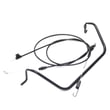
- Lawn mower zone control cable assembly 06540-VG4-B01 if the engine control or blade-stop function feels wrong
- Lawn mower clutch cable 54510-VG4-D01 for drive engagement problems
- Lawn & garden equipment engine carburetor needle valve 16155-ZM0-003 for flooding, surging, or fuel delivery issues
- Air cleaner cover 17231-Z0L-030 if the air cleaner housing is damaged or not sealing
Quick checks we recommend before replacing parts
- Drain old fuel and refill with fresh fuel (especially after storage).
- Check the air intake and air cleaner area for blockage and proper sealing.
- Inspect cables for kinks, fraying, or binding; confirm levers return smoothly.
- Clean the underside of the deck; packed grass can mimic power and cut problems.
- Verify all four wheels are set to the same cutting height.
Symptom-to-fix guide
| Symptom | What to check first | Common next step |
|---|---|---|
| Won’t start | Fuel freshness, spark plug condition | Clean carburetor; inspect fuel delivery |
| Surging | Air leaks, dirty carburetor | Replace/inspect needle valve |
| Won’t move | Cable adjustment, debris under belt cover | Inspect drive components and cable |
| Uneven cut | Blade sharpness, deck buildup | Sharpen/replace blade; clean deck |
Why it matters
Catching small issues early (stale fuel, cable drag, deck buildup) prevents hard starting, poor performance, and premature wear on the drive and blade-control systems.
For step-by-step DIY help, we recommend our guide: how to tune up a lawn mower video. For ordering additional model-specific parts beyond the list here, search by model number on Sears PartsDirect.
Last updated: February 2026