Owner’s manual
 Error Codes




What is the typical lifespan of a gas hot water heater?
Most gas water heaters, including the American FG6250T403NO, typically last 8 to 12 years. Regular maintenance (especially flushing sediment and inspecting the anode rod) helps you reach the upper end of that range and reduces nuisance issues like odor and slow recovery.
Typical lifespan by water heater type
| Water heater type | Typical lifespan |
|---|---|
| Gas tank water heater | 8 to 12 years |
| Electric tank water heater | 10 to 15 years |
What extends (or shortens) lifespan
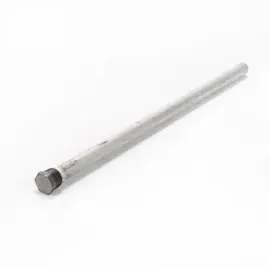
- Anode rod condition: Inspect about every 3 years; replace if more than 50% depleted.
- Water quality: Hard water and sediment increase tank wear; flushing helps.
- Water softeners: Softened water can be more corrosive and may shorten tank life.
- Temperature setting: Higher temps increase stress and scale buildup.
- Leak history and flooding: Any submersion event requires replacement of the entire water heater.
Maintenance checklist we recommend
Use the FG6250T403NO owner's manual for the exact procedure and safety steps for your model.
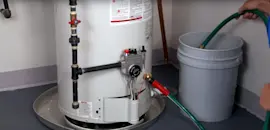
- Flush the tank periodically to reduce sediment.
- Inspect and replace the anode rod on schedule.
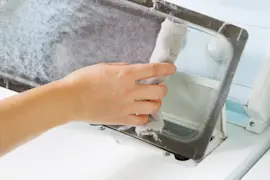
- Check the burner area and combustion air openings for dust and lint.
- Watch for early warning signs: rusty water, popping sounds, reduced hot water, or moisture at the base.
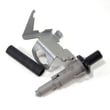
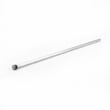
- If you are replacing the anode, use the correct part such as the anode rod 100108260.
Why it matters
A water heater usually fails from internal tank corrosion. The anode rod is designed to corrode first, protecting the tank. Keeping that sacrificial protection in place is one of the most effective ways to get full life from a gas water heater.
Last updated: January 2026
What is the typical cost to replace a 50-gallon water heater?
Replacing a 50-gallon gas water heater like American model FG6250T403NO typically costs $800 to $2,500 installed, depending on the heater type, venting changes, local labor rates, and whether code upgrades (gas shutoff, expansion tank, drain pan) are needed. For model-specific requirements, use the FG6250T403NO owner's manual.
What drives the price up or down
- Tank type and efficiency: standard atmospheric vent units usually cost less than high-efficiency options.
- Venting work: replacing or resizing vent pipe, adding draft components, or correcting venting issues adds labor.
- Gas and water line updates: new shutoff valves, sediment trap, flex connectors, or piping changes.
- Closed-system protection: many homes need a thermal expansion solution.
- Disposal and access: hauling the old tank, tight closets, attic installs, or stairs.
Common add-ons to plan for (especially in closed systems)
Your manual notes that in a closed water supply system, thermal expansion can cause the temperature and pressure relief valve to discharge; a common fix is adding an expansion tank sized at about 1.5 gallons per 50 gallons stored. See the FG6250T403NO owner's manual for the installation guidance and safety details.
| Item that may be added | Why it may be needed | Typical impact on installed cost |
|---|---|---|
| Expansion tank | Controls thermal expansion pressure | Low to moderate |
| Drain pan and drain line | Helps manage leakage risk in finished areas | Low to moderate |
| Venting materials | Ensures safe combustion exhaust | Moderate to high |
| Gas line updates | Meets code and improves safety | Moderate |
Quick budgeting ranges we see most often
- Basic swap (same style, minimal changes): $800 to $1,400
- Moderate updates (some venting or plumbing changes): $1,400 to $2,000
- Complex replacement (venting rework, access issues, multiple code upgrades): $2,000 to $2,500
Why it matters
A water heater replacement is not just the tank; correct gas supply, combustion air, venting, and pressure control help prevent nuisance relief-valve discharge and protect the system long-term.
Last updated: January 2026
How many people can shower with a 40 gallon water heater?
A 40-gallon tank like the American FG6250T403NO typically supports 2 back-to-back showers comfortably, and up to 3 if the showers are short and you have a moderate-flow showerhead. Actual results depend most on shower length, flow rate (GPM), and your thermostat setting.
What to expect from a 40-gallon tank
Most households see these real-world patterns:
- 2 people can usually shower one after another with normal shower lengths.
- 3 people can often shower if each shower is shorter and the showerhead is efficient.
- 1 person at a time is best if you want consistently hot water with no temperature drop.
- Higher hot-water demand (laundry, dishwasher) during showers reduces capacity.
- A higher thermostat setting increases usable hot water but increases scald risk.
Quick sizing guide (typical shower scenarios)
Assuming a common 2.0 to 2.5 GPM showerhead and typical mixed water temperatures:
| Shower pattern | Typical outcome with 40 gallons | Notes |
|---|---|---|
| 1 long shower (15+ min) | Usually OK | May run cooler near the end |
| 2 average showers (8 to 12 min each) | Usually OK | Best case for most homes |
| 3 short showers (5 to 8 min each) | Often OK | Works better with low-flow heads |
| 2 showers at the same time | Often not OK | Tank drains fast; recovery cannot keep up |
Settings and safety that affect shower count
Your manual recommends a starting point of 120°F for the thermostat. Higher settings can stretch shower capacity (more mixing with cold water), but they also raise scald risk.
- Start at 120°F and test shower comfort.
- If you increase temperature, do it in small steps.
- Always feel the water before bathing or showering, especially for children and older adults.
- Consider a temperature-limiting (anti-scald) valve if you need higher tank temps.
For the exact thermostat guidance and safety details for this model, use the FG6250T403NO owner's manual.
Why it matters
Shower capacity is really about usable hot water, not just tank size. Flow rate, incoming cold-water temperature, and thermostat setting determine how quickly the tank cools and how many showers you can take before you notice a drop.
Last updated: January 2026
Why are gas water heaters being phased out?
Gas water heaters are being phased out in some areas because local air-quality and climate policies target emissions from burning natural gas (especially nitrogen oxides and greenhouse gases). Your American FG6250T403NO is still a standard gas model; always follow the safety and installation requirements in the FG6250T403NO owner's manual.
What “phased out” usually means
Most phase-outs are policy changes that affect new installations and replacements, not existing units already in service.
Common examples include:
- Limits on installing new natural-gas appliances in certain cities or building types
- Requirements to use electric heat pump water heaters in new construction
- Emissions rules aimed at reducing smog-forming pollutants (NOx)
- Incentives and rebates that make electric options more attractive
- Future compliance dates that roll in over multiple years
Why it matters for FG6250T403NO owners
Even when policies change, safe operation and correct location remain critical for any gas water heater.
Key safety points we follow from the manual:
- Install the water heater indoors, vertical, and level
- Keep the unit away from flammable vapors (gasoline, solvents, etc.)
- Avoid placing it near air-moving devices (exhaust fans, dryers) that can cause flue-gas backdrafting
- If the water heater has been under water, replacement is required
- If the hot water system has been unused for 2+ weeks, purge at a faucet first because hydrogen gas can accumulate
If you are planning a replacement
Local rules vary by city and utility territory, so we recommend confirming what is allowed before you buy.
| Replacement path | Typical pros | Typical considerations |
|---|---|---|
| Like-for-like gas water heater | Familiar venting and performance | May be restricted by local rules; may require low-NOx models |
| Electric heat pump water heater | Lower operating cost in many homes | Needs space, airflow, and often a condensate drain |
| Standard electric tank | Simple install in some situations | Higher operating cost than heat pump in many cases |
Related parts that commonly come up during service
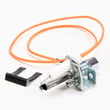
If you are troubleshooting ignition or gas control issues on FG6250T403NO, these model-matched parts are often involved:
Why this matters
Phase-outs are usually about reducing emissions at the community level, but for homeowners the practical impact is making sure your next replacement meets local requirements while keeping combustion safety, venting, and clearances correct.
Last updated: January 2026