 Owner’s manual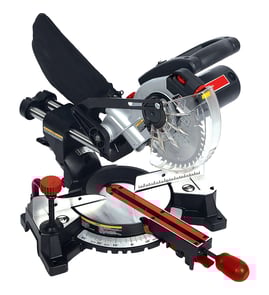

Will any miter saw stand work with any miter saw?
No. Most miter saw stands are designed to fit many saws, but they are not truly universal. For your Craftsman 315243150 miter saw, the stand must match the saw’s mounting-hole pattern and support the saw securely so you can clamp the workpiece against the fence and keep hands out of the cutting path (see the owner's manual).
A stand works when it can be adjusted to your saw’s base and still hold the saw rigidly.
- Mounting-hole spacing on the saw base (front-to-back and side-to-side)
- Stand bracket range (how far the rails/brackets slide and lock)
- Bolt size and hardware the stand accepts (and whether washers/spacers are needed)
- Saw weight capacity of the stand (including accessories and work supports)
- Stability when the saw head is raised and lowered (no rocking or twisting)
Use this quick checklist with your Craftsman 315243150:
- Measure the distance between mounting holes on the saw base.
- Compare those measurements to the stand’s adjustment range.
- Confirm the stand can be bolted down tightly (no “almost lined up” holes).
- Verify the stand’s rated capacity exceeds the saw’s weight.
- Plan for safe operation: the manual warns to clamp or bolt the saw to a workbench and not operate it on the floor; a stand should provide the same secure, bolted-down support.
| Stand type | Typical compatibility | Best for |
|---|---|---|
| Universal folding stand with adjustable brackets | Fits many brands if hole spacing falls in range | General DIY and jobsite use |
| Stand with quick-release mounting rails | Fits many saws, faster removal | Frequent transport and setup |
| Brand-specific stand | Most consistent “bolt-on” fit | Maximum convenience and repeatability |
A stand that does not bolt up solidly can shift during a cut. That increases the chance of awkward hand positions and puts you closer to the blade’s cutting path. A stable, correctly mounted setup helps you keep the workpiece firmly against the fence and operate within the saw’s “no hands zone.”
If you need mounting hardware or want to confirm safe setup steps for the Craftsman 315243150, use the parts list for this model or search by model number on Sears PartsDirect.
Last updated: February 2026
What are the parts of a miter saw?
On the Craftsman 315243150 compound miter saw, the main parts include the 10-inch saw blade, blade guards, miter table and angle scale, fence, and the controls that lock and adjust miter and bevel angles. These parts work together to support the workpiece and guide accurate crosscuts and angle cuts.
- 10-inch saw blade: does the cutting; this saw is rated at 5,000 RPM.
- Upper blade guard and self-retracting lower blade guard: shields the blade; the lower guard retracts as you lower the saw into the work.
- Miter table and miter angle scale: sets left and right miter angles for trim and framing cuts.
- Miter lock handle: locks the miter table at the selected angle.
- Fence (sliding fence): supports the workpiece; it can slide for clearance during bevel and compound cuts.
- Dust guide: directs sawdust away from the cut area.
| Part | What it does | When you adjust it |
|---|---|---|
| Miter lock handle | Locks the miter setting | Before making miter cuts |
| Sliding fence | Supports stock; provides clearance | For bevel or compound cuts |
| Lower blade guard | Retracts during the cut | Every time you lower the saw |
| Mounting holes | Lets you bolt the saw down | During setup on a bench |
A miter saw is safest and most accurate when the guards and work supports are used correctly.
- Keep guards in place; never operate without them.
- Avoid freehand cutting; keep the workpiece against the fence.
- Turn off the saw and wait for the blade to stop before moving the workpiece or changing settings.
- Unplug the saw before changing the blade or servicing.
- Bolt the saw down using the base mounting holes so it cannot tip, slide, or “walk.”
Knowing the names and functions of the miter saw parts helps you diagnose issues faster (for example, a fence that will not stay square, a miter lock that will not hold, or a guard that does not retract smoothly) and helps you set angles accurately for cleaner, safer cuts.
For diagrams and model-specific terminology, use the owner's manual. For replacement parts lookup by model number, start with the parts list for Craftsman 315243150 or search by model on Sears PartsDirect.
Last updated: February 2026
How to unlock Craftsman miter saw arm?
To unlock the saw arm on your Craftsman 315243150 miter saw, pull out the lock pin that holds the arm in the down (transport) position, then lift the arm to full height. Keep the miter lock handle and bevel lock knob snug so the saw stays stable.
- Unplug the saw before you put your hands near the blade area.
- Pull the saw arm all the way down.
- Locate the lock pin on the pivot/arm area.
- Pull the lock pin out to release the arm.
- Lift the saw arm up to its full height.
- Before cutting, tighten the miter lock handle and bevel lock knob so the table and arm are locked.
A lock pin can bind when there is pressure on it. Use this quick checklist:
- Push the arm down slightly to take tension off the pin, then pull the pin.
- Check for sawdust buildup around the pin and pivot; clean it out.
- Confirm the bevel lock knob is not overtightened while you are trying to release the transport lock.
- Inspect for bent hardware or a misaligned arm after a drop or hard impact.
| Item | What it controls | What to do before a cut |
|---|---|---|
| Lock pin | Holds arm down for carrying/storage | Pull out to raise arm |
| Miter lock handle | Locks the miter table angle | Tighten securely |
| Bevel lock knob | Locks the bevel (tilt) angle | Tighten securely |
Unlocking the arm correctly prevents sudden movement and helps you keep the blade path controlled. We also recommend clamping the workpiece when possible and making sure all adjustments are secure before you start the motor.
For diagrams and the exact control locations on model 315243150, use the 315243150 owner's manual. For replacement parts and model lookups, use the parts list for this model or search by model number on Sears PartsDirect.
Last updated: February 2026
Why is the brake on my miter saw not working?
On the Craftsman 315243150 miter saw, the electric brake is designed to stop blade rotation quickly after you release the trigger. If the blade coasts too long, the most common causes are worn carbon brushes, commutator wear or contamination, or a trigger switch that is not switching the brake circuit correctly.
- Unplug the saw before removing covers or inspecting wiring.
- Keep hands away from the blade until it stops completely.
- Do not bypass the switch or brake function.
- Replace damaged cords, terminals, or insulation before using the saw.
For operating and safety details specific to this model, use the 315243150 owner's manual.
- Carbon brushes worn: weak contact can reduce braking and cause surging.
- Commutator dirty or pitted: poor electrical contact weakens braking.
- Trigger switch failing: brake may not engage when the trigger is released.
- Loose or heat-damaged wiring: intermittent connections mimic brake failure.
- Motor bearings binding (less common): changes coast-down behavior and sound.
- Run the saw briefly, release the trigger, and compare coast-down time to normal.
- Look for heavy sparking at motor vents (brush or commutator issue).
- Inspect brushes for short length, chipping, or weak spring tension.
- Check the trigger for sticking or inconsistent start/stop.
- Inspect the power cord and internal terminals for discoloration or looseness.
| Symptom | Likely cause | Next step |
|---|---|---|
| Brake weak all the time | Brushes or commutator | Inspect brushes; clean commutator area if accessible |
| Brake works intermittently | Switch or wiring | Check terminals; test switch continuity |
| Heavy sparking | Brushes/commutator | Replace brushes; inspect commutator condition |
A working electric brake reduces the time the blade is spinning after a cut, which lowers the risk of contact while repositioning material at the fence and miter table.
To find replacement parts by model, use the diagrams for 315243150 or search by model on Sears PartsDirect.
Last updated: February 2026