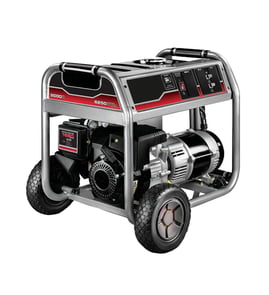



Can I buy Generac parts directly?
Yes. For your Generac 1312-0 generator, we sell replacement parts directly from the parts list for this model, so you can match the correct component by diagram and part ID before ordering (for example, the fuel cap 846987 or breaker 209872GS).
Best way to buy the right part for Generac 1312-0
Use the model-specific parts list first; it reduces ordering mistakes because parts can vary by production run.
- Confirm your model number is 1312-0 on the generator data label
- Find the part in the model diagram and note the part ID
- Compare the part name to what you are replacing (fuel system, electrical, hardware)
- Order the exact match from the parts list for this model
- If you are shopping across models, search by model number on Sears PartsDirect
Common parts customers replace on this model
These are examples of parts we commonly see customers order for portable generators like the Generac 1312-0:
| What you are fixing | Part example on this model | What it affects |
|---|---|---|
| Fuel tank sealing or missing cap | Fuel cap 846987 | Prevents fuel leaks and contamination |
| No output or tripping under load | Breaker 209872GS | Protects circuits from overload |
| Loose wiring or poor grounding | Ground wire 14353621GS | Safety grounding and stable operation |
Why it matters
Generators combine fuel and high-voltage electrical output. Ordering the exact part for Generac 1312-0 helps ensure proper fit, safe operation, and reliable power delivery when you need it.
Last updated: February 2026
What does code 1312-0 mean?
On a Generac 1312-0 generator parts page, 1312-0 is the generator’s model number, not an error or diagnostic code. If you’re seeing “1312-0” on a label or in a parts lookup, it identifies which parts fit your specific generator.
Where you’ll see 1312-0 (and what it tells you)
- On the generator’s model/serial tag (often on the frame or control panel area)
- In parts diagrams and parts lists for Generac SVP5000T-style generators
- On order confirmations or packing slips when you buy replacement parts
- In service notes when matching the correct receptacle, breaker, or wiring parts
If you meant an error code instead
Portable generators typically show issues as symptoms (no output, breaker trips, won’t start) rather than a “1312-0” code. Start with these quick checks:
- Reset the circuit breaker and reduce the load
- Inspect outlets for heat damage or looseness
- Check for damaged wiring or a loose ground connection
- Verify the engine is running at normal speed before testing voltage
Common parts people replace when troubleshooting “no power”
If your Generac 1312-0 runs but has no AC output, these model-matched parts are commonly involved:
| Symptom | What to check | Example model-matched part |
|---|---|---|
| No power at outlets | Outlet/receptacle condition | Receptacle 68867GS |
| Breaker trips or won’t reset | Breaker condition and wiring | Breaker 209872GS |
| Intermittent output | Loose/failed electrical connection | Ground wire 14353621GS |
Why it matters
Using the exact model number 1312-0 prevents ordering the wrong Generac generator parts (especially electrical items like a receptacle, breaker, or ground wire) and speeds up troubleshooting.
Last updated: February 2026
What is the average lifespan of a Generac generator?
A Generac generator typically lasts 10 to 20 years with normal residential use and consistent maintenance; in engine hours, many portable-style units land around 2,000 to 5,000 hours before major wear becomes likely. For the Generac 1312-0 generator, lifespan depends most on load, run time, and maintenance.
What most affects generator life
- Maintenance frequency: oil changes, air filter service, spark plug checks
- Operating load: running near max output shortens engine and alternator life
- Fuel quality and storage: stale gasoline causes hard starting and carburetor issues
- Environment: dust, moisture, and heat accelerate wear and corrosion
- Electrical health: loose connections and overheating damage receptacles and breakers
Practical maintenance targets (typical)
Use these as common, real-world intervals for portable generators like the 1312-0.
| Item | Typical interval | Why it matters |
|---|---|---|
| Oil change | Every 50 to 100 hours | Reduces engine wear and overheating |
| Air filter | Inspect every 25 hours | Prevents dirt ingestion and power loss |
| Spark plug | Inspect every season | Improves starting and fuel burn |
| Fuel system | Drain or stabilize before storage | Prevents varnish and clogged passages |
Quick checks that prevent early failure
- Keep the generator level while running so oiling works correctly.
- Avoid long runs at 100% load; size your loads and rotate high-draw appliances.
- Inspect the output panel for heat damage; replace worn outlets such as a receptacle 68867GS if plugs fit loosely or the face is discolored.
- If output is unstable or missing, test wiring and connections; our how to use a multimeter to test electrical parts video helps you verify voltage and continuity safely.
Why it matters
Most “short lifespan” complaints come from running overloaded, skipping oil changes, or storing fuel improperly. A generator that is exercised, kept clean, and run at reasonable load lasts years longer and produces steadier power for sensitive electronics.
Last updated: February 2026
What is the most common problem with generac generators?
The most common problem we see with Generac generators (including model 1312-0) is a no-start condition, most often tied to the starting system (weak battery, dirty/loose connections) and fuel delivery issues (stale fuel, restricted flow). Electrical output problems can also happen when wiring or power components fail.
Most common issues (and what they look like)
- Weak/failed battery or poor cable connections: slow crank, clicking, or no crank
- Fuel problems (stale fuel, clogged valve/line, venting issues): starts then dies, surging, won’t start
- Tripped breaker or bad receptacle: engine runs but no power at outlets
- Loose/damaged wiring or poor grounding: intermittent power, erratic operation
- Electrical conversion/output faults (rectifier/bridge issues): low or no AC output even though it runs
Quick checks we recommend first
- Turn the generator off and let it cool.
- Confirm the breaker is set and outlets are not damaged.
- Check fuel level and fuel freshness; open the fuel shutoff if equipped.
- Inspect battery terminals and cables for corrosion and tightness.
- Look for pinched, rubbed, or broken wires; verify the ground connection is secure.
Parts that commonly relate to “runs but no power”
| Symptom | What to check | Example part for model 1312-0 |
|---|---|---|
| Runs, no AC output | breaker, receptacles, wiring | Breaker 209872GS |
| Outlet loose/burned | receptacle condition | Receptacle 68867GS or receptacle 68759GS |
| Low/unstable output | rectifier/bridge components | Brdg rect bd 091825A |
| Intermittent power | grounding and wire integrity | Ground wire 14353621GS |
Why it matters
A generator that cranks poorly or has fuel restriction can fail when you need it most. Catching battery, fuel, and basic electrical issues early also helps protect the alternator, breaker, and receptacles from overload damage.
Last updated: February 2026